

The African Union (AU) has issued a powerful call for renewed global cooperation, warning that growing strains on the international multilateral system are severely testing the effectiveness of global peace, security, and conflict resolution mechanisms.
Speaking at the 4th AU–UN High-Level Retreat in Libreville, the Chairperson of the African Union Commission stressed that navigating Africa’s rapidly evolving peace and security challenges requires an immediate revival of collective diplomatic action.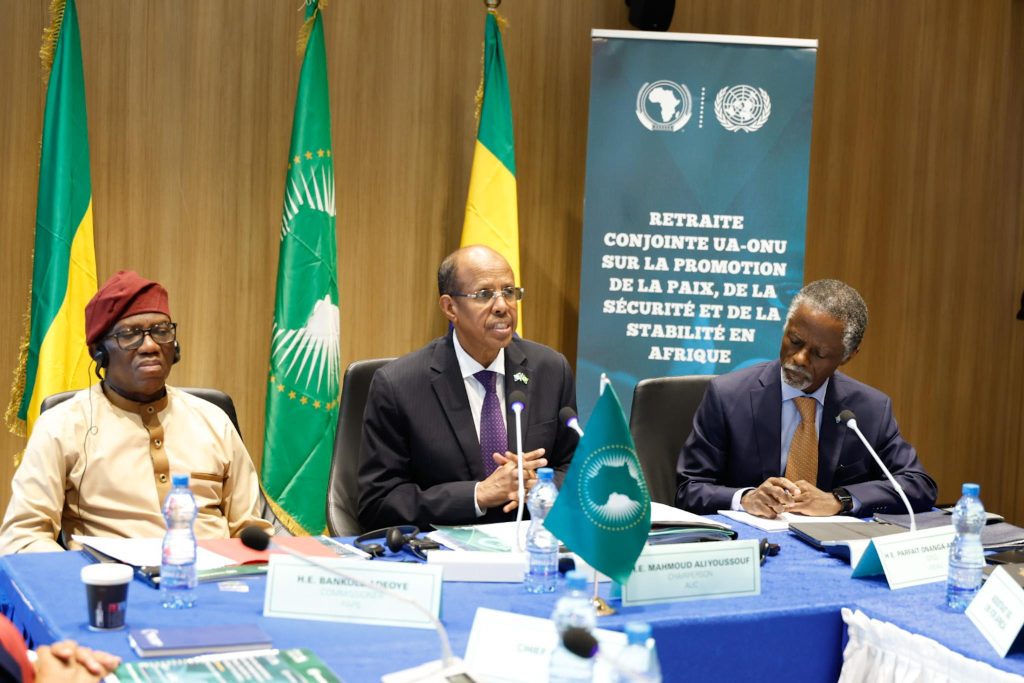
The address aligns closely with the principles established in the recently signed AU-UN Joint Cooperation Framework in Addis Ababa, which aims to institutionalize deeper strategic partnerships between the two bodies.
Escalating Geopolitical Pressures on Mediation
During his address, the Chairperson observed that the foundational tools of international relations including preventive diplomacy, strategic mediation, and conflict resolution mechanisms are facing unprecedented pressure.
“The effectiveness of preventive diplomacy, mediation, and conflict resolution mechanisms is increasingly being tested amid growing strains on the multilateral system,” the Chairperson stated.
The remarks highlight a growing concern within the African Union that fragmented international responses are leaving the continent vulnerable to unresolved crises, demanding a more coordinated approach between regional leaders and the United Nations.
The Domino Effect of the Strait of Hormuz Crisis
In a stark warning regarding global economic interconnectedness, the Chairperson specifically highlighted ongoing developments in the Strait of Hormuz. He pointed out that disruptions in this vital global shipping lane carry severe, far-reaching implications for African economies and could derail broader international economic stability.
With many African nations heavily reliant on global trade routes for energy imports and agricultural exports, any escalation in maritime choke points risks exacerbating inflation and fiscal vulnerabilities across the continent.
Demands for Global Financial and Resource Reforms
Beyond immediate security and maritime threats, the African Union leader focused heavily on systemic inequities, reiterating the urgent need to advance reforms of the international financial architecture. The AU maintains that current global financial structures must be overhauled to better align with, fund, and respond to Africa’s development priorities and aspirations.
Compounding these developmental hurdles, the Chairperson expressed deep concern over how limited financial resources continue to bottleneck the operational effectiveness of multilateral institutions. He concluded by underscoring that global and continental challenges can only be mitigated through strengthened cooperation and enhanced coordination between the AU and the UN, urging international stakeholders to back diplomatic frameworks with the necessary funding and political will.
Share this


