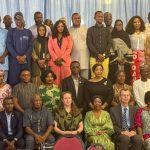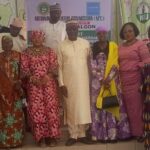

The Executive Director and Chief Executive Officer of the Wole Soyinka Centre for Investigative Journalism, Motunrayo Alaka, has called for a bold shift from press freedom to what she describes as people’s freedom, urging stakeholders to activate citizenship as a pathway to human rights, development, security, and peace.
She made the call while delivering a keynote address at the 2026 World Press Freedom Day convening organised by the The Nation Journalism Foundation, themed “Shaping a Future at Peace: Promoting Press Freedom for Human Rights, Development and Security.”
Honouring Courage Amid Rising Threats
Alaka began by acknowledging the sacrifices of Nigerian journalists working under increasingly hostile conditions, noting that many have faced harassment, detention, intimidation, and violence.
She cited recent incidents involving journalists across the country, stressing that these are “not isolated cases but indicative of a troubling pattern.”
“Any meaningful conversation about press freedom must begin with those who bear its cost,” she said, paying tribute to media professionals who risk their lives daily.
Referencing anti-apartheid icon Nelson Mandela, she reiterated that “a critical, independent and investigative press is the lifeblood of any democracy.”
A Global and Local Decline in Press Freedom
Alaka warned of a systemic regression in press freedom globally and locally, citing data from Reporters Without Borders showing that conditions for journalism have fallen to some of the lowest levels in decades.
Locally, she referenced WSCIJ’s Journalism and Civic Space Guard Report, which documented over 100 civic space violations in 2024, most involving state actors. She also noted Nigeria’s low openness score of 50.51 percent in the index by the Centre for Journalism Innovation and Development.
“Threats against the press intensify during elections, suggesting that in the eyes of the powerful, the press is seen as an obstacle rather than a partner in democracy,” she said.
Redefining Press Freedom as People’s Freedom
Alaka proposed a conceptual shift, arguing that press freedom should not be seen as a privilege for journalists but as an extension of citizens’ rights.
She traced its evolution from libertarian ideals championed by thinkers like John Milton and John Stuart Mill to the modern emphasis on accountability and social responsibility.
“Press freedom is not complete when a story is published; it is complete when that information enables a citizen to act,” she stated.
A Pillar for Human Rights Protection
Highlighting the link between journalism and human rights, Alaka said societies that suppress the press often suppress their citizens.
She cited data from the National Human Rights Commission showing over 370,000 complaints by September 2025, warning that without a free press, such cases would remain invisible.
She pointed to investigative reporting successes, including stories that exposed injustice and led to reforms, as evidence that“journalism does not just inform—it liberates.” Such as the case of the Federal Government suspended accreditation of degree certificates from Benin and Togo Republics, following Daily Nigerian undercover report by Umar Audu in 2024 It also sacked civil servants with certificates from both countries.
Driving Inclusive Development Through Information
On development, Alaka described Nigeria’s growth as paradoxical, noting that while the economy expanded to over $423 billion, poverty levels rose to 38.9 percent.
Drawing on the work of economist Amartya Sen, she emphasised that development is the expansion of freedoms, which cannot happen without access to reliable information.
“Journalism is not just storytelling; it is an interventionist strategy for development,” she said.
Press Freedom as a Security Imperative
Addressing national security, Alaka stressed that press freedom is not a luxury but a necessity for stability, describing independent media as an early warning mechanism.
She warned about news deserts in Nigeria areas with little or no media coverage citing insights from Professor Umar Pate, which show how such gaps can fuel misinformation and conflict.
“Journalism is preventive security,” she added, noting that underreporting conflicts creates dangerous vacuums exploited by insurgents and disinformation.
Introducing the R.U.S.H. Model
Alaka also presented the R.U.S.H. model “Report Until Something Happens,” a framework designed to strengthen journalism’s impact through persistence, depth, and accountability.
“Truth told once is a whisper; truth told consistently is a clarion call,” she said, urging media organisations to move beyond episodic reporting to sustained investigative work.
Shared Responsibility for Change
She outlined responsibilities across sectors:
- Governments must protect journalists as a constitutional duty.
- Media organisations should invest in sustainability, ethics, and innovation.
- Citizens must support credible journalism and resist misinformation.
- Civil society should engage constructively without politicising issues.
Alaka also called for stronger editorial independence and safeguards between business, politics, and journalism, particularly within media institutions.
A Call to Action for the Future
In her closing remarks, Alaka invoked writer Mark Twain, who described the press as one of the forces that bring light to the world.
“If we truly desire a future at peace, then we must invest in press freedom as a foundational system,” she said.
She urged stakeholders to commit to building a Nigeria where information is trusted, voices are heard, and institutions are accountable, adding:
“A society that commits to reporting until something happens is a society that produces change.”
Share this