
Stakeholders from the media, strategic communication, civil society and political spheres have developed recommendations for a Strategic Communication Toolkit aimed at strengthening the visibility, confidence and electoral competitiveness of female candidates ahead of Nigeria’s 2027 general elections.
The recommendations emerged at the Southern Convergence, a regional stakeholder consultation convened by the International Press Centre (IPC) in Ibadan, Oyo State, on November 25, 2026, under its Media for SHE Initiative.
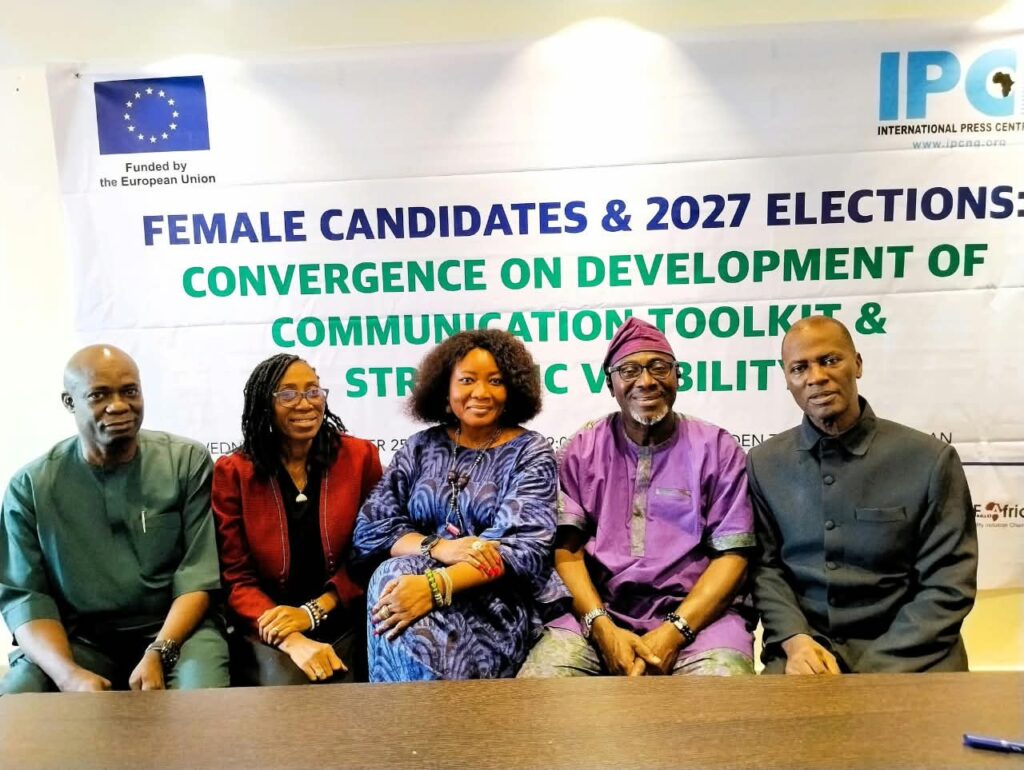
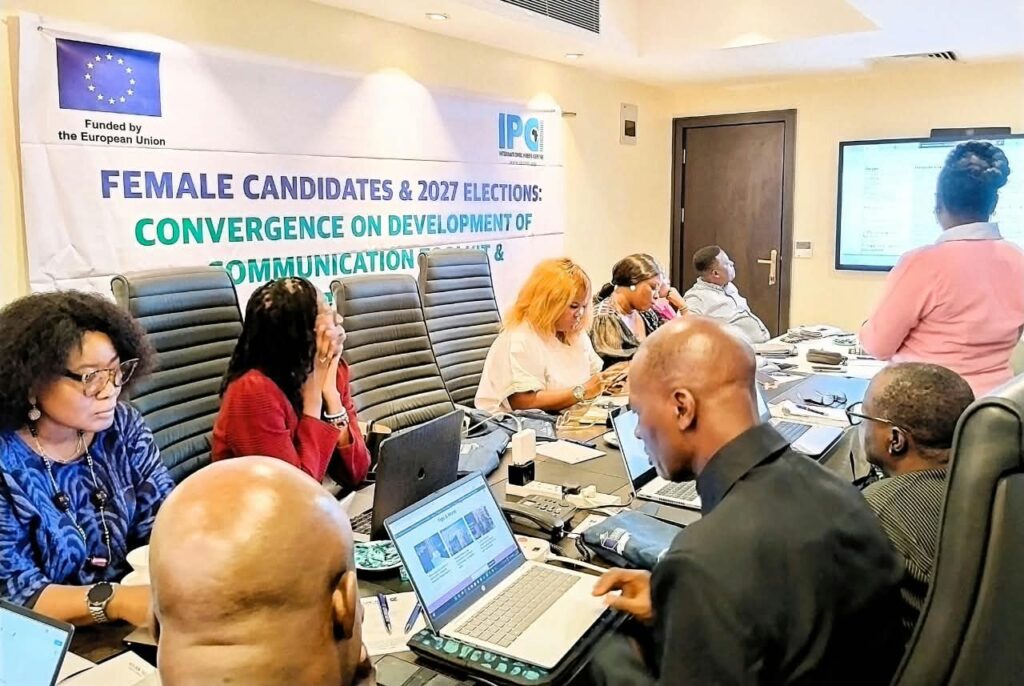
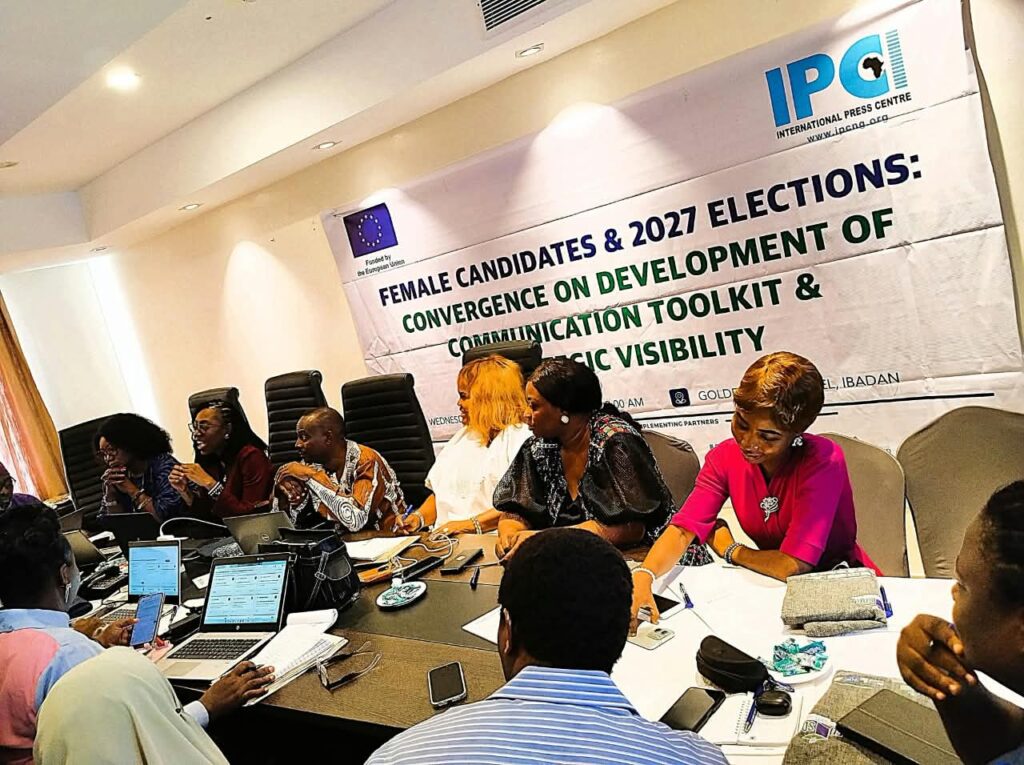
The consultation brought together experts from across Southern Nigeria to examine the communication challenges confronting female candidates and identify practical strategies to improve their campaign messaging, media engagement, public visibility and voter outreach.
Participants, who included media professionals, communication specialists, social media journalists, civil society representatives and a former legislator, examined how strategic communication could help female candidates connect more effectively with voters and compete in the electoral process.
They observed that despite growing advocacy for women’s political inclusion, many female aspirants continue to face difficulties in campaign communication, public visibility, media relations and voter engagement, stressing that political ambition and competence must be supported by effective communication strategies.
Female Candidates Face Communication, Visibility and Voter Engagement Challenges
During the discussions, stakeholders identified inadequate public visibility, difficulties in media engagement and ineffective campaign communication as some of the challenges confronting female candidates seeking elective positions.
They noted that success in modern elections increasingly depends not only on political ambition and competence but also on the ability of candidates to communicate their ideas effectively, establish public trust and connect with the electorate.
A recurring concern was the tendency of political candidates to make promises that fall outside the constitutional responsibilities of the offices they seek. Participants advised female aspirants to develop realistic, practical and voter-centred campaign messages that address the needs of their communities.
They argued that campaign promises should reflect the actual powers and responsibilities attached to the offices being contested, rather than raising expectations that candidates may be unable to fulfil if elected.
The stakeholders also stressed that female candidates must communicate their programmes and policy positions in ways that are understandable and relevant to voters, noting that clear messaging would help them present their priorities and establish stronger connections with their constituencies.
Stakeholders Urge Candidates to Understand Voters, Strengthen Grassroots Mobilisation
Participants advocated a “Know Your Voter” approach, urging female candidates to understand their target electorate, identify the issues affecting different communities and determine the communication channels through which voters receive information.
They explained that effective voter engagement requires candidates to understand where their constituents are, what matters to them and how best to communicate campaign messages that address their concerns.
Although stakeholders acknowledged the growing influence of digital platforms in political communication, they cautioned against overlooking traditional and community-based channels, particularly in rural areas.
They identified radio, direct community engagement, grassroots networks and traditional structures as important channels through which female candidates could reach voters who may have limited access to digital platforms.
The consultation also emphasised community mobilisation as a critical component of electoral engagement, recommending that female candidates build relationships with women’s groups, youth associations, religious organisations, artisan groups, community-based organisations and other local stakeholders to broaden their voter outreach.
IPC’s Communication Toolkit to Cover Media Engagement, Digital Campaigning, Public Speaking
In reviewing the proposed Strategic Communication Toolkit, participants recommended the inclusion of practical modules designed to equip female candidates with the communication skills required throughout the electoral cycle.
The proposed areas include public speaking, campaign planning, advocacy messaging, storytelling, media engagement, debate and dialogue skills, digital campaigning, voter education, online safety and misinformation management.
They stressed that the toolkit should provide practical guidance that candidates can apply when developing campaign messages, interacting with journalists, engaging different voter groups and communicating their political programmes.
Stakeholders further recommended that the toolkit should not be restricted to a printed manual but should also be produced in audio, video and mobile-friendly formats to make it accessible to female candidates with different educational backgrounds and communication needs.
Another major recommendation was for female candidates to establish professional communication teams capable of providing support in public relations, media relations, stakeholder engagement and digital communication.
Participants maintained that such teams would help candidates coordinate their campaign messages, manage media interactions and sustain communication with voters across different platforms and communities.
Consultation to Inform Toolkit Development Ahead of 2027 Elections
The Southern Convergence represents the first phase of a broader consultation process through which the IPC is gathering recommendations to guide the development and validation of the Strategic Communication Toolkit for female candidates.
The consultation was moderated by Mrs Jadesola Ajibola and Mr Francis Abayomi, with contributions from media experts Mrs Anikeade Funke Treasure, Dr Monday Ashibogwu, Mr Yinka Adedeji and Mr Lekan Otufodunrin.
Other contributors included social media journalist Ms Adewumi Omotego, communications specialist Ms Racheal Fadimu, publicist and graphic designer Mr Deji Sotonwa, and former legislator Hon. Tomewowo Favour.
Participants agreed that the final toolkit should be practical, easy to use and adaptable to the realities of women contesting elections across different regions and socioeconomic backgrounds.
The initiative is expected to provide female candidates with a resource for strengthening their communication capacity, improving their engagement with voters and increasing their visibility throughout the electoral cycle as preparations intensify for the 2027 general elections.
The Media for SHE Initiative is being implemented under the European Union Support to Democratic Governance in Nigeria (EU-SDGN) Programme, Component 4: Support to Media, with funding from the European Union.


