

Abudu A. Olalekan |
The United Nations (UN) is calling on countries to create an enabling environment for People living with HIV/AIDS (PLWHA) to have equal access to medical treatments.
The call to action according to the UN Secretary-General, António Guterres in his official address on Thursday to mark this year’s World AIDS Day will assist in eliminating the virus by 2030.
According to the agency, there were an estimated 38.4 million [33.9–43.8 million] people living with HIV at the end of 2021.
This the UN chief said can be minimised when words are matched with actions – making equality not just a slogan but a reality.
The audacious move should be matched with laws that tackle stigma and exclusion on people living with HIV.
“Better laws, policies and practices to tackle the stigma and exclusion faced by people living with HIV, especially marginalized populations. Everyone needs respect and to be welcomed.”
He said the many-layered inequalities that perpetuate the pandemic can and must be overcome: “We can end AIDS. If we Equalize.”
Guterres further said that the “proven practical solutions” exist that can help end AIDS, such as more funding to boost the availability, quality and suitability of services for HIV treatment, testing and prevention.
Meanwhile, echoing the UN chief’s call to action, and his core theme for the year, the President of the General Assembly, Csaba Kőrösi, said the AIDS crisis was “ripe for solutions based on science, solidarity and sustainability.”
“We need urgent measures to end inequalities that make people vulnerable to infection. If the international community acts, 3.6 million new HIV-infections and 1.7 million AIDS-related deaths will be prevented this decade.
He called on all Member States and stakeholders, to renew their political and financial commitments to ending AIDS by the ambitious deadline.
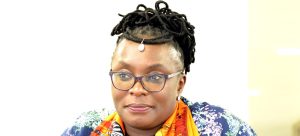
Earlier in the week, HIV activist and Unitaid board member, Maureen Murenga, encouragee more urgency in the fight against the illness.
Referring to a recent UNAIDS report which indicated that the world’s AIDS response is in danger, with rising new infections and deaths in many parts of the world, Ms. Murenga explained that adolescent girls and young women are still disproportionately affected by HIV.
“(It) is really saddening because when I was diagnosed with HIV 20 years ago, I was an adolescent and a young woman, and I thought that 20 years later we would be telling a different story and not the same sad story,” she told journalists in Geneva briefing ahead of the International Day.
In Africa, according to figures released by the agency, two thirds of the global AIDS infections are from the World Health Organisation (WHO) African Region which is 25.6 million living with the virus in Africa.
The challenge the continent is faced with inadequate treatment and people’s apathy to adhere to treatment as well lack of support structures, according to Ms. Murenga, a Kenyan national who represents communities living with HIV,
“We are still seeing a lot of new infections”, she said. “It means that the treatment is not reaching everyone and where it is, people are not adhering to treatment.”
Nonetheless, progress has been made, particularly in identifying infections, Ms. Murenga said, recalling the torment of her wait for a diagnosis, and the fact that she needed to get herself tested five times before she could accept that she had HIV.
“During the time I was diagnosed with HIV, there was a delay in getting results,” she said. “You’d be tested and then you would wait for two weeks to get your results. It was a very difficult time for someone to wait that long.”
Share this


