In a significant move to bolster the nation’s medical infrastructure, the World Health Organization (WHO) has officially presented its 2026–2027 Programme Budget workplan to the Federal Government of Nigeria.
The strategic roadmap, presented by WHO Country Representative Dr. Pavel Ursu to the Honourable Coordinating Minister of Health and Social Welfare, Professor Muhammad Ali Pate, reaffirms the global body’s commitment to the Nigeria Health Sector Reform & Investment Initiative (NHSRII).
A Results-Driven Framework for Universal Coverage
The newly minted biennial plan is designed to align strictly with Nigeria’s Sector-Wide Approach (SWAp) and the WHO’s 14th General Programme of Work (GPW14). It establishes a rigorous, results-oriented framework aimed at achieving measurable impacts in several critical areas:
-
Primary Health Care (PHC) and the expansion of Universal Health Coverage (UHC).
-
Strengthening routine immunization and managing the polio transition.
-
Enhancing health security through the 7-1-7 capacity framework under International Health Regulations.
-
Advancing digital health systems and ensuring service equity and quality.
“This approach provides the Ministry with full visibility, ownership, and accountability for WHO’s contribution to the health sector,” stated Professor Muhammad Ali Pate, commending the organization for its transparency and the integration of quarterly updates on implementation results.
Focus on Subnational Delivery and Global Leadership
Beyond high-level strategy, the discussions emphasized a pivot toward stronger subnational delivery, adapting to evolving resource realities to ensure health services reach the most vulnerable populations at the state and local levels.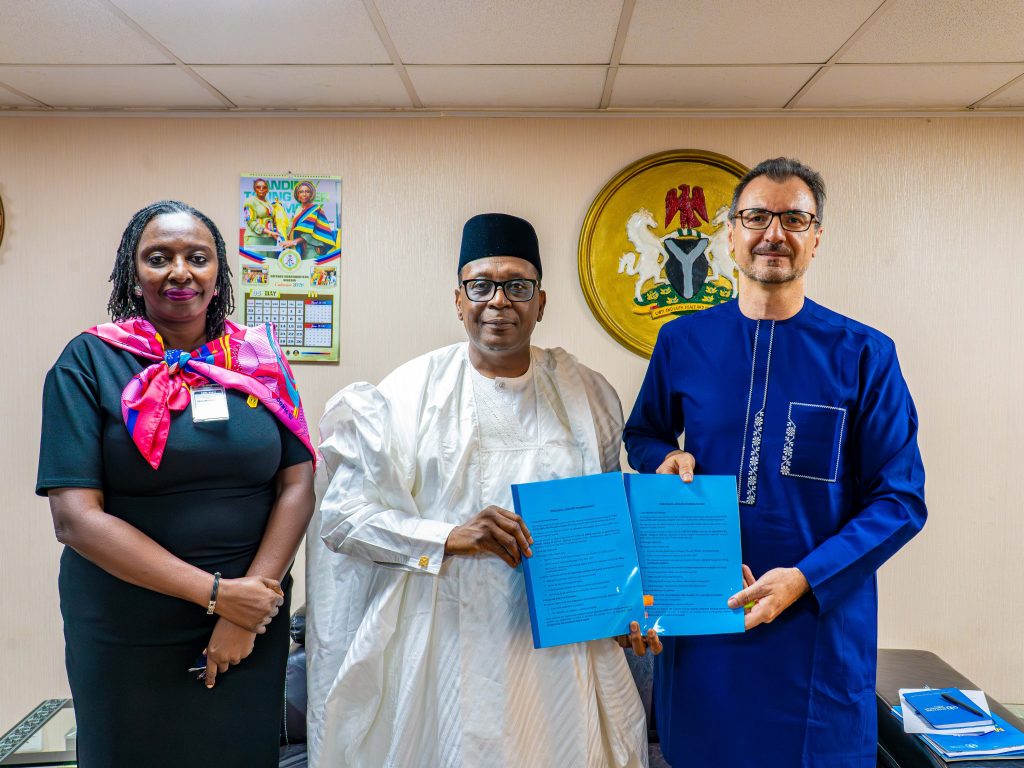
The meeting also served as a preparatory briefing for Nigeria’s participation in the 79th World Health Assembly and the upcoming 5th High-Level Ministerial Meeting on Antimicrobial Resistance (AMR), which is scheduled to take place in Abuja from June 29–30, 2026.
Through this collaborative workplan, both the WHO and the Nigerian government aim to build a resilient and equitable health sector, ensuring that national health targets are met with precision and that no citizen is left behind in the pursuit of better health outcomes.