

The World Health Organisation (WHO) Regional Office for Africa has highlighted the role of journalists in raising awareness about antimicrobial resistance (AMR), warning that stronger media coverage is needed to help the public understand the growing threat posed by drug-resistant infections.
The point was emphasised during a WHO Africa media webinar on antimicrobial resistance, moderated by Saida Swaleh, which brought together health experts, journalists and advocates to discuss how the media can improve public understanding of AMR and promote accountability in the response to the threat.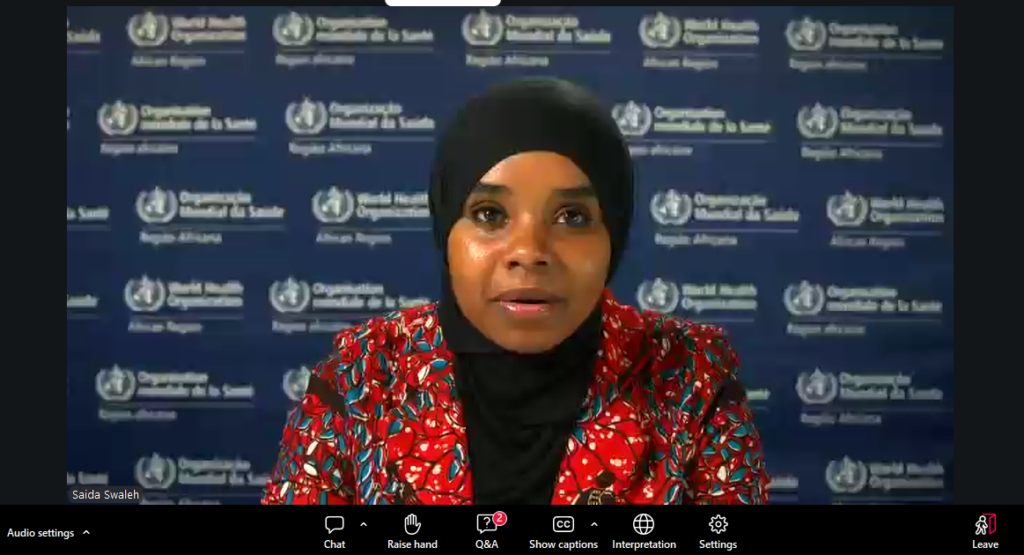
Dr Walter Fuller, WHO Africa Technical Officer leading regional AMR education, stewardship and One Health, told participants that journalists had an important role in making the health threat understandable to the public.
“For too long, Amr has been locked away in technical jargon. This is why you are here today as journalists and media personnel, you have the unique power to give this invisible threat, an urgent human face,” Fuller said.
Fuller called for reporting that goes beyond statistics to show how resistant infections affect patients, families and communities.
“We need you to shift from passive reporters to bold advocates translating abstract data into relatable stories that mobilize communities and drive policy.”
AMR Poses Growing Threat to Africa
During the webinar, Dr Nienke Bruinsma, a senior technical officer in WHO’s AMR Department, explained that antimicrobial resistance occurs when bacteria, viruses, fungi and parasites evolve to survive medicines designed to eliminate them.
She said the development makes standard treatments less effective and is driven partly by the overuse and misuse of antimicrobial medicines, as well as weaknesses in infection prevention and control.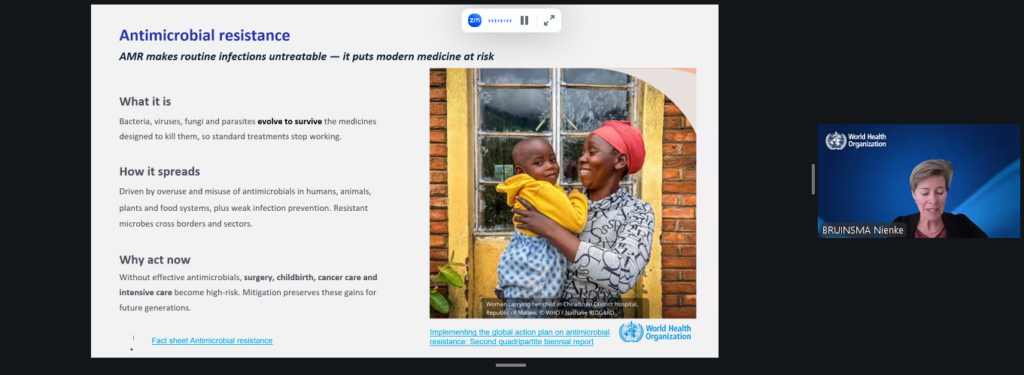
According to figures presented during the session, bacterial AMR was associated with approximately 4.71 million deaths globally in 2021, with more than one million deaths directly attributable to resistant bacterial infections.
The WHO African Region faces a particularly serious burden. Data presented at the webinar put the median AMR estimate for the region at 19.6 per cent of laboratory-confirmed bacterial infections, compared with 17.2 per cent globally.
Children under five account for a substantial proportion of AMR-related deaths, making the problem a major concern for child health.
The presentation also projected that sub-Saharan Africa could record 6.63 million direct deaths from AMR between 2025 and 2050.
Bruinsma warned that the consequences extend beyond hospitals, affecting food production, the environment, household finances and access to essential healthcare.
Without effective antimicrobials, procedures such as surgery, childbirth and cancer treatment could become more dangerous.
Only 22% of Countries Fully Implement AMR Plans
The webinar highlighted gaps between governments’ commitments to tackle AMR and the implementation of national action plans.
According to the presentation, data from the 2025 Tracking Antimicrobial Resistance Country Self-Assessment Survey showed that only 22 per cent of countries had fully implemented their AMR national action plans with monitoring in place.
In Africa, all 47 WHO Member States have developed multisectoral national action plans on AMR. However, implementation, financing and monitoring remain important challenges.
The presentation also showed progress in laboratory capacity, with 44 of the region’s 47 Member States able to conduct antimicrobial susceptibility testing for priority bacterial pathogens.
WHO emphasised the need for countries to strengthen surveillance systems, improve infection prevention, ensure equitable access to appropriate medicines and invest in research and innovation.
The organisation’s approach recognises that AMR cannot be addressed through human healthcare alone. It requires coordinated action across human health, animal health, agriculture and the environment.
Nigerian Journalist Highlights Gaps in AMR Reporting
Racheal Abujah, a public health correspondent with the News Agency of Nigeria and president of the One Health Antimicrobial Resistance Reporters Network, shared her experience covering AMR and the challenges of sustaining public attention on the issue.
Abujah explained that the death of her father following an infection that did not respond to antibiotics changed how she approached health reporting.
She said the experience motivated her to report on AMR regularly rather than limiting coverage to World AMR Awareness Week.
Her review of 356 media reports from Nigeria, Ghana, Senegal and Côte d’Ivoire revealed gaps in how the issue was covered.
According to the findings she presented, only 12.1 per cent of the reports appeared as front-page or leading stories, while approximately 64 per cent focused mainly on human health. Only 21 per cent adopted an integrated One Health approach.
The findings highlighted the need for media coverage to examine the links between human health, animal health and the environment.
Abujah encouraged journalists to engage a wider range of sources, including patients, families, health workers, farmers, pharmacists, laboratory scientists, veterinarians and policymakers.
She also stressed the importance of following up on government commitments rather than treating policy announcements as the end of a story.
“And most importantly, did anything change for the patient. This is where journalism becomes accountability.”
She added that patients’ experiences should be reported accurately and their dignity protected, with attention paid to groups whose experiences may be overlooked, including women affected during pregnancy and childbirth.
AMR Survivors Show Human Cost of Drug Resistance
The webinar also featured personal accounts from people affected by drug-resistant infections, highlighting the consequences for patients beyond clinical statistics.
Vanessa Carter, a South African AMR patient advocate and founder and executive director of The AMR Narrative, described how a resistant infection developed during a decade of facial reconstruction following a serious car accident.
Carter said the infection repeatedly returned despite treatment and hospital admissions. She eventually learned that she had a methicillin-resistant Staphylococcus aureus (MRSA) infection.
Her experience highlighted the challenges patients can face when healthcare providers lack effective communication and coordinated medical records.
Carter also emphasised the role of the media in communicating patients’ experiences to the public and policymakers.
She said reporting can help people understand the realities of resistant infections while encouraging policies that respond to patients’ needs.
The session reinforced the importance of combining scientific evidence with personal accounts to show how AMR affects people’s health, livelihoods and families.
WHO Promotes One Health Approach
The webinar also highlighted preparations for World AMR Awareness Week, scheduled for 18–24 November 2026, under the theme “One Health, One Action, Prevent AMR Now.”
Dr Diriba Mosissa of WHO headquarters explained that the annual campaign provides an opportunity for governments, health professionals, journalists and other stakeholders to raise awareness and encourage practical action.
The One Health approach recognises the connections between people, animals, plants and the environment in the spread and prevention of antimicrobial resistance.
Participants discussed how journalists could use accessible language, social media campaigns, interviews with affected people and investigative reporting to explain the issue to wider audiences.
They also highlighted the need to examine whether national AMR plans are adequately funded, whether policies are being implemented and whether interventions are improving outcomes for patients.
The webinar concluded with a call for stronger collaboration between WHO, journalists, health professionals and policymakers to improve reporting and public engagement.
By placing patients’ experiences alongside reliable data and examining the implementation of public health commitments, journalists can help make antimicrobial resistance a continuing public interest issue rather than one that receives attention only during awareness campaigns.
Share this


