The Federal Government of Nigeria has revealed that unsafe food is responsible for nearly 50 million illnesses and more than 53,000 deaths annually across the country. This alarming statistic underscores the critical and urgent need to overhaul and strengthen national food safety systems to protect public health.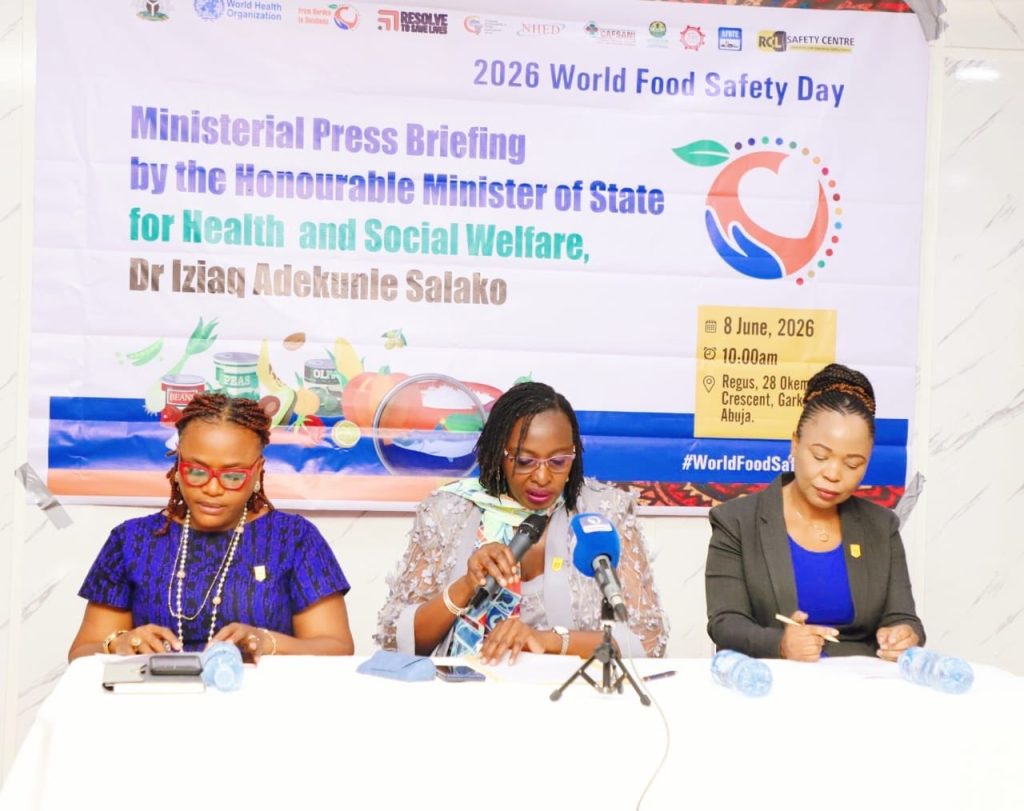
The grim reality was disclosed by the Honourable Minister of State for Health and Social Welfare, Dr. Iziaq Adekunle Salako, during the commemoration of World Food Safety Day 2026 in Abuja. Speaking under the national theme, “From Burden to Solutions – Safe Food Everywhere,” Dr. Salako emphasized that food contamination has escalated from a mere hygiene concern into a full-blown national crisis.
Children Bear the Brunt of the Crisis
The newly released data paints a devastating picture for Nigeria’s youngest demographic. Children under five years old account for more than 80 percent of the nation’s food-borne disease burden. According to health ministry estimates, over 40 million cases of diarrhoea illnesses annually are directly linked to food-borne pathogens, including Salmonella, E. coli, Campylobacter, Shigella, and Rotavirus.
“Food safety is not merely a technical issue; it is a national development priority,” Dr. Salako stated during his address. “The true cost of unsafe food is measured not only in sickness and death but in the lost cognitive, physical and developmental potential of our children.”
Government Outlines Policy Interventions
Despite the staggering statistics, Dr. Salako highlighted significant progress in the country’s food safety governance. Nigeria’s 2025 State Party Annual Report (SPAR) scored a Level 3, placing the country ahead of the World Health Organization (WHO) food safety targets for Sub-Saharan Africa and other low- and middle-income nations.
This progress is driven by the National Food Safety Management Committee and the implementation of the 2023 National Integrated Guidelines for Food-borne Disease Surveillance and Response, which have aggressively boosted outbreak response, food recalls, and risk communication. Furthermore, the government is tackling non-communicable diseases by enforcing trans-fat elimination regulations, implementing sodium reduction guidelines, strengthening the sugar-sweetened beverage tax, and developing Front-of-Pack Labelling to guide healthier consumer choices.
Environmental and Global Perspectives
The crisis is heavily compounded by deteriorating environmental factors. The Honourable Minister of Environment, Balarabe Abbas Lawal, noted that food-borne diseases in Nigeria are strongly fueled by poor sanitation, unsafe water, pollution, climate change, and unsafe agricultural practices. Corroborating this stance, Daju Kachollom, mni, the Permanent Secretary of the Federal Ministry of Health and Social Welfare, called for immediate, multi-sectoral collaboration to merge food safety and healthy diet policies into a unified national agenda.
Supporting Nigeria’s stance, the World Health Organization (WHO), represented by Dr. Pindar Wakawa, reminded stakeholders that safe food is a fundamental human right. Dr. Wakawa praised Nigeria’s regulatory advancements but urged the government to remain vigilant against emerging threats like chemical contamination to safeguard the future of its citizens.
Share this