

The United Nations Children’s Fund (UNICEF) and the UK-funded Strengthening Peace and Resilience in Nigeria (SPRiNG) Programme have reaffirmed their commitment to supporting Nigeria’s efforts to address gender-based violence (GBV) through stronger institutions, coordinated survivor-support services and improved access to justice for women and girls.
The commitment was reaffirmed at a press briefing organised by the Federal Ministry of Women Affairs and Social Development in Abuja to mark the commencement of the 2026 16 Days of Activism Against Gender-Based Violence.
Speaking at the event, SPRiNG Team Leader, Dr Ukoha Ukiwo, said the programme was strengthening institutional mechanisms for preventing and responding to sexual and gender-based violence (SGBV) and conflict-related sexual violence (CRSV).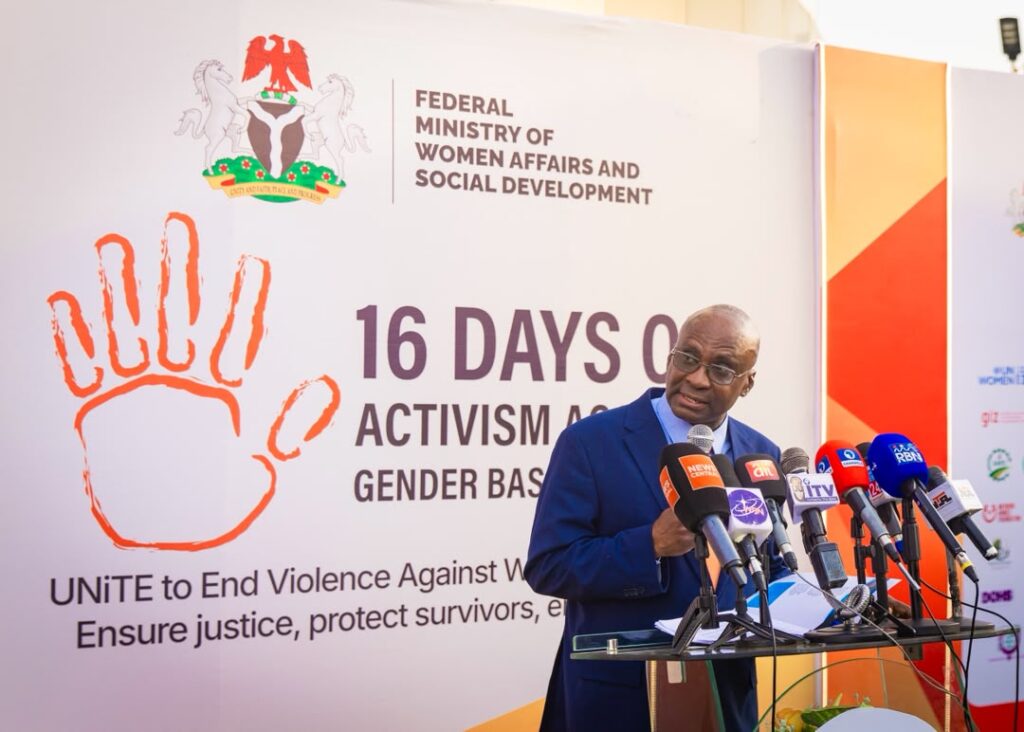
He said the interventions also focused on improving referral systems and expanding survivors’ access to medical, psychosocial, legal and protection services.
SPRiNG Supports Over 500 GBV Survivors in Benue
Highlighting the programme’s interventions, Ukiwo disclosed that SPRiNG had supported the establishment of a multisectoral Technical Working Committee on SGBV and CRSV in Plateau State to improve coordination, referrals and accountability.
In Benue State, he said “more than 500 survivors had been reached through referrals, psychosocial care and livelihood support.”
He added that the programme was improving access to justice through training for legal experts under the Police Duty Solicitor Scheme and integrating the scheme into SGBV and CRSV response systems.
The initiative has also supported capacity-building for police investigators and other justice-sector actors to strengthen the handling of violence-related cases.
According to him, community listening centres and protection desks are bringing support services closer to vulnerable populations, while radio programmes and community sensitisation activities are helping to challenge stigma, raise awareness of rights and encourage safe reporting.
Ukiwo further disclosed that SPRiNG’s gender equality, disability and social inclusion analysis, conducted in Benue, Kaduna, Plateau and Katsina States, had identified existing protection services as opportunities for further intervention while exposing barriers to access, coordination and justice.
“SPRiNG’s gender equality, disability and social inclusion analysis, conducted in Benue, Kaduna, Plateau and Katsina States, had identified existing protection services as opportunities for further intervention, while exposing barriers to access, coordination and justice,” he said.
He stressed the importance of integrating violence prevention into institutional plans and budgets, strengthening law enforcement and ensuring survivors receive timely, confidential and accessible services.
“Strengthening coordinated action requires integrating prevention into institutional plans and budgets, working with relevant security and justice institutions to enforce laws, and connecting survivors to timely, confidential and accessible services,” he said.
The SPRiNG Team Leader also highlighted the need for effective implementation of Nigeria’s Third National Action Plan on Women, Peace and Security, alongside relevant legislation, to strengthen accountability, access to justice and women’s leadership before, during and after conflicts.
UNICEF Highlights Scale of Violence Against Girls
Also speaking, UNICEF Child Protection Specialist, Dr Godwin Chinedu Odo, who represented the UNICEF Country Representative, Wafaa Saeed, emphasised the need to strengthen child protection systems and address violence against women and girls through prevention, survivor-centred services and accountability.
Odo, who recently participated in the Second Global Ministerial Conference on Ending Violence Against Children in Manila, Philippines, said the gathering brought together 1,370 delegates from more than 134 countries to review progress and commitments made at the inaugural conference in Bogota, Colombia, in 2024.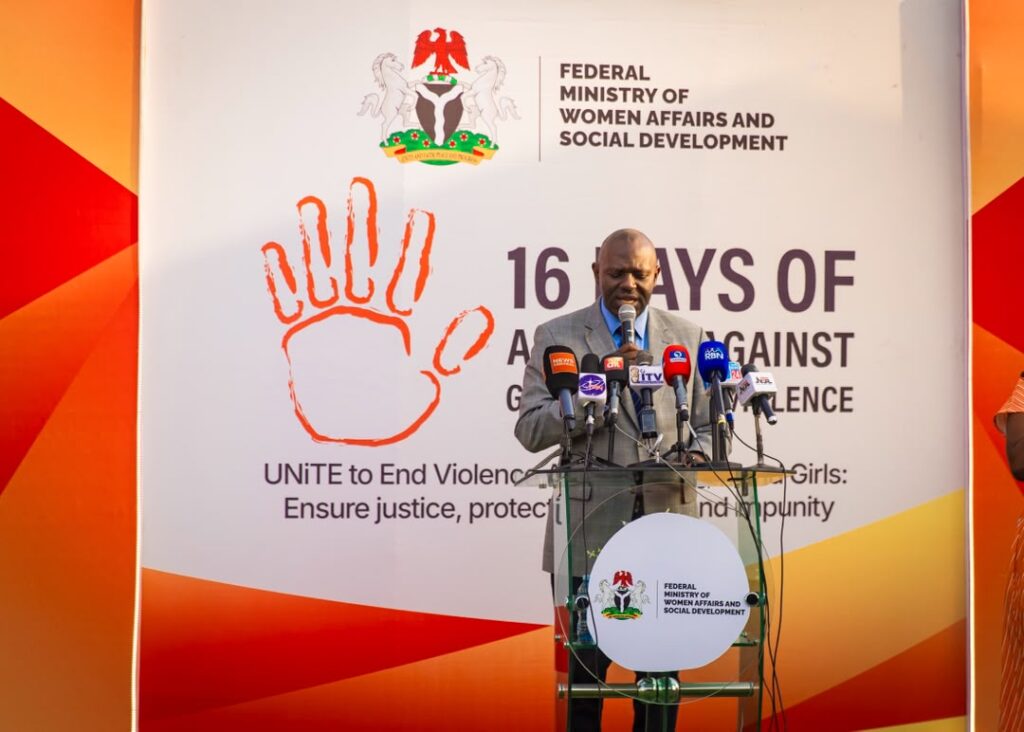
Citing global statistics, he disclosed that almost one in three girls aged 15 to 19 had experienced intimate-partner physical or sexual violence, non-partner sexual violence, or both.
“Behind every statistic on violence is a human story,” he said, stressing that survivors must be heard, believed, protected and supported.
He explained that UNICEF’s prevention approach included supporting families and communities, creating safer schools and digital spaces, challenging harmful social norms and ensuring children know where to access help.
Odo also urged media organisations to protect survivors’ identities and dignity, challenge the normalisation of violence and hold institutions and decision-makers accountable.
Stakeholders Stress Collective Action Against GBV
Both organisations emphasised that sustained collaboration among government institutions, civil society organisations, women-led groups, traditional and religious leaders and the media remained essential to preventing violence and strengthening protection systems.
They maintained that coordinated efforts were necessary to ensure women and girls could live safely, exercise their rights and contribute meaningfully to peaceful and inclusive development.
Share this


