

By Peter Emmanuel
The African Union (AU) and the United Nations (UN) have reaffirmed their commitment to strengthening cooperation on Africa’s economic, peace and security challenges, including debt sustainability, food security and reform of the international financial system.
The commitment was made on the margins of the 81st United Nations General Assembly (UNGA81), where AU Commission Chairperson Mahmoud Ali Youssouf and UN Secretary-General António Guterres co-chaired a high-level meeting on cooperation between the two institutions.
The meeting focused on ways to support Africa’s efforts to address structural challenges and strengthen its position in the international system, with both sides agreeing on the need for closer coordination between the AU and UN.
AU, UN Review Conflicts Across Africa
The two institutions reaffirmed the strategic importance of their partnership in addressing peace and security challenges on the continent.
They called for stronger African peace and security structures, improved preventive diplomacy and mediation, as well as adequate resources to support African-led efforts to resolve conflicts.
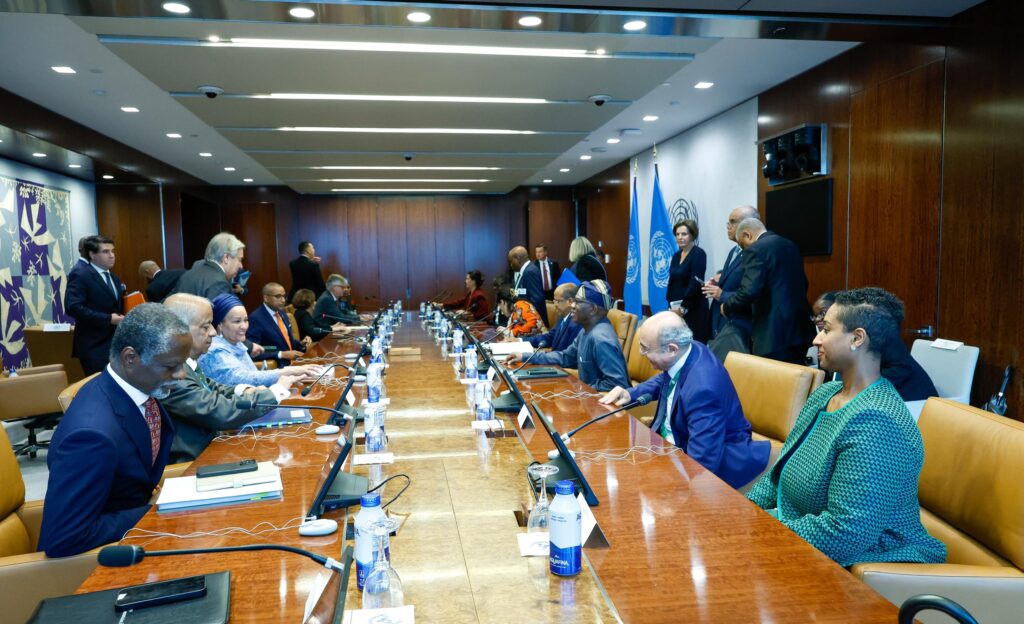
The meeting reviewed developments in the Sahel, Libya, Sudan, South Sudan, Somalia and the Democratic Republic of the Congo (DRC), with the AU and UN also discussing continued support for mediation efforts led by Togo in the DRC.
The UN was reaffirmed as a key partner of the AU in addressing peace and security challenges, with both sides stressing the need to strengthen cooperation in preventing conflicts and supporting peaceful solutions.
Focus on Debt, Food Security and Critical Minerals
Economic challenges facing African countries also featured prominently at the meeting, with discussions focusing on reform of the international financial architecture and the need to improve debt sustainability across the continent.
The AU and UN also discussed the importance of ensuring that African countries derive greater value from their critical mineral resources, which are increasingly important to global industries and supply chains.
Both sides expressed concern over external shocks, including conflicts, disruptions to global supply chains and maritime chokepoints, which they said were putting additional pressure on African economies and food security.
They also considered the potential impact of climate-related events and agreed on the need to identify countries most vulnerable to food insecurity and develop contingency measures through stronger coordination and financing.
The AU and UN agreed to pursue concrete follow-up actions, including finalising their joint roadmap beyond 2026 and planned engagements on Libya and Sudan, as part of efforts to strengthen cooperation and address the continent’s economic and security challenges.
Share this