
In a decisive move toward climate action and operational resilience, the United Nations in Nigeria officially commissioned Phase 1 of the UN House Solarization and Smart Energy Upgrade.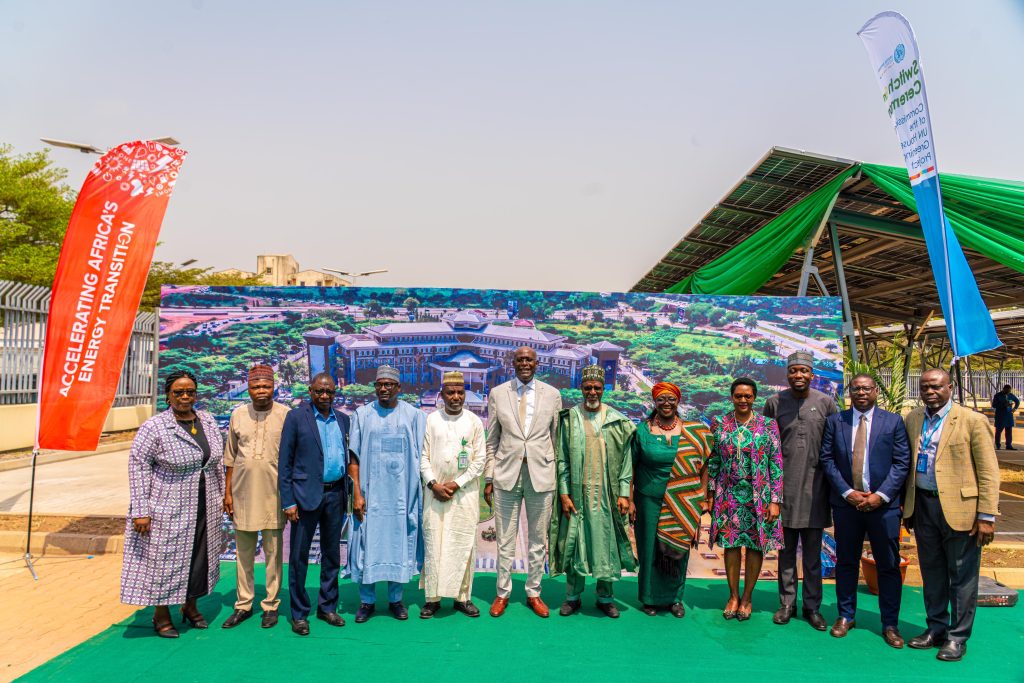
The project marks a significant shift away from fossil fuel dependency for the more than 20 UN agencies operating within the capital’s diplomatic hub.
The upgrade features a 400 kWp solar PV microgrid, meticulously engineered for future expansion to 700 kWp with integrated battery storage. This transition is expected to drastically reduce carbon emissions while ensuring the greening of UN operations in West Africa.
Overcoming Energy Instability
The move to renewables comes as a direct response to Nigeria’s persistent energy challenges. Records indicate that the UN House alone suffered over 340 power outages in 2023, a figure that frequently threatened the continuity of critical humanitarian and development programmes.
By utilizing hybrid solar-grid integration, the facility now boasts nearly uninterrupted power, shielding international operations from the instability of the national grid and the rising costs of diesel generation.
A Milestone for Sustainability
During the ribbon-cutting ceremony, high-level stakeholders and government officials gathered to witness the Switch-On. Mohamed Fall, the UN Resident Coordinator in Nigeria, highlighted the broader implications of the project for the nation’s energy sector.
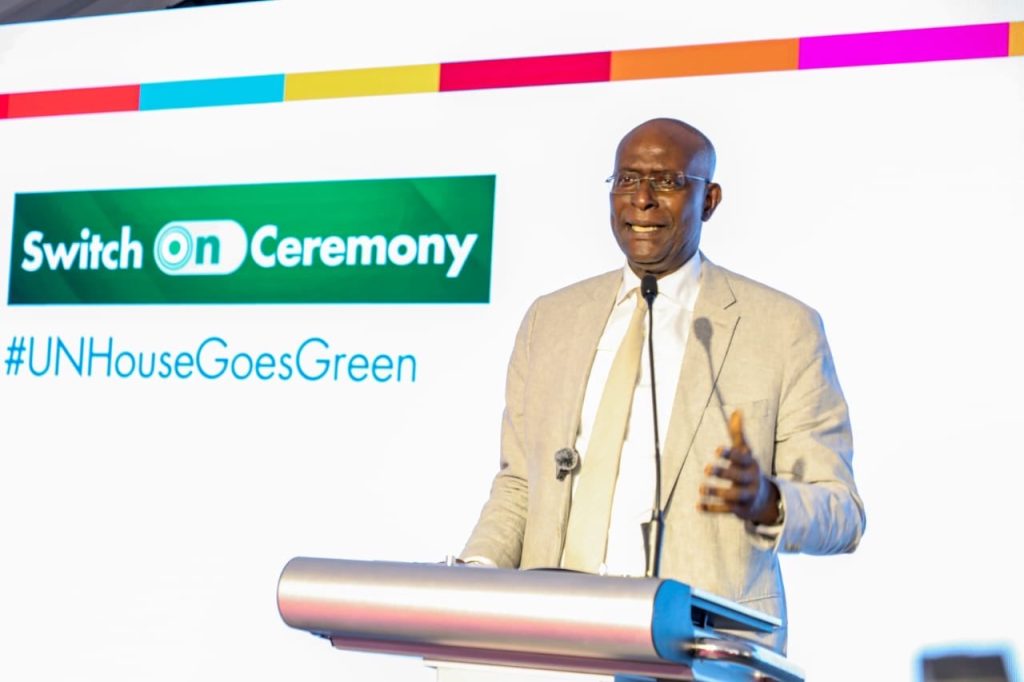
“Solar energy has the potential to transform power generation, boost industry, and expand access across Nigeria. This initiative is not just about powering our offices; it is about reaffirming a shared commitment to climate action and supporting the country’s own clean energy transition.” — Mohamed Fall, UN Resident Coordinator.
Fall also praised Nigeria’s growing momentum in the sector, noting that in 2025, the country became Africa’s second-largest solar market, experiencing a growth rate of over 140%.
Strategic Partnerships
The ceremony was attended by the Minister of Environment, Balarabe Abbas Lawal, underscoring the collaboration between the UN and the Federal Government of Nigeria. The Greening Initiative is designed to serve as a blueprint for other diplomatic missions and large-scale institutions in the region.
As the UN moves toward the next phase of the project, officials emphasized that clean energy is no longer just an environmental preference—it is financially sound and operationally essential for sustainable development in the 21st century.
Share this


