

President Bola Ahmed Tinubu has ordered all ministries, departments, and agencies (MDAs) to deepen their digital operations, declaring that the era of manual inefficiency in the nation’s bureaucracy must end.
The President revealed that 38 ministries and extra-ministerial departments have officially transitioned to a secure, paperless, end-to-end electronic workflow system. Speaking at the opening of the International Civil Service Conference 2026 in Abuja on Wednesday, Tinubu stated that the country’s public service is undergoing a profound digital evolution aimed at driving speed, transparency, and inclusive economic growth.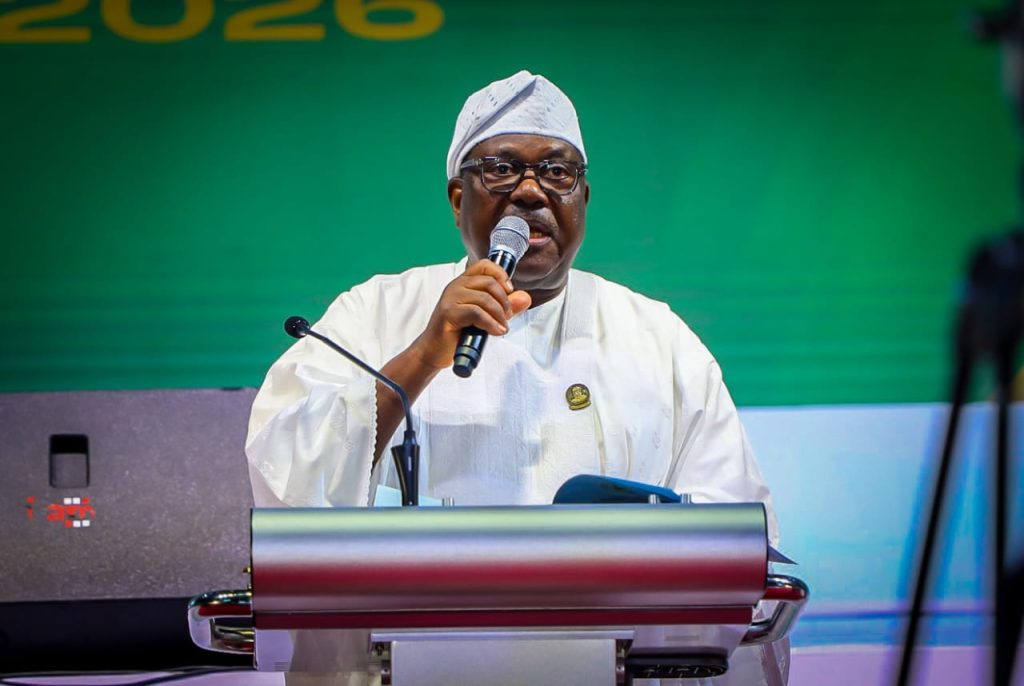
The President’s directive and progress update were delivered on his behalf by the Secretary to the Government of the Federation, Senator George Akume.
Moving From Aspiration to Execution
According to the presidency, the rapid transition away from paper-based operations signals a major victory for the administration’s Renewed Hope Agenda. The civil service, long criticized for bureaucratic bottlenecks, is reportedly moving away from slow, manual systems toward data-driven decision-making.
Reflecting on the pace of the reforms, President Tinubu highlighted how quickly the digital transition has materialized over the past year.
“When we spoke of digitalisation in 2025, some may have considered it an ambition for the distant future. Today, with 38 Ministries and Extra-Ministerial Departments operating on a secure, paperless and end-to-end electronic workflow system, we are sending a clear message: Nigeria is building a public service that enables progress.”
The President insisted that public institutions must become more responsive to the needs of ordinary Nigerians, urging civil servants to foster a culture of speed and transparency.
Personnel Audit and Global Digital Partnerships
Beyond the software transition, the federal government is also auditing its workforce to ensure civil servants are equipped for modern governance. The administration announced that a comprehensive Personnel Audit and Skills Gap Analysis is nearing completion. The exercise is designed to identify competency gaps and strategically reposition public workers for 21st-century administrative demands.
The internal overhaul ties directly into Nigeria’s broader international economic push. The President linked these domestic civil service reforms to Project BRIDGE (Building Resilient Digital Infrastructure for Growth), a initiative he recently pitched to global investors at the Africa CEO Forum in Rwanda. The government aims to open up Nigeria’s digital ecosystem to foreign investors and development partners to boost job creation, connectivity, and public sector efficiency.
Praise for Civil Service Leadership
The President credited the recent milestones to the disciplined leadership within the civil service structure, specifically praising the Head of the Civil Service of the Federation, Didi Esther Walson-Jack. Walson-Jack has been spearheading the reforms under the Federal Civil Service Strategy and Implementation Plan 2021–2025.
Tinubu explicitly pointed to the integration of cutting-edge tools like Service-Wise GPT within the bureaucracy as proof of what can be accomplished through modern institutional commitment.
Closing his address, the President challenged conference participants to treat the gathering as a results laboratory. He urged stakeholders to focus on structural strategies that will make these digital reforms irreversible, ensuring long-term accountability across all facets of Nigerian public institutions.
Share this


