

The Senate has begun a major review of Nigeria’s Sugar-Sweetened Beverage (SSB) Tax following warnings from the Minister of Health, civil society groups, and medical advocates that the current N10 per litre charge is ineffective and has failed to protect Nigerians from the rising burden of non-communicable diseases linked to sugary drinks.
The review opened at a public hearing in Abuja on Thursday, organised by the Senate Joint Committee on Finance, Customs and Excise, to consider a bill seeking to replace the fixed N10 duty with a stronger percentage-based levy and to earmark part of the revenue for public-health programmes.
The amendment bill, sponsored by Senator Ipalibo Harry Banigo, proposes shifting from a specific tax to an ad valorem levy tied to the retail price of sugary drinks an approach public-health experts say is more effective in reducing consumption and raising sustainable health funding.
Representing the Senate President, Senator Adeniyi Adegbomire (SAN) described the proposal as both “a fiscal and a public-health investment strategy,” saying the current rate has lost its value in today’s economy.
“Clearly, the N10 per litre excise is no longer realistic, not only from the value of the naira but more importantly the cost of providing health interventions,” he said.
The Minister of Health and Social Welfare, Prof. Muhammad Ali Pate, backed the amendment and warned that Nigeria is witnessing a surge in diseases such as diabetes, stroke, heart conditions, and obesity many tied to excessive sugary-drink consumption.
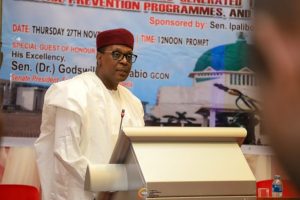 Pate urged lawmakers to raise the SSB tax to at least 20 percent and earmark 40 percent of the revenue for health promotion, arguing that such measures would serve the interests of “230 million Nigerians” and create “a valuable funding stream” for universal health coverage.
He added that the existing N10 rate introduced in 2021 when a typical bottle of soft drink sold for about N150 has been eroded by inflation and no longer influences consumer behaviour.
Civil society organisations including Corporate Accountability and Public Participation Africa (CAPPA), CISLAC, the Nigerian Cancer Society, the Diabetes Society of Nigeria, the Nigerian Tobacco Control Alliance, and the National SSB Tax Coalition also supported the amendment.
CAPPA’s Executive Director, Akinbode Oluwafemi, urged the Senate to adopt a retail-price-based excise of 50 percent, with a minimum floor of 20 percent, in line with WHO guidelines. He said the current N10 tax has “lost its value and its purpose,” insisting that a percentage-based structure would reduce consumption, push the industry toward healthier formulations, and generate measurable health gains.
Oluwafemi also called for clear earmarking of SSB tax revenue for public-health programmes, especially for preventing and managing non-communicable diseases.
The Vice President of the Diabetes Society of Nigeria, Dr. Mansur Ramalan, described rising diabetes prevalence now around 7 percent as a national concern and dismissed fears that a higher tax would reduce government revenue. According to him, revenue “will increase by 200 percent” with a stronger levy.
The Ministry of Finance signaled broad alignment with the objectives of the bill but noted that the Customs and Excise Act gives the president the power to vary tax rates. It urged the Senate to consider current efforts by the ministry to review excise regimes for both sugary and alcoholic drinks.
However, the Joint Committee insisted that the National Assembly has constitutional authority to amend legislation and noted that Nigerians have repeatedly called for a stronger SSB tax as a matter of public health.
Nigeria first introduced the SSB tax in 2021 as part of efforts to curb excessive sugar consumption, reduce the prevalence of diet-related diseases, and raise revenue for health programmes. But experts say the current rate is too low to produce meaningful change.
The Committee is expected to submit its report to the Senate after reviewing all stakeholder submissions.
Share this


