
Yiaga Africa has said the results declared by the Independent National Electoral Commission (INEC) for the 2026 Osun governorship election are in line with its independent observation of the poll.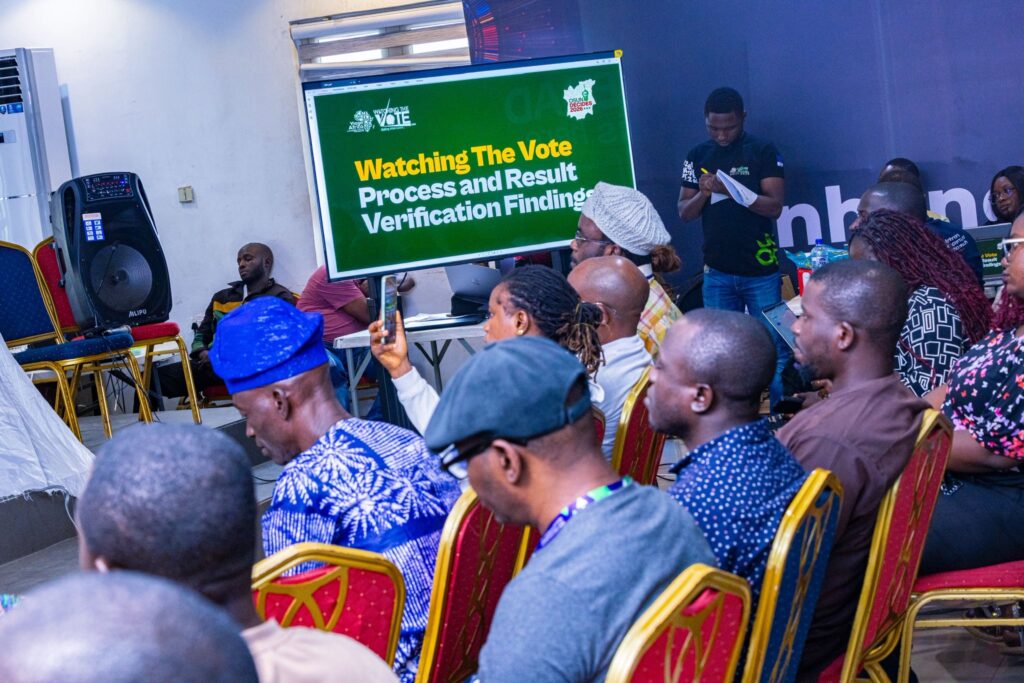
The organisation said this in its final statement on the election released on Sunday, August 16, after deploying observers across the 30 local government areas of the state.
Yiaga Africa said its findings were based on reports from 289 of 300 sampled polling units, representing 96 per cent of the polling units covered by its Process and Results Verification for Transparency (PRVT) methodology.
Results fall within Yiaga Africa’s estimate
According to the organisation, its observation put the Accord Party’s expected vote share between 50.3 per cent and 54 per cent, while the African Democratic Congress (ADC) was estimated at between 1.4 per cent and 2.1 per cent.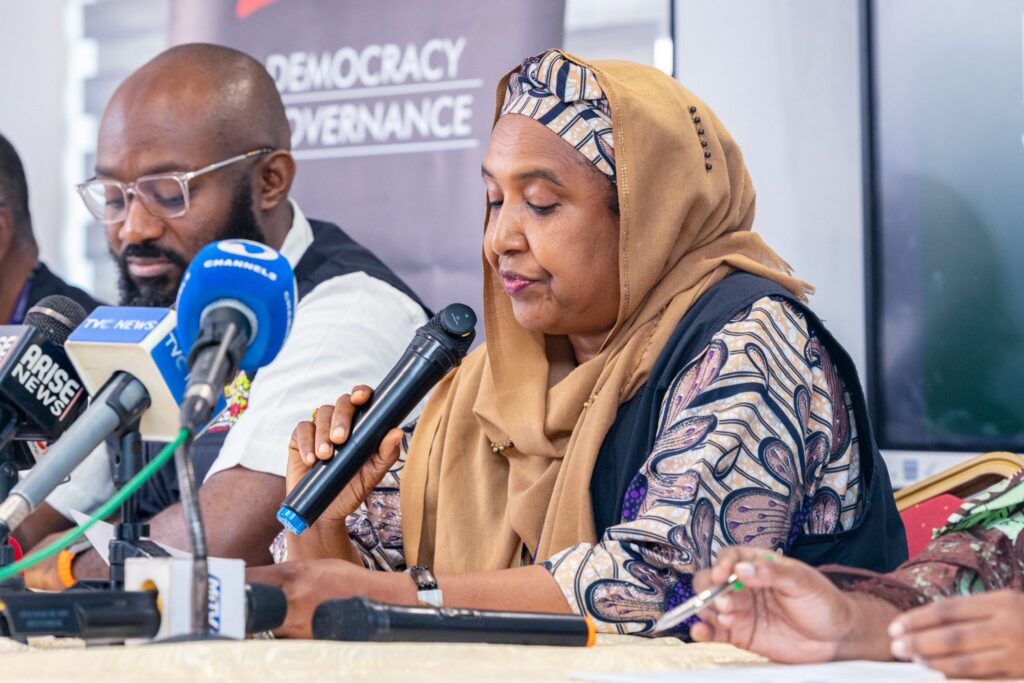
The All Progressives Congress (APC), it said, was expected to score between 43 per cent and 46.8 per cent.
Yiaga Africa said the official results announced by INEC fell within the ranges recorded by its observers.
It said this suggests that the results announced by INEC reflect the votes counted at polling units, although concerns over vote buying and voter inducement remain.
“The consistency of the results therefore speaks specifically to the accuracy of the tabulation of polling-unit results,” the organisation said.
BVAS worked in 80% of polling units
Yiaga Africa also reported that election-day logistics improved despite the late changes to the ballot papers following the court-ordered inclusion of the Social Democratic Party.
The organisation said 48 per cent of polling units had started accreditation and voting by 8:30am, with the figure rising to 96 per cent by 9:30am.
On the Bimodal Voter Accreditation System (BVAS), the group said the devices were deployed to all polling units it observed.
However, BVAS worked properly in 80 per cent of the polling units, while 20 per cent recorded malfunctions which were later fixed.
Yiaga Africa also recorded cases where BVAS failed to authenticate the fingerprints or facial details of some elderly voters.
Downloadable PVCs caused some problems
The election also provided an early test of the use of downloadable Permanent Voter Cards under the Electoral Act 2026.
Yiaga Africa said voters presented downloadable PVCs in 23 per cent of the polling units it monitored.
While most of those voters were accredited, the organisation said some voters were denied accreditation in 7 per cent of polling units where downloadable PVCs were presented.
It also reported a polling unit where all voters who presented downloadable PVCs were reportedly denied accreditation.
IReV delay raises concern
The organisation said the INEC Result Viewing portal, IReV, played an important role in making polling-unit results available to the public.
But it noted that the platform experienced a delay on election night.
According to Yiaga Africa, uploads stopped at 3,292 polling-unit results, leaving 471 results outstanding, before transmission resumed at about 11:50pm.
It called on INEC to explain the delay, saying timely uploads and clear communication are important to maintaining public confidence in the platform.
Voters showed strong interest in the process
Yiaga Africa estimated voter turnout at between 42.5 per cent and 44.8 per cent, while INEC announced a turnout of 43 per cent.
The organisation said the figure was within its estimated range.
It also praised voters who stayed at polling units to watch the counting and announcement of results and followed the process to ward and local government collation centres.
Yiaga Africa said such involvement helped protect the process against manipulation, but added that citizens should not be expected to take over the responsibility of protecting electoral institutions.
Security agencies get commendation
The group also praised security personnel for what it described as generally professional conduct during the election.
This was despite concerns about violence and inflammatory statements during the campaign period.
Yiaga Africa said the Osun election showed that security agencies could maintain a strong presence without unnecessarily interfering with the voting process.
It, however, urged them to do more to tackle vote buying, intimidation and electoral violence.
Yiaga Africa wants INEC to fix gaps before 2027
Looking ahead to the 2027 general election, Yiaga Africa said INEC needs to build on what worked in Osun and address the problems that emerged.
The organisation called for a post-election technical audit of BVAS, better testing and maintenance of the devices and clearer guidance on the use of downloadable PVCs.
It also wants INEC to explain the biometric failures recorded during accreditation and improve the training and supervision of ad hoc officials.
Yiaga Africa further called on security agencies, the EFCC and ICPC to step up action against voter inducement and prosecute those involved, including party financiers and agents.
The organisation said it would release a more detailed report as it begins preparations for its wider election observation activities ahead of the 2027 general elections.
Share this


