

The Nigeria Civil Society Situation Room has raised concerns over vote buying, BVAS challenges and delays in the distribution of election materials during the Osun State governorship election held on Saturday.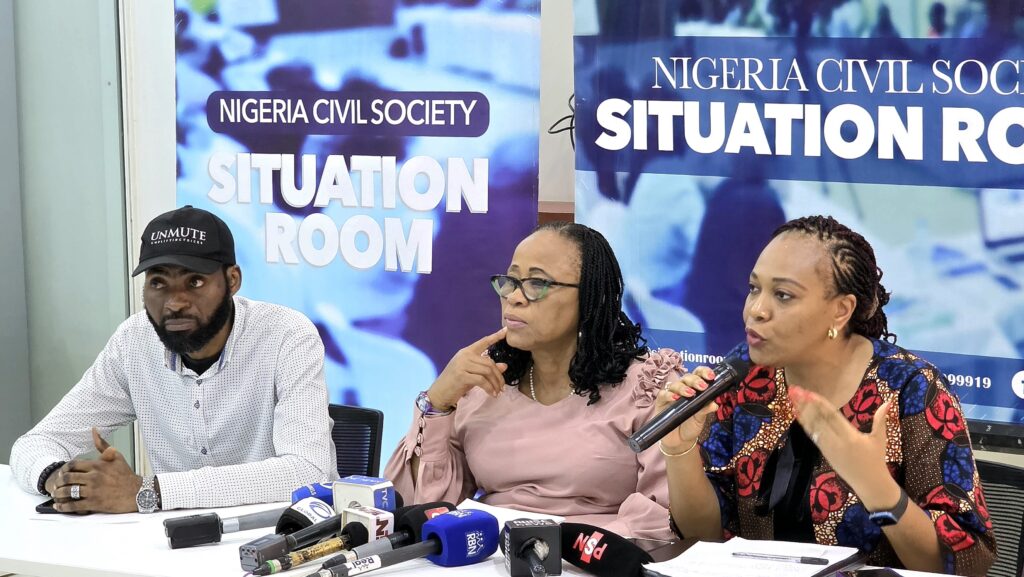
In its final report issued on Monday, the group said the election was largely peaceful, but noted several issues that needed to be addressed before the 2027 general elections.
The Situation Room deployed observers across the 30 local government areas of the state, working with the CLEEN Foundation, Centre for Democracy and Development (CDD) and Kimpact Development Initiative (KDI). More than 300 accredited observers were involved in the exercise.
Election largely peaceful
The group commended Osun voters for coming out to participate in the election, saying the process was generally calm across the areas observed.
It said voters who were still in queues by the 2:30pm closing time were allowed to vote, while election officials and security personnel generally followed the required procedures.
Figures released by INEC showed that 1,906,390 out of 2,339,233 registered voters collected their PVCs, representing 81.50 per cent.
The total votes cast stood at 1,005,800, giving a voter turnout of about 43.2 per cent.
BVAS delays affected voters
One of the major issues highlighted by the Situation Room was the performance of the Bimodal Voter Accreditation System (BVAS).
The group said some polling units experienced long queues and delays, particularly where many registered voters had to depend on a single BVAS machine.
Problems were reported in several local government areas, including Ila, Irepodun, Ayedaade and Irewole.
In Ila, observers reported that the BVAS had difficulty recognising some elderly voters. In Irepodun, fingerprint authentication reportedly failed at one polling unit, forcing officials to rely on facial verification.
Similar complaints were recorded in Ayedaade and Irewole, where the machines were said to be slow and struggled to recognise some voters’ faces.
The Situation Room said the problems showed that technology can only improve elections when the systems work properly and are adequately deployed.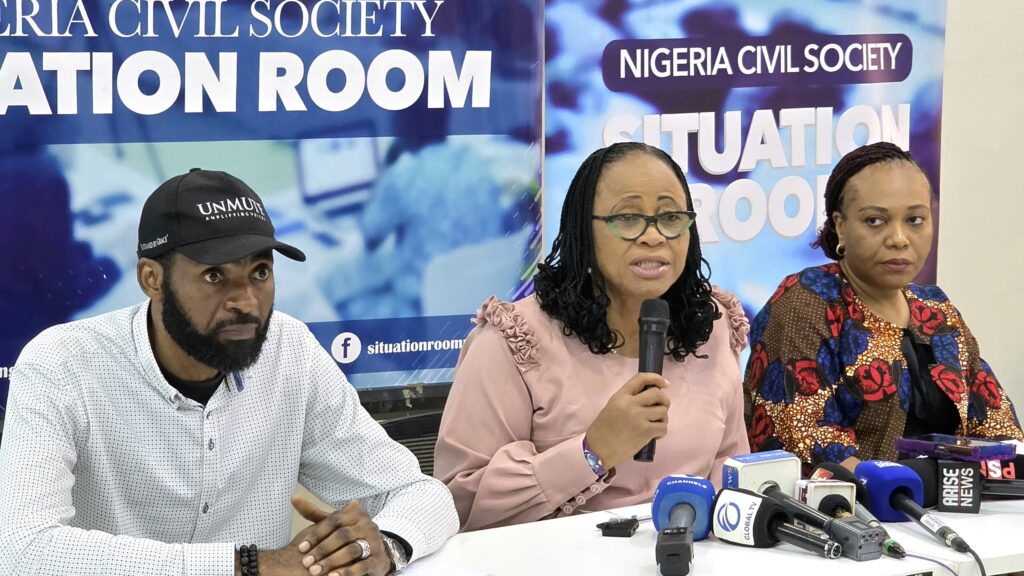
It also noted that the uploading of results to the INEC Result Viewing Portal, IReV, progressed steadily, with 98.43 per cent of results uploaded as of August 16.
Vote buying reported in some areas
The Situation Room said it was particularly worried by reports of vote buying and voter inducement in different parts of Osun.
According to the group, the practice appeared to have become more discreet but remained a threat to the credibility of elections.
At a polling unit in Isekan Local Government Area, party agents were reportedly seen calling voters aside after voting and checking their names against a list.
A similar report came from Irepodun, where voters were allegedly asked to write their names with party agents after casting their ballots.
In Ife East, observers reported alleged vote trading involving different political parties. Voters were reportedly asked to indicate the party they voted for before their names and phone numbers were recorded.
The group also reported the sharing of jollof rice and drinks at a polling unit in Isokan, saying it contributed to disorder at the location.
The Situation Room said vote buying undermines voters’ freedom to make their own choices and called for stronger action against those involved.
Late ballot production caused delays
Another issue raised was the late addition of the SDP candidate to the ballot following a Federal High Court judgment delivered on July 22.
The Situation Room said the development forced INEC to reproduce ballot papers and result sheets, which affected the arrival and distribution of sensitive materials in some areas.
Its observers reported that voting started in 87 per cent of the polling units monitored between 7am and 9:30am, although some locations recorded delays.
The group said the situation should be considered ahead of 2027, noting that late court decisions involving candidates can affect ballot printing, logistics, voter education and other parts of the election timetable.
Security situation remained calm
The Situation Room also commended security agencies for maintaining a generally peaceful atmosphere on election day.
This, it said, was important because the political environment before the election had been tense.
However, observers still recorded isolated cases of harassment, thuggery and vote buying.
The group urged security agencies to improve their response to electoral offences and ensure that those responsible are investigated and prosecuted.
Polling units still not fully accessible
The observers also found gaps in the accessibility of some polling units for persons with disabilities.
The Situation Room said bold posters meant to assist deaf voters were available in most of the polling units observed.
However, some polling locations were difficult to reach because of gutters and staircases, while disability-friendly facilities were limited in many areas. It also reported that some polling units did not have Form EC40H, which is used to record information on voters with disabilities.
Lessons for 2027
The Situation Room said the Osun election offered useful lessons for Nigeria as preparations begin for the 2027 general elections.
It called on INEC to carry out a detailed review of the election, particularly its logistics, BVAS performance, polling unit opening times, result transmission, security arrangements and accessibility of polling units.
The group also urged INEC to involve political parties, civil society organisations, observers and the media in the review.
It said the process should not be treated as an internal exercise but as an opportunity to identify what worked and what needs to change.
The Situation Room further called on security agencies and the Economic and Financial Crimes Commission to strengthen efforts to detect and prosecute cases of vote buying.
Political parties, it added, should improve their internal democratic processes and focus on campaigns based on issues rather than inducement.
“Technology alone cannot guarantee credible elections,” the Situation Room said, stressing that electoral integrity depends on the combined efforts of INEC, political parties, security agencies, the judiciary, citizens, observers and the media.
The group also called for electoral disputes involving candidates to be resolved within the required constitutional and legal timelines to avoid last-minute disruptions.
Situation Room urges peaceful post-election period
The Situation Room praised Osun voters for participating in the election and urged candidates and their supporters to remain peaceful.
It called on those dissatisfied with the outcome to use the available legal channels to seek redress.
The group also urged the governor-elect, political parties and citizens to use the post-election period to strengthen accountability and inclusive governance in the state.
It said the priority ahead of 2027 should be to build on the positive aspects of the Osun election while addressing the weaknesses identified during the process.
The final statement was signed by Y.Z. Ya’u, Convener of the Situation Room, and Mma Odi and Celestine Odo, Co-Conveners.
Share this


