
Eunice Afolabi
The United Nations Children Fund (UNICEF) has disclosed that Nigeria needs about N3 billion annually to improve access to clean water in the country.
MAPNEWS reports that UNICEF representative in Nigeria, Peter Hawkins, made this known while speaking with newsmen.
Hawkins noted that the boost in population is taking Nigeria backward in improving access to clean water.
He explained that Nigeria needs to seek alternative means to improve access to clean water, adding that sustainable water storage is needed to prevent acute shortages.
READ ALSO: Address Water Scarcity ‘immediately and boldly’, urges UN Agriculture Agency Chief
Hawkins stated that, “In terms of provision of clean water, there are two levels. The actual increase has been, I think it was, about 10inent or 11 percent increase about access to clean water.
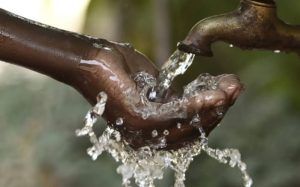
“But when you look at the population growth and where the population has moved to, I am afraid Nigeria is going backward on access to clean water.
“Nigeria relies a lot on the water table and surface water. With the water table with climate change and the massive population, Nigeria potentially has a crisis looming in the future.
“I am talking about 10, 20, 30 years and its reliance on surface water. Without the infrastructure to meet it, it is always going to be a burden on the country.”
The UNICEF representative warned that if the government and relevant agencies does not step into action now the consequences would be dire in the next few decades.
“So, it has to look at different ways of capturing water, making water available, especially in the urban areas, piping water and making it better available — that will require considerable investment.
“So, the data now is there and that is owned by and produced by the ministry of water resources for state-level entities. So, you can see where your state is going and what is required, but then it requires massive investment.”
“The level of investment I think, if I remember correctly, is between the region of N3 billion a year if Nigeria were to catch up with any sort of reasonable level of access to clean water and good sanitation.
“That level of investment, it needs to take place, and if it doesn’t take place, I am afraid, over the next 20, 30 years, that Nigeria will be faced with serious consequences.
“I will give you one statistic that I know from water in primary healthcare centers — it has dropped from seven to six percent year on year. So, only six percent of primary healthcare centers across the country have access to clean water.”
Share this


