

By Esther Olaoluwa |
The MTN Foundation, in partnership with SAIL Innovation Lab and Co-Creation Hub, has trained educators across Nigeria on the use of artificial intelligence tools to improve teaching and learning as part of its ongoing 12-week Teachers Programme.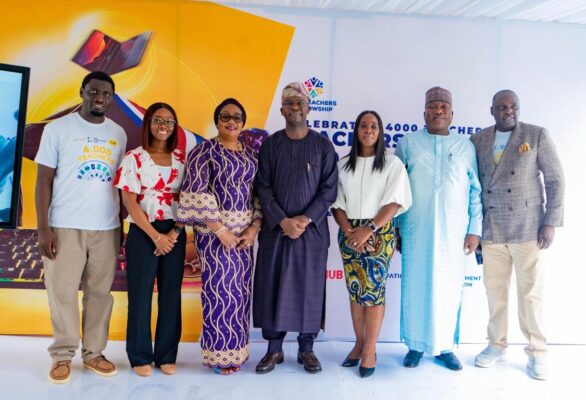
The programme, established in collaboration with the Senator Abiru Innovation Lab (SAIL), is designed to equip classroom teachers with digital skills and practical knowledge to integrate emerging technologies into teaching and learning.
Teachers Gain Practical AI Skills
The 10th week of the programme featured a virtual training session facilitated by Oluwatobi Olayanju, a data scientist and business analyst at Data Science Nigeria, who took participants through AI literacy, responsible technology use and the practical application of AI in lesson delivery.
The session brought together educators from across the country who have participated in the programme since its commencement.
Participants were exposed to digital tools and applications covering areas such as 2D animation, cloud-based note-taking, AI-assisted lesson planning and content creation.
Olayanju also introduced educators to different AI tools that can support lesson planning, visual design, content creation and student assessment, including chatbots, text-to-video and text-to-audio applications and assessment generators.
He also introduced participants to Ditch That Textbook, a platform that provides educators with resources and tools for integrating technology into classroom practice.
According to Olayanju, educators can use the tools to improve lesson planning, create visual learning materials and develop multimedia content that can make classroom experiences more engaging for students.
Programme Addresses Digital Skills Gap
The training comes amid concerns over the challenges facing Nigeria’s education sector, including the large number of children currently out of school and the need to strengthen the capacity of teachers already working in classrooms.
The United Nations Educational, Scientific and Cultural Organisation (UNESCO) estimates that more than 10.2 million primary school-aged children in Nigeria are out of school, while the figure rises to nearly 20 million when secondary-school-aged adolescents are included.
The programme organisers said equipping teachers with digital skills remains an important part of improving learning outcomes, particularly as technology continues to reshape education.
The training also builds on the need for stronger digital skills among educators across Africa. A 2022 survey by the Brookings Institution found that fewer than 30 per cent of teachers in sub-Saharan Africa had received digital skills training.
Teachers Test Knowledge Through Interactive Session
The 10th-week session also featured an interactive quiz that tested participants on lessons covered during the programme.
Feedback from participating educators indicated gains in productivity tools, AI-assisted lesson planning and student assessment design.
Joy Medupin, who manages the training component of the programme on behalf of Co-Creation Hub, described the engagement among participants as encouraging.
With two weeks of training remaining before the final project phase, organisers said the programme is progressing towards developing a cohort of educators equipped to use digital and AI-powered tools in teaching, learning and assessment.
Share this


