

Malala Fund has announced a major leadership transition, with Nabila Aguele set to take over as Chief Executive Officer, marking what the organisation describes as a new chapter grounded in continuity, purpose and a strengthened focus on girls’ education globally.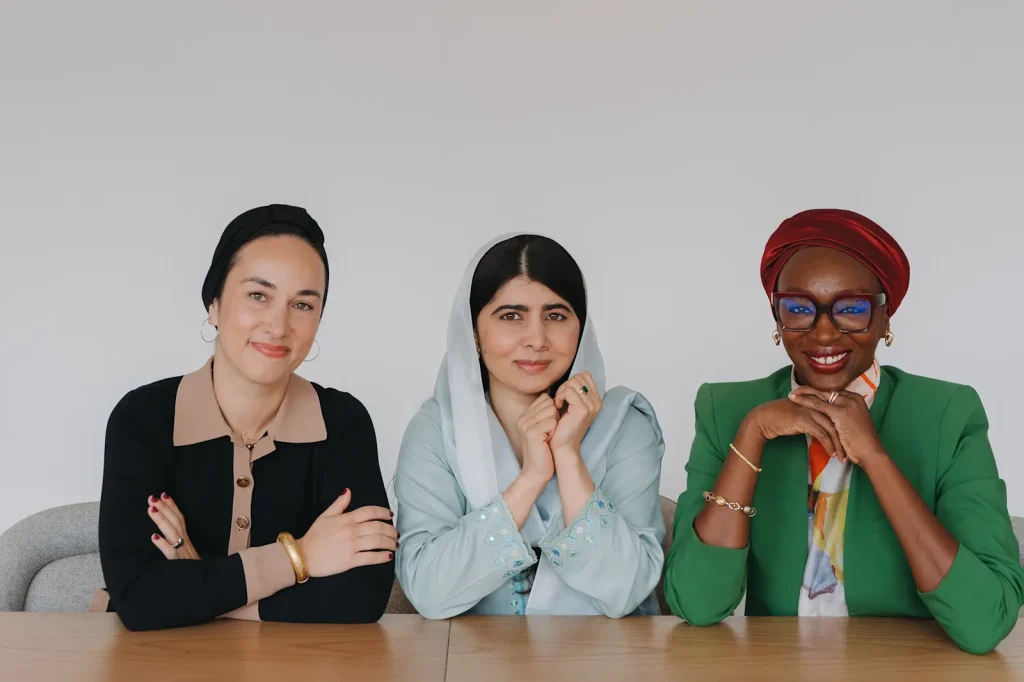
Outgoing CEO Lena Alfi said the transition reflects the organisation’s long-standing commitment to strategic growth and impact, noting that the foundation is well-positioned to build on years of progress.
“What I most want people to feel when they hear about this transition is trust that Malala Fund’s mission is as steadfast as it has always been,” Alfi said.“And excitement about seeing Malala Fund thrive under this brilliant leader.”
Alfi highlighted that under her leadership, the organisation had refined its strategy, strengthened operational foundations and deepened support for grassroots partners, including educators and activists working to remove barriers preventing girls from accessing education.
Aguele, who previously led Malala Fund’s work in Nigeria, steps into the role with extensive experience within the organisation, having played a key role in developing country strategies and strengthening partnerships with local stakeholders.
“For me, there is momentum in not having to figure that out and in being able to continue to build forward,” Aguele said, emphasising the advantage of internal leadership continuity.
Her appointment as the first Nigeria-based CEO of Malala Fund signals a deliberate shift towards proximity-driven leadership, reinforcing the organisation’s belief that those closest to the challenges are best positioned to lead solutions.
Strategy Anchored in Local Leadership
Both leaders described the transition as a continuation of Malala Fund’s five-year strategic plan, which prioritises systems change, local activism and amplifying girls’ voices, rather than isolated interventions.
Aguele credited Alfi with driving the development of the strategy, describing it as bold, ambitious and innovative, particularly for its emphasis on empowering local actors and grassroots organisations.
Alfi, in turn, stressed the importance of maintaining focus in a sector with overwhelming needs.
“Leaders need to be clear about what their organisation is uniquely positioned to do and stay anchored to their mission even when the choices are difficult,” she said.
Leadership Built on Trust and Shared Values
Reflecting on her tenure, Alfi said she is most proud of the strong global community built around Malala Fund’s work, including partners, supporters and staff committed to advancing educational opportunities for girls.
She added that she believes Aguele’s leadership style characterised by strategic thinking, respect for partners and a commitment to systems change makes her well-suited for the role.
“She sees potential in everyone and knows how to bring out the best in people,” Alfi said.
Aguele, on her part, described Alfi’s leadership as service-driven and rooted in trust, noting that the outgoing CEO helped build both internal capacity and external confidence in the organisation.
A Global Vision Rooted in Nigeria
For Aguele, stepping into the role carries both professional and personal significance. Having lived and worked across multiple countries, she said her experience in Nigeria and internationally continues to shape her leadership approach.
“It means absolutely everything for me to be Malala Fund’s first CEO based in Nigeria. There is power in proximity to the work,” she said.
She noted that leaders working close to communities often have a deeper understanding of the realities shaping girls’ lives, allowing for more responsive and effective interventions.
Aguele also drew on her background in law and public policy, explaining that sustainable change requires long-term engagement, collaboration and technical expertise, rather than one-off advocacy efforts.
Looking Ahead
Both leaders expressed confidence that Malala Fund is entering its next phase from a position of strength, with a clear mission and a growing global footprint.
Alfi described the transition as both strategic and deeply human, built on trust, mentorship and shared commitment to advancing girls’ education.
“Malala Fund is about to be in the best hands it has ever been in,” she said.
Aguele added that the organisation will continue to focus on ensuring that every girl can access and complete school, while placing girls themselves at the centre of decision-making processes.
Despite global uncertainties, both leaders stressed that the transition represents not a shift in mission, but a deepening of Malala Fund’s commitment to equity, access and opportunity for girls worldwide.
Share this


