

Lagos State, in partnership with the Federal Ministry of Health and Social Welfare and the Society for Family Health (SFH), has unveiled the final outcomes of the three-year ePharma4FP Project, an initiative stakeholders say is redefining access to family planning services through digital pharmacy models.
The dissemination meeting, held on Tuesday at BON Hotel, Ikeja, brought together policymakers, pharmacists, regulators, researchers and digital health innovators to examine evidence from the project and outline a national pathway for scaling tech-driven family planning services. The intervention, funded by the Bill & Melinda Gates Foundation and piloted in Lagos, demonstrated how digital tools linked with community pharmacies can expand contraceptive access, improve confidentiality, and reduce stigma for women and adolescents.
Speaking at the event, the Special Adviser to the Governor on Health, Dr. Kemi Ogunyemi, described the initiative as “a defining moment for digital healthcare in Lagos State.” She said the hybrid digital platform had addressed long-standing barriers such as long waiting periods, stock-outs, distance, and limited privacy, adding that the project prevented more than 3,300 unintended pregnancies and averted over 7,400 Disability-Adjusted Life Years.
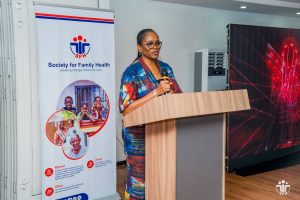
Dr. Ogunyemi also pointed to major system-strengthening achievements, including the newly approved National ePharmacy Policy and the near completion of the Lagos State Digital Family Planning HMIS, which she said would support a more data-driven and client-centered health ecosystem. “Lagos will continue to lead in digital health innovation and set new benchmarks for the country,” she said.
Deputy Managing Director of SFH, Dr. Jennifer Anyanti, noted that the project had proven that digital platforms, when integrated with existing pharmacy networks, can significantly expand access points for family planning information and services. She said the evidence generated forms a strong foundation for national scale-up. “This project shows what is possible when technology is aligned with community-level care,” she added.
Representing the Lagos State Ministry of Health, Acting Permanent Secretary Dr. Folashade Oludara, through Dr. Oluwatosin Onasanya, said the project’s digital approach reduced barriers related to distance and stigma, particularly through the inclusion of USSD and IVR platforms for women without smartphones or internet access.
Dr. Faith Eromon of the PSN Foundation emphasised the role of pharmacists in Nigeria’s digital health transition, revealing that the country’s first national ePharmacy Policy has been approved by the Coordinating Minister of Health and is awaiting formal launch. She said the policy will help standardize digital pharmacy services nationwide and guide safe implementation.
Chief of Party for ePharma4FP, Dr. Uchenna Okafor, highlighted the project’s contributions to regulatory strengthening, updated policies, and better coordination within the national ePharmacy ecosystem. He credited Lagos State for providing an enabling environment for innovation and thanked partners including the Gates Foundation, research institutions and private-sector operators.
From a behavioural perspective, Dr. Mohammed Alhaji of Busara said the project’s success is rooted in its sensitivity to real-life contexts. He explained that empowering community pharmacies and PPMVs as hybrid counseling-and-digital access points proved crucial for continuity of care.
A key moment at the event was the formal handover of the project’s complete findings to the Lagos State Government, signalling what stakeholders described as a major step toward institutionalising digital family planning pathways in Nigeria.
Discussions ended with a strong consensus that Nigeria must rapidly strengthen regulation, expand digital infrastructure, and scale successful models like ePharma4FP to other states. Stakeholders also emphasised that equitable access especially for women in underserved communities remains central to the future of digital reproductive health services.
The meeting closed with a unified call to sustain innovation and integrate digital pharmacy models more deeply into the national health system, ensuring that every woman can make informed and dignified reproductive health decisions regardless of location or socioeconomic status.
Share this


