

For years, families in many Lagos neighborhoods faced devastating losses simply because nearby primary health centers could not manage sudden medical crises. Treatable emergencies like cardiac arrests, severe bleeding, or choking often resulted in preventable deaths before patients could reach distant tertiary hospitals.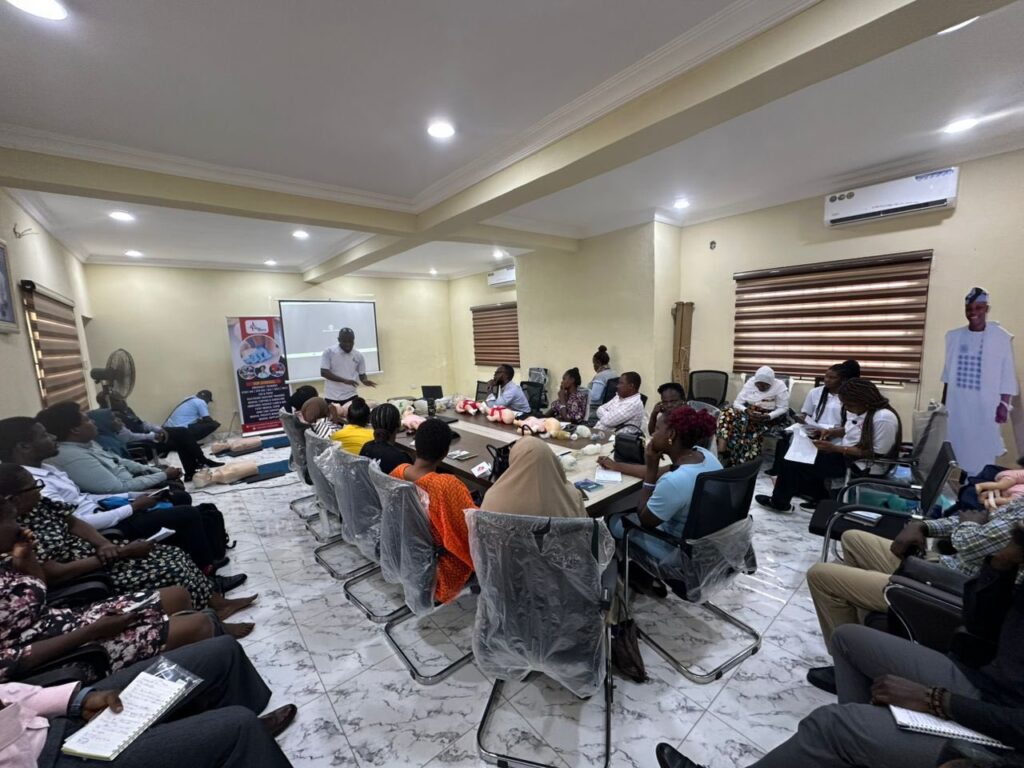
To address these past care gaps, Lagos State Health District V has stepped up its emergency response capabilities by training frontline healthcare workers across the district.
The intensive workshop, held at the Oriade Local Council Development Area (LCDA) Conference Hall, brought together doctors, nurses, community health officers, laboratory scientists, and health information personnel to build practical skills for life-threatening situations.
Shifting Focus to Real-World Survival
Addressing the participants, the Permanent Secretary of Lagos State Health District V, Dr. Oladapo Asiyanbi, made it clear that passive learning will no longer suffice when lives are on the line.
“The goal of this training is not merely to acquire theoretical knowledge but to develop practical competencies capable of saving lives whenever emergencies occur,” Dr. Asiyanbi said. He urged health workers to run regular refresher drills at their facilities so these skills become second nature.
Supporting this push, Dr. Oladeinde Oluwaseun, Director of Planning, Research, and Statistics, emphasized that the success of the exercise will depend entirely on how staff perform during real life-or-death situations.
Dr. Ahmad Amina Bello, Director of Medical Services and Disease Control, also reminded workers that proper medical documentation is essential during emergencies to keep patient records intact during referrals.
Hands-On Training for High-Stakes Emergencies
Technical partners Medics Experts led practical simulations covering Cardiopulmonary Resuscitation (CPR), Basic Life Support (BLS), and Automated External Defibrillator (AED) operation. Facilitators Mrs. Uju Dorothy and Mr. Patrick Amobi took staff through step-by-step patient evaluations using the ABCDE approach.
The sessions tackled critical conditions that previously caught local clinics off guard, including the differences between cardiac arrest and a heart attack, alongside immediate steps for stroke, drowning, asthma attacks, anaphylaxis, and severe bleeding. Facilitators also instructed workers to communicate clearly with patients and families using simple, everyday language during crises.
Ahead of the exercise, Dr. Asiyanbi visited the Chairman of Oriade LCDA, Hon. Rasak Olojede, reaffirming the state’s plan to work with local governments to ensure grassroots clinics function as effective first lines of defense.
Share this


