

By Michael Omotosho |
Lagos State Government has renewed its push for mandatory health insurance and stronger local capacity for advanced cardiac care, as survivors of government-supported heart surgeries shared their journeys from critical illness to recovery.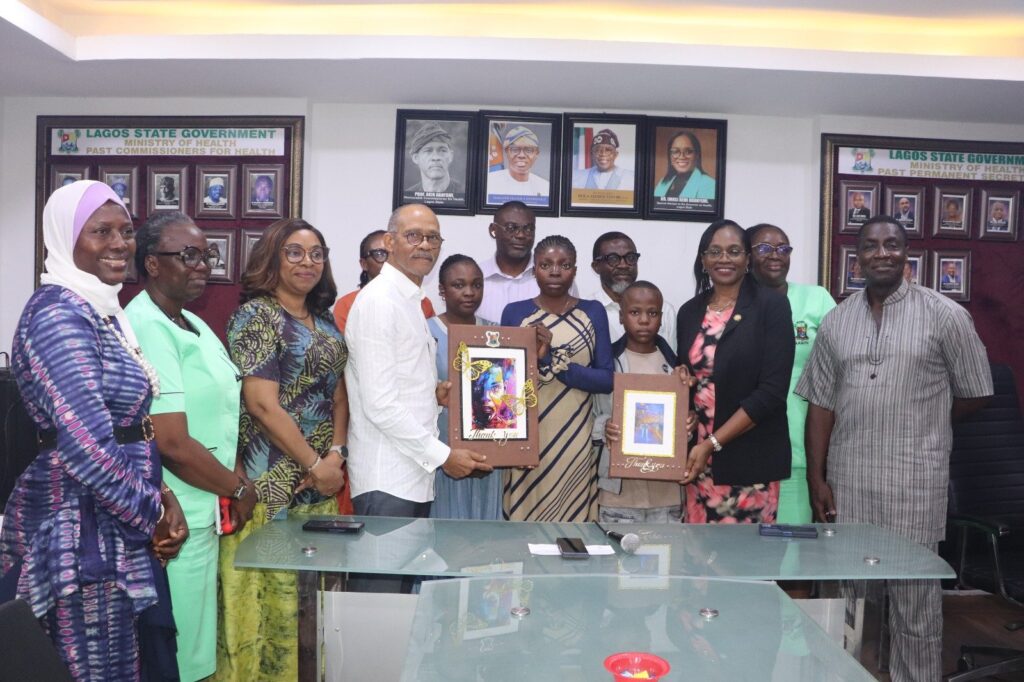
The beneficiaries, including 19-year-old Lydia Ogungbayi, 16-year-old Moshood Muritala and three-year-old Ayoife George, were received by the Commissioner for Health, Prof. Akin Abayomi; Special Adviser to the Governor on Health, Dr Kemi Ogunyemi; and Permanent Secretary, Ministry of Health, Dr Dayo Lajide, during a visit to the ministry.
Insurance Can Protect Families From Poverty
Abayomi said the beneficiaries’ recovery showed the importance of combining government funding, specialist expertise, modern medical equipment and health insurance to provide life-saving treatment without pushing families into financial hardship.
He said the government was working to strengthen local capacity for complex procedures instead of relying heavily on overseas treatment.
“For us as government, in healthcare delivery, there is one side that is the ability to treat, and then there is the other side, which is who pays for it, because there is nothing that is free,” Abayomi said.
The commissioner also called for wider adoption of health insurance, saying the recently issued executive order making health insurance compulsory was aimed at protecting residents from catastrophic medical expenses.
“Your health is your greatest asset. Insure it,” he said, adding that insurance would reduce the pressure on families to sell homes, land or exhaust their savings to pay medical bills.
“We don’t want anybody in Lagos to be plunged into poverty because they got sick,” Abayomi added.
Lagos Targets More Specialist Cardiac Care
Abayomi also praised cardiothoracic surgeon, Prof. Bode Falase, and his team for helping to build advanced cardiac surgery capacity in Lagos.
He said retaining specialists such as Falase was critical to the state’s efforts to reduce the need for residents to travel abroad for complex medical procedures.
“He chose to stay, and he chose to build a renowned institute of cardiothoracic surgery,” Abayomi said.
The commissioner said the state was also investing in specialist infrastructure, including the proposed Massey Children’s Specialist Referral Centre, to expand access to advanced paediatric care.
“We’re trying to build that capacity on ground so that the next patient that comes, we will not be in a position to send you to India,” he said.
Government Faces Difficult Choices
Ogunyemi said the beneficiaries’ recovery reflected the Babajide Sanwo-Olu administration’s commitment under the THEMES Plus Agenda to ensuring that residents can access quality healthcare.
She disclosed that the ministry receives hundreds of requests for medical assistance, refunds and overseas treatment, but limited resources mean that difficult decisions have to be made.
“Choosing who to help is one of the most difficult things you can ever imagine,” Ogunyemi said.
She commended Dr Mazeedat Erinosho and her team for reviewing applications and mobilising resources for patients considered deserving of government support.
Ogunyemi also praised the LASUTH cardiothoracic team, stressing that successful cardiac surgery depends on the combined efforts of surgeons, cardiologists, anaesthetists, nurses and other health professionals.
“They cannot do anything without the nurses. It cannot happen. It is a team effort,” she said.
Lydia’s Long Journey to Recovery
Erinosho, Director of Medical Administration, Training and Programmes, said Lydia was diagnosed with HbSS and later developed constrictive pericarditis, a serious condition that caused massive swelling and severely affected her movement.
She said the state provided ₦5 million in support, while additional resources were mobilised to enable the LASUTH cardiothoracic team to perform the complex surgery.
According to Erinosho, Lydia’s operation lasted about 10 hours and was carried out a day before her birthday.
Falase said Lydia first presented at the cardiothoracic clinic in 2024 and returned several times before preparations for surgery began in 2025.
“Lydia, who I’m seeing here today, is completely changed,” Falase said.
The surgical team included Falase; Consultant Cardiologist, Dr Ramon Moronkola; Cardiothoracic Surgeon, Dr Ajibade Adebayo; Consultant Cardiac Anaesthetist, Dr Ikotun O. Aderemi; Head of Critical Care Nurses, Nurse Alonge Lydia; and Cardiac ICU Nurse, Nurse Aina Alake F.
‘I Was Finally Free’
Lydia, who underwent surgery in December 2025, said she had lived with progressive massive anasarca caused by constrictive pericarditis for five years and nine months before receiving treatment.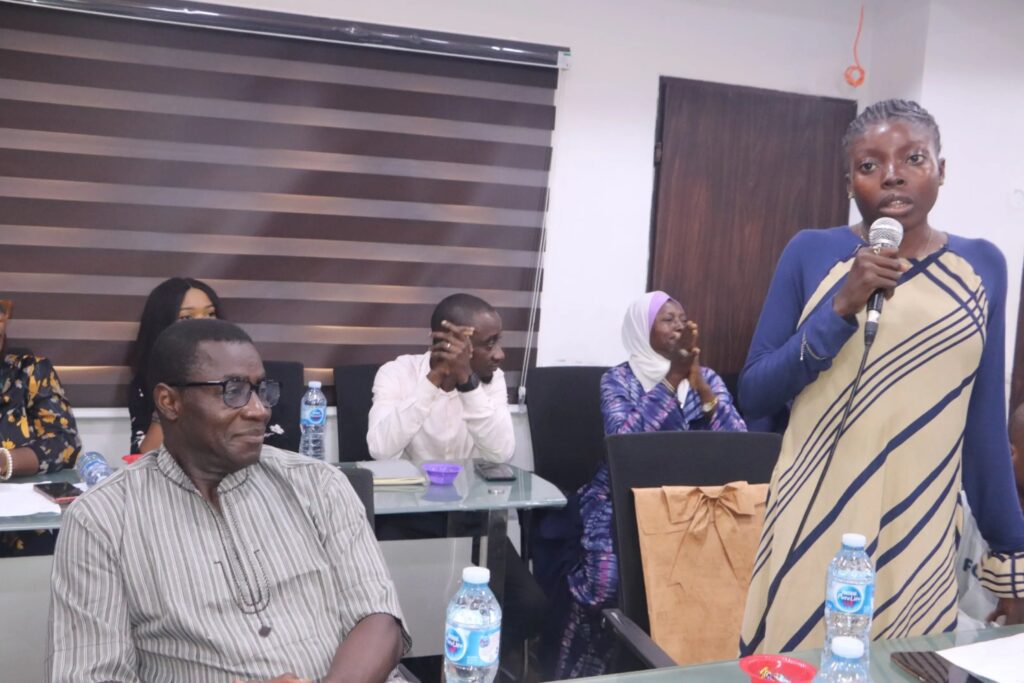
“I was finally free,” she said, expressing appreciation to the Lagos State Government, medical professionals and individuals who supported her treatment.
Lydia said the intervention had given her “a brand-new health” and described the government’s assistance as the beginning of a new chapter in her life.
Other Beneficiaries
Other beneficiaries highlighted at the event included 16-year-old Moshood Muritala, who was diagnosed with Transposition of the Great Arteries and underwent cardiac surgery in India.
Erinosho said Moshood’s treatment became complicated after he spent more than a month on a ventilator in India. Additional funding, including $10,000 raised through government and well-meaning individuals, helped facilitate his return to Nigeria about three weeks ago.
Three-year-old Ayoife George, who was diagnosed with Ventricular Septal Defect and Right Ventricular Outflow Tract Obstruction, also received surgery at Aster MIMS Calicut Hospital in Kerala, India.
The ministry also disclosed that Mrs Kajebora, a Lagos State civil servant and patient at LASUTH’s Paediatric Cardiology Unit, benefited from state-funded cardiac surgery for her daughter in India.
More Investment in Life-Saving Care
Lajide said seeing the beneficiaries healthy and recovering provided evidence that the administrative work behind government-funded healthcare interventions was making a real difference.
She said the process often involved extensive paperwork, approvals, phone calls and efforts to secure funding before treatment could begin.
“There’s a lot of file movement, paper pushing, phone calls, just trying to get approvals, trying to get money released,” Lajide said.
She added that seeing the young beneficiaries healthy and smiling made the effort worthwhile.
The state government said it would continue investing in specialist healthcare capacity and stronger health financing, with the long-term goal of ensuring that procedures that can be performed in Lagos no longer require residents to travel abroad.
Share this


