

By Emmanuel Peter |
This initiative targets Lagos Island and Apapa communities with multilingual animations designed to improve environmental awareness, strengthen waste management practices, and promote citizen-led accountability in climate action.
The Lagos Civil Society Participation for Development (LACSOP) on Wednesday unveiled the Citizens-Led Accountability Mechanism (CLAIM) campaign, a multilingual initiative designed to strengthen environmental awareness, improve waste management practices, and promote citizen participation in climate governance.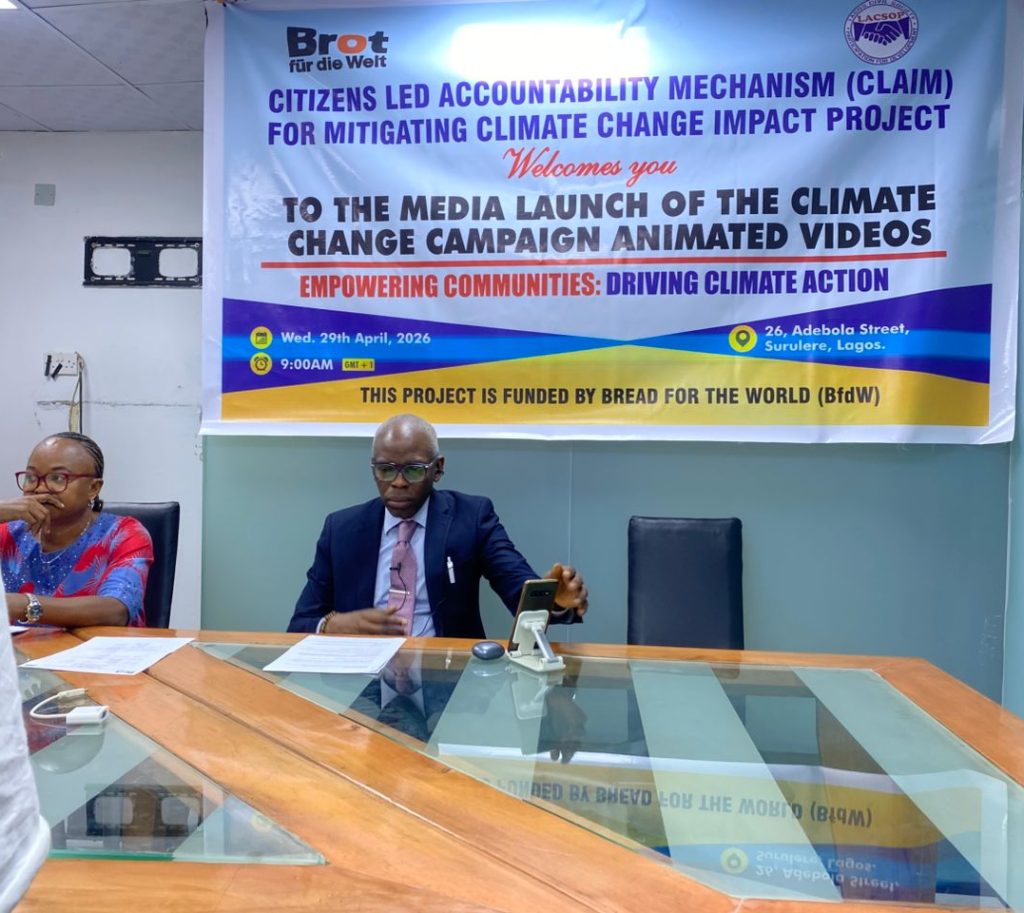
Supported by international development organisation Bread for the World, the campaign introduces animated educational content delivered in English, Yoruba, and Nigerian Pidgin, targeting communities most affected by climate-related risks in Lagos.
The launch event took place at 26 Adebola Street, Surulere, and brought together civil society organisations, community representatives, media professionals, and development stakeholders.
Speaking at the event, the Board Chairman of the Lagos Civil Society Participation for Development (LACSOP), Barrister Ayo Adebusoye, said the launch of the CLAIM campaign comes at a critical moment for Lagos, as climate-related challenges continue to intensify across the state.
He explained that the impact of climate change is no longer distant or theoretical, but something residents experience directly in their homes, streets, and business environments, particularly through recurring flooding during heavy rainfall.
Barrister Adebusoye noted that in several parts of Lagos, flooding has become a predictable seasonal disruption rather than an isolated incident, with drainage systems frequently overwhelmed or blocked.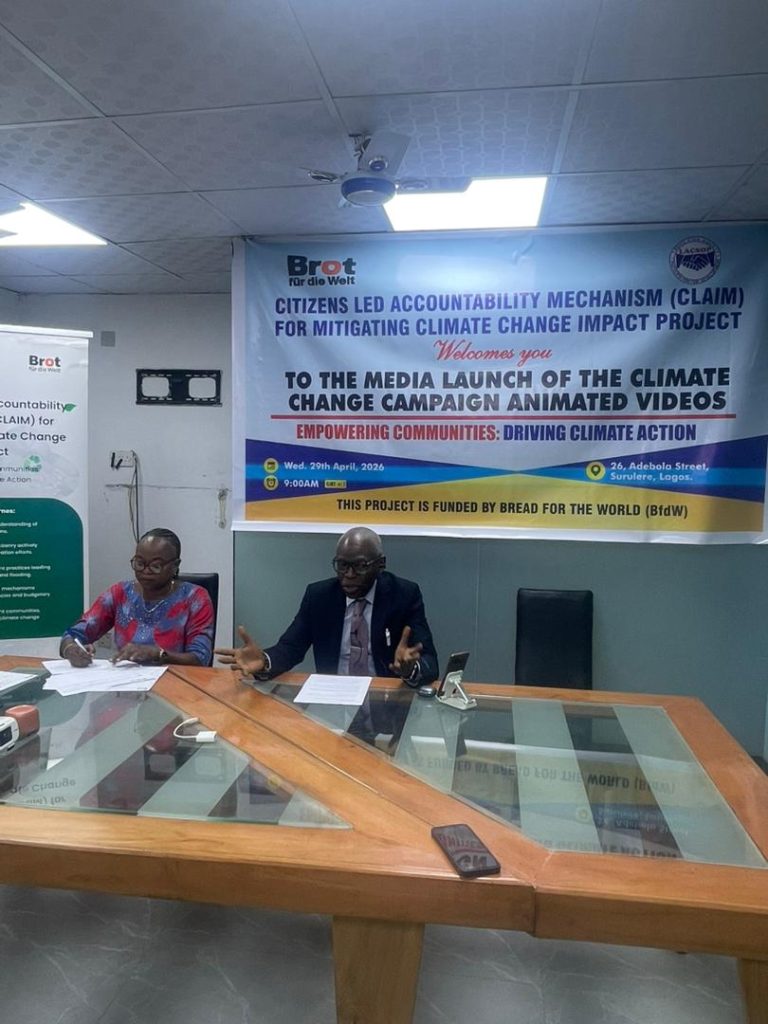
He attributed much of the problem to poor waste disposal practices, stressing that indiscriminate dumping of plastics and solid waste into gutters and drainage channels continues to worsen environmental vulnerability across communities.
According to him, these everyday actions, though often overlooked, accumulate over time and significantly reduce the capacity of drainage infrastructure to function effectively during rainfall.
Barrister Adebusoye further stated that the CLAIM campaign is designed to shift how residents understand their role in addressing climate challenges, moving them from passive observers to active participants in environmental protection.
He emphasised that lasting solutions to climate-related flooding cannot be achieved through government action alone, but require behavioural change at the community level.
He also observed that climate communication in Nigeria has often been overly technical and inaccessible, making it difficult for many residents to fully grasp the link between their daily actions and environmental outcomes.
The campaign, he said, seeks to close that gap by simplifying climate messaging and making it more relatable, practical, and rooted in everyday experiences.
Language and Animation as Tools for Inclusion
A key feature of the CLAIM campaign is its multilingual and visual approach, designed to make climate information more accessible to residents across Lagos communities. The initiative relies on animation and storytelling as primary tools for simplifying complex environmental issues such as flooding, waste management, and climate vulnerability, translating them into relatable everyday experiences.
The Programme Manager of the Lagos Civil Society Participation for Development (LACSOP), Ms Omolara Olusaiye, and the Communications Manager of LACSOP, Mr Akinlolu Akinpelumi, explained that the approach was developed in response to the gap between technical climate communication and public understanding at the grassroots level.
According to them, environmental information is often presented in formats that are too technical or policy-driven for many residents to engage with meaningfully, particularly those in informal settlements where access to structured environmental education remains limited. The use of animation, they said, allows the campaign to visually represent real-life situations such as blocked drainage channels, indiscriminate waste disposal, and the resulting flooding that affects homes, markets, and transport routes during heavy rainfall.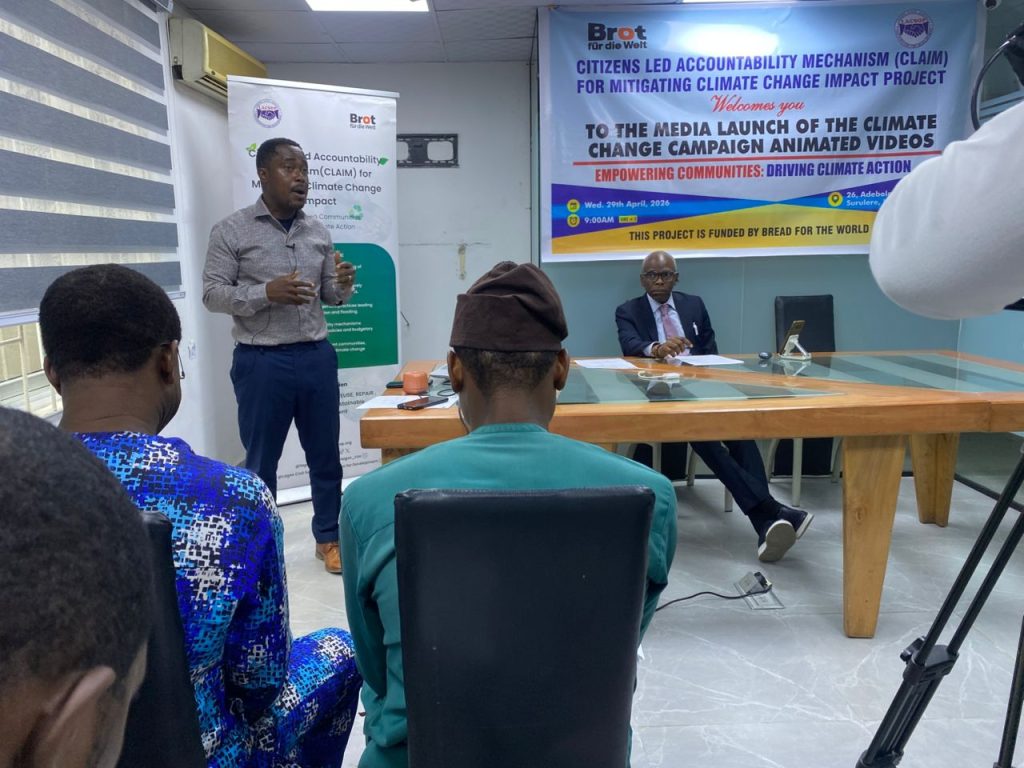
They further explained that the campaign content has been produced in three languages to reflect the linguistic diversity of Lagos. English is used for formal and policy-level engagement with institutions and stakeholders, Yoruba is used to connect with indigenous communities and strengthen cultural relevance, while Nigerian Pidgin is deployed to ensure accessibility in informal settlements where it is widely spoken and understood.
Ms Olusaiye and Mr Akinpelumi said the multilingual strategy is intended to remove language barriers that have historically limited the reach of climate awareness campaigns in the state. They added that ensuring information is delivered in languages people use in their daily interactions increases both understanding and community participation in environmental issues.
They also noted that the use of animation is particularly targeted at younger audiences, especially those between the ages of 18 and 35, who are more engaged with digital content and visual storytelling formats. This demographic, they said, plays a critical role in shaping behaviour within communities and is therefore central to the success of the campaign.
By combining animation with multilingual communication, the initiative seeks to make climate education more inclusive, relatable, and effective across different segments of Lagos society.Got it — here is a more detailed, flowing newsroom version with stronger context and narrative depth:
Targeting Lagos Island and Apapa
The CLAIM campaign is deliberately focused on Lagos Island and Apapa Local Government Areas, two densely populated and economically significant parts of Lagos that continue to face severe environmental pressure due to rapid urban activity and weak infrastructure systems.
Both areas serve as major commercial hubs for the state, with heavy daily movement of people, goods, and services. However, this high level of activity also places enormous strain on existing drainage systems and waste management structures, which are often unable to keep pace with the volume of waste generated.
Residents in these communities frequently contend with flooding, especially during periods of heavy rainfall, as drainage channels are often obstructed by solid waste, plastics, and other debris. In many cases, what begins as minor blockages quickly escalates into widespread flooding, disrupting businesses, damaging property, and affecting transportation routes.
Stakeholders involved in the campaign noted that the situation is further worsened by high population density and inconsistent waste disposal practices, which continue to overload already fragile environmental systems in these areas.
The initiative therefore seeks to encourage residents of Lagos Island and Apapa to become more actively involved in environmental protection by engaging directly with service providers responsible for waste management and drainage maintenance. It also aims to strengthen community participation in monitoring local environmental conditions, identifying problem areas, and reporting challenges in a timely manner to relevant authorities.
According to organisers, the focus on these two areas is strategic, as they represent both the economic heartbeat of Lagos and some of its most vulnerable environmental hotspots, where the impact of climate-related flooding is most immediate and visible.
From Awareness to Accountability
At the core of the CLAIM campaign is a deliberate shift from general environmental awareness to stronger citizen accountability in environmental governance across Lagos communities.
Rather than limiting the intervention to sensitisation alone, the initiative is designed to encourage residents to take a more active role in monitoring how environmental decisions are made and how public resources allocated for climate-related services are utilised. LACSOP said the idea is to move communities beyond passive awareness into sustained engagement with the systems that directly affect their environment.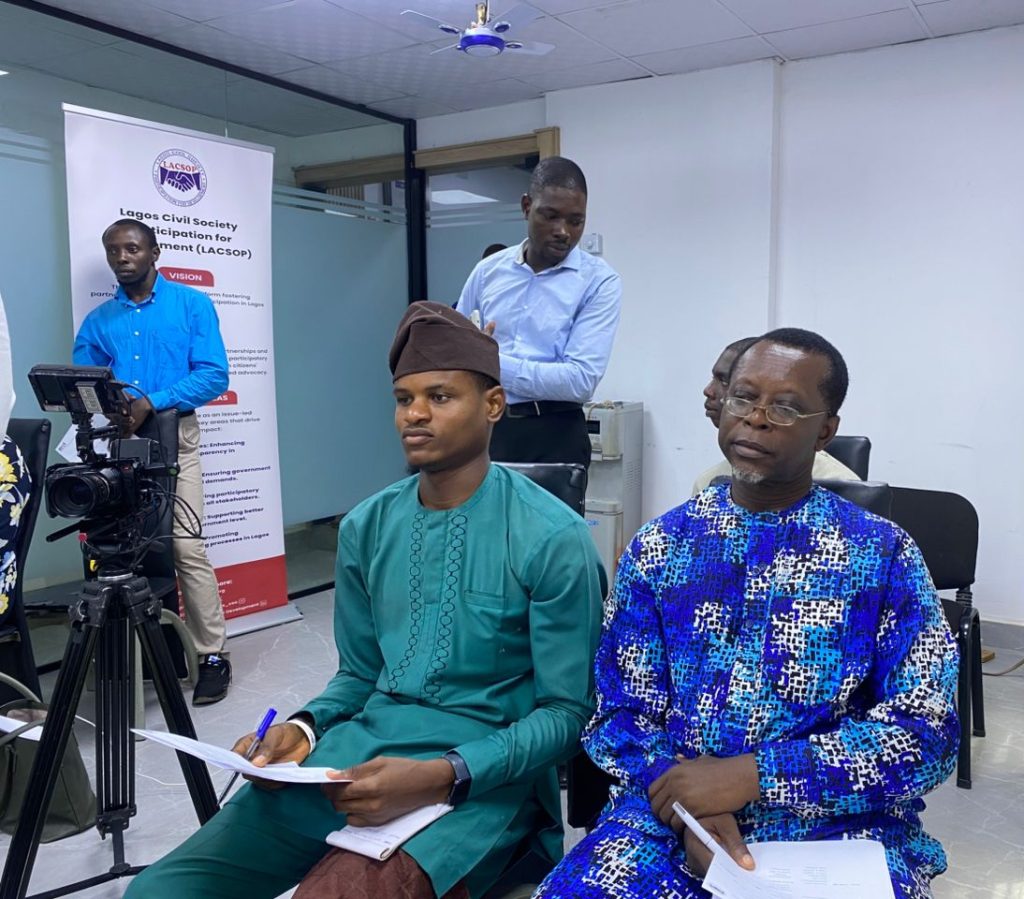
Under the framework, residents are encouraged to pay closer attention to local government actions and allocations relating to waste management, drainage maintenance, and broader climate adaptation programmes. This includes understanding what resources are committed to these sectors and questioning whether such commitments translate into visible improvements in their communities.
The organisation explained that the objective is to bridge the long-standing gap between government promises and actual service delivery at the grassroots level, particularly in areas that experience recurring flooding and waste management challenges.
LACSOP stressed that environmental policies, no matter how well designed, cannot achieve meaningful impact if citizens remain disconnected from their implementation process. It added that informed and engaged communities are essential to ensuring that public institutions are held accountable for delivering basic environmental services effectively and consistently.
Youth Engagement in Climate Action and Innovation
The CLAIM campaign places strong emphasis on young people, who constitute a significant proportion of Lagos’ population and remain central to the state’s social and economic dynamics.
According to the Lagos Civil Society Participation for Development (LACSOP), youths between the ages of 18 and 35 are not only regarded as beneficiaries of the initiative but are also positioned as key drivers of environmental change within their communities. The organisation said this approach reflects the reality that young people are often at the forefront of both environmental challenges and emerging solutions in urban settings.
As part of the intervention, the programme is expected to support youth-led initiatives focused on practical environmental actions such as recycling, waste reduction, and community-based clean-up efforts. It also aims to encourage innovative ideas that can help improve waste management practices at the local level, particularly in densely populated areas where environmental pressures are most severe.
Officials involved in the project noted that young people are uniquely positioned to influence behavioural change due to their strong presence in affected communities and their high level of engagement with digital platforms, where information sharing and behavioural trends are rapidly shaped.
They explained that by integrating youth participation into the design and implementation of the campaign, CLAIM seeks to build not only immediate awareness but also long-term environmental consciousness and civic responsibility among the next generation.
From Policy to Implementation
Lagos State has introduced a range of environmental policies in recent years, including climate change adaptation strategies and restrictions on the use of single-use plastics, as part of broader efforts to address rising environmental challenges across the state.
However, despite these policy measures, enforcement and implementation have remained inconsistent, particularly at the grassroots level where environmental challenges such as flooding and waste accumulation are most severe. In many communities, residents continue to experience the same environmental conditions the policies were designed to address, raising concerns about the gap between policy formulation and actual delivery.
The Lagos Civil Society Participation for Development (LACSOP) said the CLAIM campaign was developed specifically to address this disconnect by ensuring that environmental policies are not only announced at government level but are also clearly understood by citizens and translated into practical action within communities.
According to the organisation, part of the challenge has been limited public awareness of existing environmental policies and how they apply to everyday behaviour, particularly in areas related to waste disposal and drainage maintenance. It noted that without adequate understanding, policy compliance at community level remains weak.
The initiative also seeks to strengthen communication channels between residents and government institutions responsible for environmental management, with the aim of improving responsiveness and accountability in service delivery.
LACSOP said that by reinforcing this feedback loop between citizens and authorities, environmental governance in Lagos can become more transparent, more participatory, and ultimately more effective in addressing the realities on the ground.
Media Role in Driving Climate Accountability
Speakers at the launch event emphasised the crucial role of the media in advancing climate awareness and strengthening accountability within environmental governance systems across Lagos.
The Board Chairman of the Lagos Civil Society Participation for Development (LACSOP), Barrister Ayo Adebusoye, said journalists remain central to ensuring that environmental issues do not fade from public attention, especially at a time when climate-related challenges such as flooding and waste mismanagement continue to affect communities across the state.
He noted that beyond reporting policy announcements, the media has a responsibility to consistently highlight how environmental challenges are impacting everyday life in communities, particularly in vulnerable areas such as Lagos Island and Apapa.
Barrister Adebusoye urged media practitioners to give greater attention to climate reporting by not only documenting challenges but also amplifying solutions and community-driven responses emerging from affected areas.
According to him, sustained media engagement is essential in maintaining public pressure on relevant institutions, while also helping to educate citizens on their roles in addressing environmental issues and holding authorities accountable for service delivery.
Everyday Struggle and Implementation Challenges
During an interactive session facilitated by the Community Officer of the Lagos Civil Society Participation for Development (LACSOP), Mr Oluwatosin Ismail, participants reflected on the practical difficulties involved in implementing climate awareness campaigns within informal settlements across Lagos.
Discussions at the session highlighted that while awareness campaigns are important, translating environmental messages into sustained behavioural change remains a major challenge in communities where basic infrastructure is often inadequate and daily survival takes priority over environmental considerations.
Participants noted that limited access to proper waste disposal systems continues to influence how residents manage household waste, often resulting in indiscriminate dumping into drainage channels and open spaces, which in turn worsens flooding during rainfall.
They also raised concerns about behavioural resistance, pointing out that long-standing habits around waste disposal are difficult to change without consistent engagement, visible improvements in public services, and sustained community education.
Stakeholders agreed that one-off sensitisation efforts are not sufficient to drive long-term change, stressing instead the need for continuous interaction, follow-up activities, and trust-building between implementing organisations and residents.
It was further observed that climate communication must be carefully adapted to local realities, taking into account language, literacy levels, and the socio-economic conditions of targeted communities, in order to ensure that messages are both understood and acted upon effectively.
Lagos at the Frontline of Climate Risk
As one of Africa’s fastest-growing coastal megacities, Lagos continues to face mounting environmental pressure driven by rapid urbanisation, steady population growth, and the worsening impacts of climate change.
Across the state, flooding, inefficient waste management systems, and stretched infrastructure capacity remain persistent challenges that increasingly shape daily life for millions of residents. In many communities, heavy rainfall quickly exposes the limitations of drainage networks, while inadequate waste disposal systems continue to worsen environmental vulnerability.
Despite ongoing policy interventions and environmental programmes, the gap between planning and implementation remains visible at the community level, where the effects of climate stress are most directly experienced.
However, initiatives such as the Citizens-Led Accountability Mechanism (CLAIM) campaign are beginning to reflect a gradual shift in approach, moving away from top-down awareness efforts toward community-driven solutions that combine education, accountability, and active public participation.
Stakeholders involved in the initiative say its long-term impact will depend largely on how effectively citizens, government institutions, and other partners are able to work together to translate environmental policies into practical, measurable outcomes.
As the event in Surulere came to a close, organisers reiterated a central message that ran through the discussions: climate action in Lagos can no longer remain at the level of policy statements alone, but must evolve into a shared, continuous responsibility embedded in everyday behaviour and community life.
Calls For Collaboration
The Executive Director of the Lagos Civil Society Participation for Development (LACSOP), Mrs Dede Kadiri, has called for stronger and more sustained collaboration among government institutions, civil society organisations, the private sector, and community stakeholders in addressing climate challenges across Lagos State.
Speaking at the launch of the CLAIM campaign, Mrs Kadiri said the scale and complexity of environmental issues in Lagos, particularly flooding and waste management, make it impossible for any single institution to address them effectively on its own.
She noted that meaningful progress in climate action will require coordinated efforts that bring together different sectors with shared responsibility for environmental protection and governance.
Mrs Kadiri urged stakeholders to contribute their expertise, financial resources, and institutional support towards ensuring the long-term sustainability and impact of the CLAIM initiative.
She stressed that collective action remains essential in building climate resilience, particularly in vulnerable communities where the effects of environmental degradation are most severe and immediate.
Share this


