

By Michael Omotosho |
When Agbadun Abdulrahman was first shown how wastewater from his fishpond could be used to grow vegetables, he was not convinced.
For him, pouring water from a fishpond onto cucumber plants did not seem like something that would work.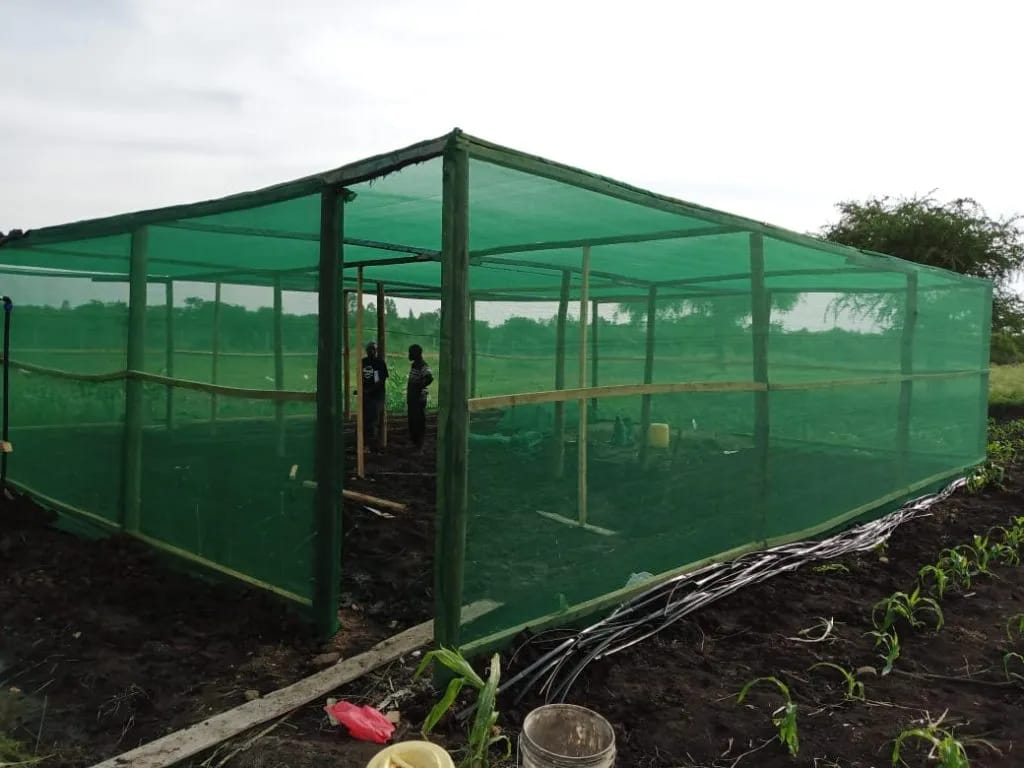
“I didn’t think taking wastewater from my fish and pouring it over potted cucumber plants made any sense. It felt risky,” Abdulrahman said.
Today, the cucumber plants growing beside his fishponds in Eiyenkorin, Kwara State, are telling a different story.
The plants have grown well, with healthy leaves and early flowers. Abdulrahman said he has also noticed a difference compared with the way he previously grew crops in soil.
“The crops grew faster and healthier than standard soil planting. I’m convinced now,” he said.
Abdulrahman learnt the method through his engagement with Harvest Value Chain (HVC), an agribusiness startup working with farmers to adopt aquaponics and other circular farming practices.
The work is part of the City Waste City Wealth (CIWACIWE) project under the INCiTiS Food initiative.
Making use of what is available
The idea behind the project is fairly simple: instead of allowing useful materials from one farming activity to become waste, they can be put to use somewhere else.
In Abdulrahman’s case, water from the fishpond is being used in crop production.
HVC is also demonstrating hydroponic farming, substrate-grown vegetables and other methods that allow farmers to produce food while making better use of available resources.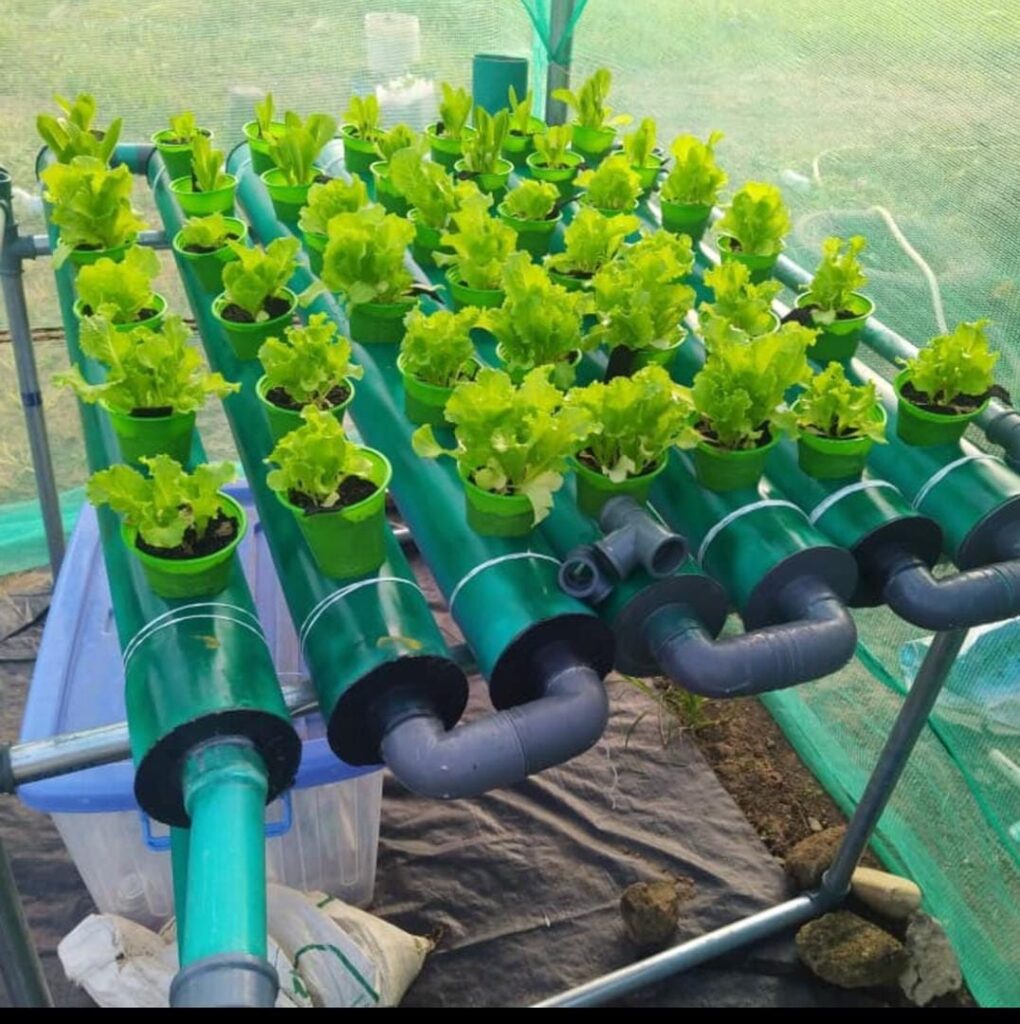
The approach is gaining attention as farmers continue to deal with the rising cost of inputs and other pressures affecting food production.
The World Food Programme has estimated that 35 million Nigerians are at risk of acute food insecurity, with conflict, displacement and other shocks affecting food systems across the country.
For small-scale farmers, making better use of resources already available on their farms could help reduce some production costs.
Since 2024, HVC said it has trained more than 600 farmers across West Africa on circular agriculture, providing them with practical knowledge and technical support.
From training to the farm
For Abdulrahman, the training only became convincing after he saw the results for himself.
His initial fear was that the fishpond water could damage the cucumber plants. But after watching them grow, he began to see the possibility of expanding the system.
He is now considering increasing his container cucumber production and encouraging other fish farmers in Eiyenkorin to look at their pond wastewater differently.
At the HVC facility, which serves as the Kwara Living Hub for the CIWACIWE project, farmers can also see other examples of integrated production.
Cucumber is grown using hydroponic methods, while pepper is cultivated using substrates.
The project is not focused only on production. HVC also uses its Food Flow App to connect farmers with food processors and buyers, while helping with market linkages and crop traceability.
Charles Adetola, CEO of Harvest Value Chain, said the approach is particularly important for farmers who cannot afford to rely heavily on expensive external inputs.
“The system is designed to offer smallholder farmers operating under financial constraints an alternative to production models dependent on expensive external inputs,” Adetola said.
He said the project is also about finding out whether farmers can take what they see at demonstration sites and use it on their own farms.
“It is about testing whether waste from one agricultural activity can become an input for another, whether farmers will adopt the approach, and whether locally adapted circular systems have a place in the future of smallholder agriculture in Kwara State and beyond,” he said.
Farmers remain central to the idea
Dr Oyebola Oyediran, a lecturer at the University of Ibadan and supervisor of the CIWACIWE project in Nigeria, said the involvement of farmers was important to determining whether the technology could work outside a demonstration centre.
During a recent visit to Abdulrahman’s farm, Oyediran observed the system being used beside the fishpond.
“It’s one thing to run a high-tech facility at a central hub, but seeing a farmer adopt the system at his own pond side shows real viability,” he said.
For Abdulrahman, what began as an experiment has now become something he is willing to continue.
The wastewater he once considered risky is now part of his attempt to grow cucumbers alongside his fish production.
As more farmers in Kwara State look for ways to weather rising operational costs, simple closed-loop setups like Abdulrahman’s are proving that the best solutions often come from making smart use of what used to be thrown away.
Share this


