

The Chairman of the Independent National Electoral Commission (INEC), Prof. Joash Amupitan (SAN), has challenged Nigeria’s political parties to strengthen internal democracy by conducting transparent, credible, and inclusive primary elections.

Amupitan warned that the vast majority of election disputes across the country originate within party structures long before voters ever head to the polling units.
Speaking in Abuja at the public presentation of Shadows: Protest Essays on Africa’s Most Consequential Country (1999–2023), a two-volume work authored by THISDAY Managing Director Eniola Bello, Amupitan delivered a keynote address titled “Strengthening Electoral Institutions: Pathways to Free, Fair and Peaceful Elections in 2027.” He stressed that political parties can only build public trust by adhering strictly to their own constitutions and giving card-carrying members a genuine voice in candidate selection.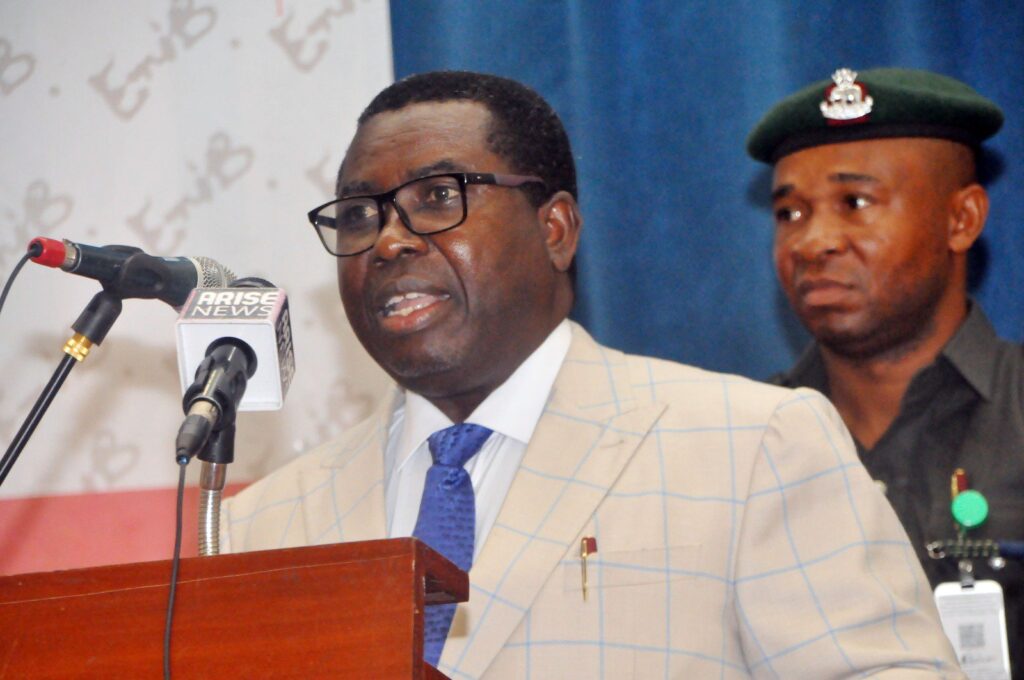
“Most election-related disputes originate long before Nigerians cast their votes. The imposition of candidates, opaque primary election processes, and blatant disregard for party guidelines continue to fuel avoidable pre-election litigation, weaken public confidence, and undermine the integrity of our electoral process,” he said.
Proposing a One-Year Primary Timeline
To tackle the endless flood of pre-election lawsuits clogging Nigerian courts, the INEC Chairman advocated for an urgent amendment to the Electoral Act. He proposed forcing political parties to finalize candidate nominations at least one year before general elections.
Amupitan argued that shifting candidate selection forward would allow the legal system ample time to resolve internal disputes without disrupting the election timetable. This timeline shift would also allow the Commission to divert its focus away from legal battles and concentrate strictly on its constitutional duty of delivering free, fair, and peaceful polls.
Demanding Direct Funding and True Autonomy
Beyond internal party discipline, Amupitan made a firm case for expanding INEC’s institutional independence. He revealed that while Section 81(3) of the Constitution places the Commission on a first-line charge, operational funding remains constrained by the conventional budgetary envelope system.
To eliminate administrative hurdles, the INEC chief proposed that future funding for the electoral body be drawn directly from the Federation Account. Securing true financial autonomy, he argued, is vital for uninterrupted voter registration, effective regulation of political parties, and seamless national election management heading into 2027.
Share this


