

A new publication by the Human and Environmental Development Agenda (HEDA) has revealed the staggering scale of corruption in Nigeria, documenting alleged thefts amounting to ₦1.38 trillion, $53.84 billion, and £1 million across 100 high-profile corruption cases.
The revelations were contained in HEDA’s 9th edition of its corruption compendium, unveiled in Lagos to mark the 2025 International Anti-Corruption Day. The publication tracks major corruption cases involving senior public officials and private individuals, highlighting the far-reaching impact of corruption on Nigeria’s development.
Among the prominent figures listed in the compendium are former Central Bank of Nigeria Governor Godwin Emefiele; former Anambra State Governor Willie Obiano; former Accountant-General of the Federation Ahmed Idris; former Kogi State Governor Yahaya Bello; and former Abia State Governor Orji Uzor Kalu, who currently serves as a senator.
Speaking at the event themed “Youth as Catalyst of Integrity: Building a Corruption-Free Future for Nigeria,” former Chairman of the Kano State Public Complaint and Anti-Corruption Commission, Muhuyi Magaji, called on Nigerian youths to take the lead in promoting integrity and accountability. He stressed that young people remain critical to dismantling entrenched corruption and reshaping Nigeria’s future.
HEDA’s Executive Secretary, Sulaimon Arigbab, described corruption as more than a financial crime, warning that it represents a deep development crisis that weakens public trust and deprives citizens of essential services such as healthcare, education, and infrastructure.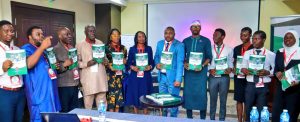
The unveiling ceremony attracted a broad range of stakeholders, including civil society leaders, government officials, legal practitioners, media professionals, and youth advocates. Participants agreed that corruption can only be effectively confronted through collective action, ethical leadership, and sustained, practical reforms.
Stakeholders also reaffirmed the central role of Nigerian youths in fostering a culture of integrity, noting that empowering young people remains key to building a transparent, accountable, and corruption-free Nigeria.
Share this


