

The Federal Government has moved to safeguard Nigeria’s multibillion-naira livestock industry, reaffirming its commitment to eliminating preventable animal diseases as a critical step toward achieving national food security.
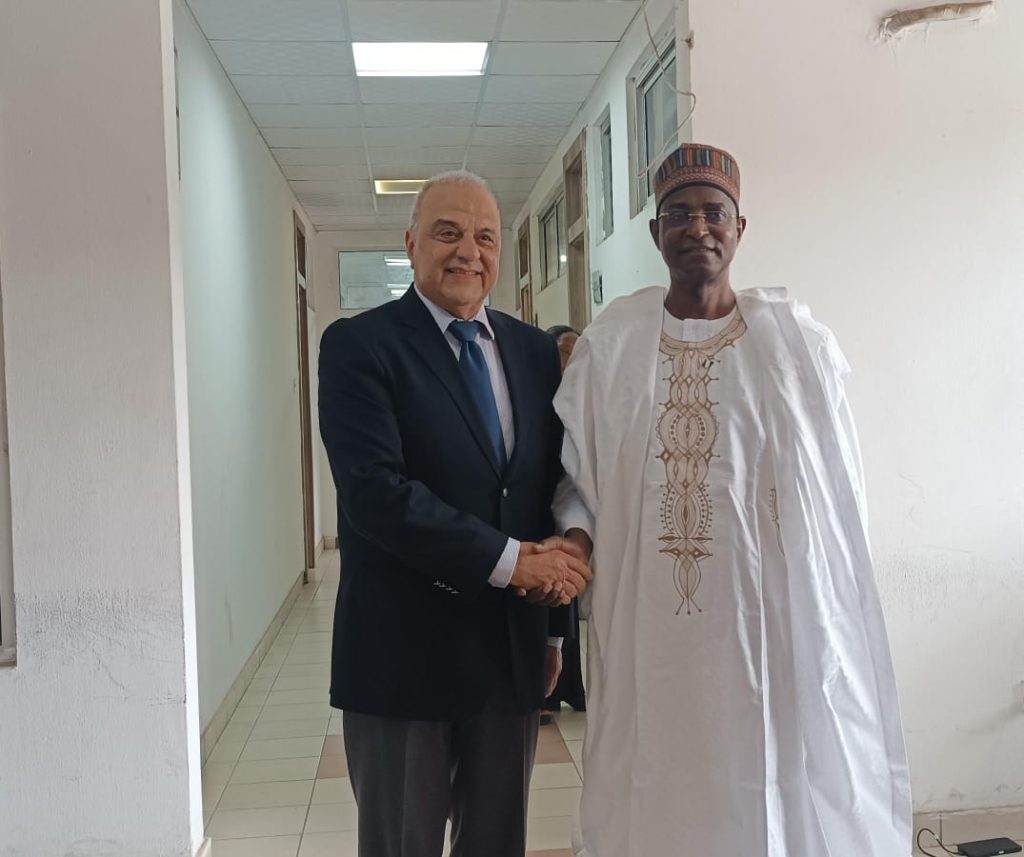
The Honourable Minister of Livestock Development, Idi Mukhtar Maiha, disclosed this on Monday, April 20, 2026, during a high-level engagement with a delegation from Ambuvets Konsult and MCI Santé Animale at the Ministry’s headquarters in Abuja. The partnership aims to address the devastating impact of transboundary diseases such as Peste des Petits Ruminants (PPR), Foot-and-Mouth Disease (FMD), and Contagious Bovine Pleuropneumonia (CBPP), which continue to erode farmer incomes and threaten agricultural resilience.
Animal Health as a Pillar of Economic Stability
Speaking on the strategic importance of the sector, Minister Maiha emphasized that animal health is a fundamental requirement for the nation’s broader development goals. He noted that the Ministry is currently executing an ambitious transformation of the livestock landscape.
“We are undertaking an ambitious transformation of the livestock sector, one in which disease prevention, control, and management are central pillars,” the Minister stated. “This partnership strengthens our capacity to confront zoonotic and transboundary diseases and to ensure that Nigerian farmers have access to the vaccines they need to thrive.”
He further clarified that while the collaboration is privately driven, the Federal Government remains committed to creating an enabling environment that accelerates innovation and supports research efforts to deliver measurable impacts across the continent.
Closing the Vaccine Availability Gap
The initiative brings together the local expertise of Ambuvets Konsult, an indigenous Nigerian animal health firm, and the global manufacturing power of MCI Santé Animale, a renowned veterinary pharmaceutical manufacturer.
Dr. Shehu Shamsudeen, CEO of Ambuvets Konsult, explained that the partnership is designed to bridge longstanding gaps in vaccine access. Under the arrangement, MCI will focus on high-quality production, while Ambuvets utilizes its expansive domestic distribution network to ensure vaccines reach smallholder farmers the backbone of Nigeria’s livestock economy.
Echoing this sentiment, the CEO of MCI Santé Animale, Dr. Tadlaoui Omari Khalid, stressed the importance of “Africa-driven solutions” to local challenges, noting that global multinationals often fail to grasp the unique realities of the African agricultural landscape.
“For me, it is to find the best solution for our continent,” Khalid remarked. “The big multinationals are not aware of our realities and will not help us, so we have to come together and find the right solutions for ourselves.”
Scaling Local Impact and Manufacturing
Dr. Khalid further revealed that the company has successfully navigated the rigorous regulatory process in Nigeria, securing NAFDAC registration for several key products, including Ovivax PPR, Bovivax CBPP, and LYOPOX.
Beyond distribution, the partners are working closely with the National Veterinary Research Institute (NVRI) to conduct localized trials and validate vaccine efficacy. Discussions are also underway regarding the potential for local manufacturing and deeper research collaborations to ensure long-term sustainability.
By optimizing last-mile delivery and prioritizing smallholder operations, the Federal Government and its partners aim to build a future-ready livestock sector that protects both the livelihoods of farmers and the health of the Nigerian public.
Share this