

The Federal Government has officially transitioned from manual data gathering to an advanced tracking network to reshape the future of the nation’s academic framework. Through the Federal Ministry of Education, the government unveiled the Digitalised Nigeria Education Management Information System (DNEMIS). This unified national education data platform is built to drastically strengthen planning, accountability, and evidence-based decision-making across Nigeria’s entire education sector.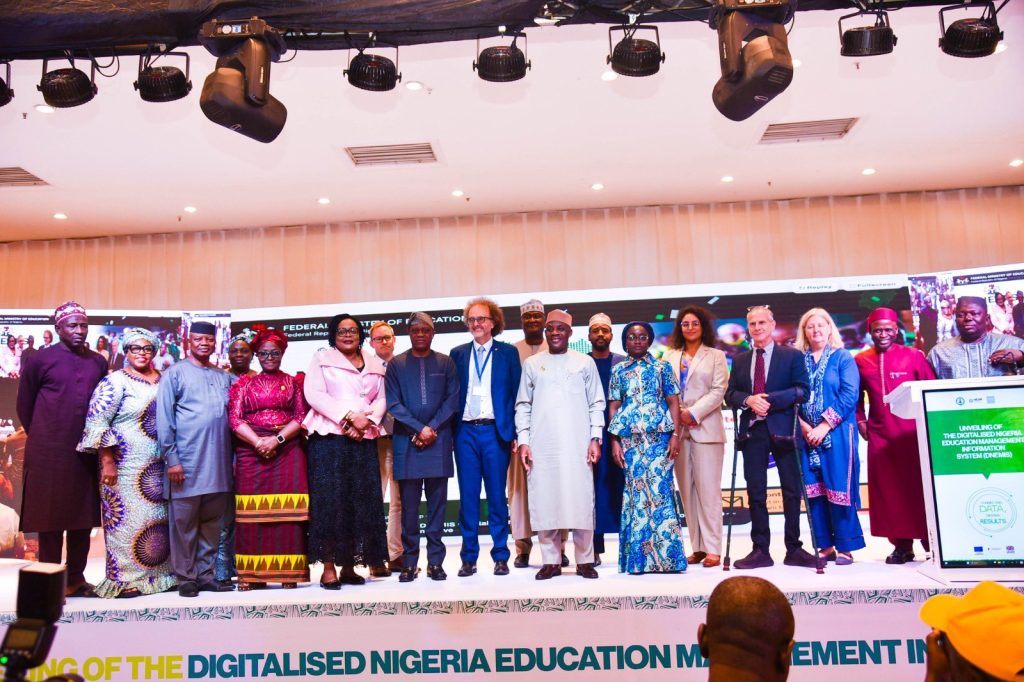
By retiring the outdated, paper-based Annual School Census, the government aims to inject transparency into school administration. The new system will allow policymakers to see immediate infrastructure and staffing needs as they happen, ensuring resources go exactly where they are needed most.
Massive Data Capture Underway
The digital platform is already operating at an impressive scale across the country. During the official launch in Abuja, authorities revealed that DNEMIS has already captured 124,548 schools, which represents 58.4 per cent of national coverage. Alongside these institutions, the system has successfully registered over 40 million learners, 1.19 million teachers, 730,000 classrooms, and 607,000 sanitation facilities.
To ensure long-term precision and security, every single school captured on the platform has been completely geo-mapped. Furthermore, the ministry announced that every learner will receive a unique 16-digit Learner Identification Number (LIN), which will be directly linked to their National Identification Number (NIN) to prevent data duplication and track academic progress from primary school onward.
Minister Highlights Reform Intentions
The launch marks a critical milestone in addressing long-standing structural deficits in the school system. Speaking on the strategic value of the platform, the Honourable Minister of Education, Dr. Maruf Tunji Alausa, emphasized that the software will be the foundational pillar for all future academic investments and resource distribution.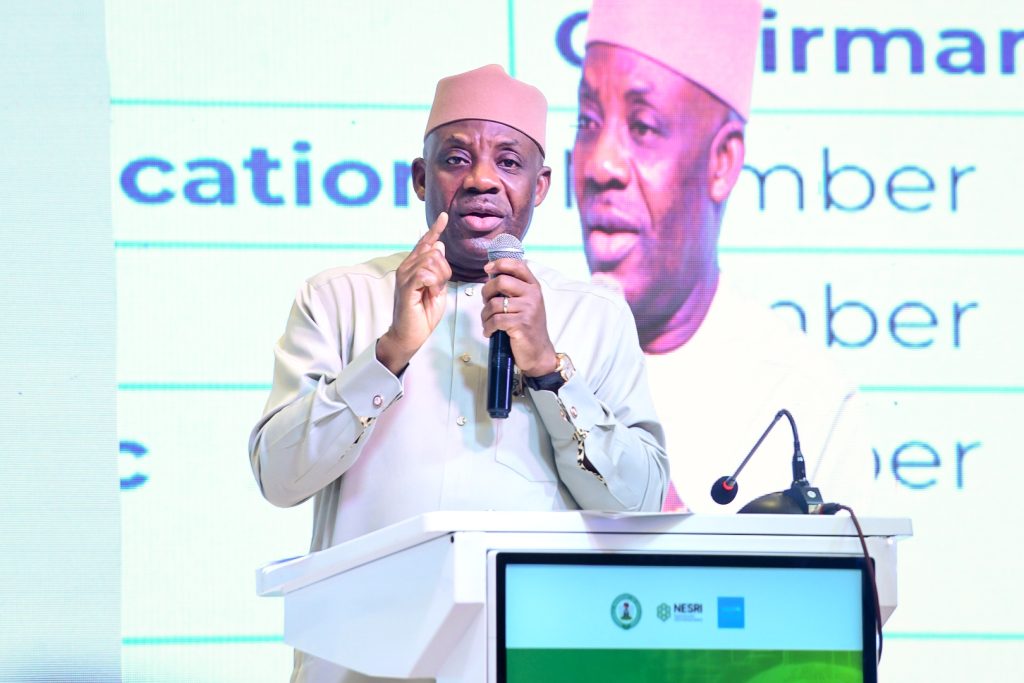
“DNEMIS is a transformative reform that replaces the paper-based Annual School Census with a real-time digital system capturing data on schools, learners, teachers, classrooms, and education infrastructure. The platform will support planning, budgeting, teacher deployment, school safety, and interventions to improve learning outcomes,” Dr. Maruf Tunji Alausa, Minister of Education stated.
International Partners Back the Initiative
The successful deployment of this technological framework relies heavily on cross-sector collaboration. The initiative was developed and launched with significant technical and logistical support from UNICEF Nigeria and other development partners, who are working alongside the government to modernize West African data management systems.
Moving forward, the Federal Ministry of Education has reaffirmed its absolute commitment to scaling the platform until every school, teacher, and learner is fully captured. The ultimate objective remains using this real-time data to guarantee equitable, inclusive, and high-quality education for children in every state across the federation.
Public Access to Live School Data
In an effort to promote open governance, the ministry has made the platform accessible to everyday citizens, researchers, and parents who wish to verify the status of schools in their local communities. UNICEF Nigeria encouraged the public to engage with the system to discover education data at your fingertips and easily track regional academic progress.
Members of the public can now explore the DNEMIS portal online to view live metrics by state, local government, or specific institutions. The public registration and data breakdown portal can be accessed directly at https://emis.education.gov.ng.
Share this


