
In a move set to redefine international development finance, the European Investment Bank (EIB) Group and the World Trade Organization (WTO) Secretariat have signed a first-of-its-kind agreement to harmonize trade regulations with massive capital investment.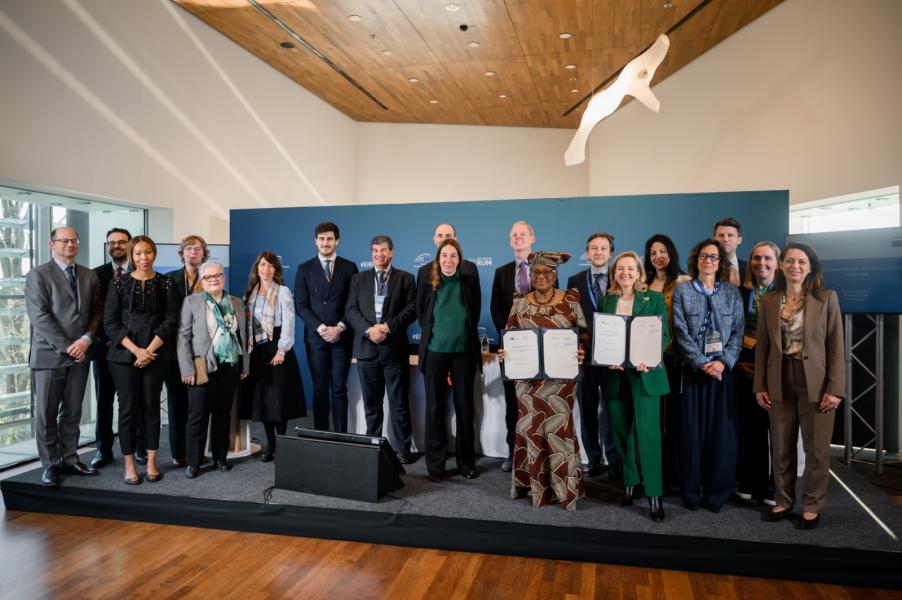
The partnership, formalized through a Memorandum of Understanding (MoU) at the EIB Group Forum, aims to bridge the gap between high-level trade policy and boots-on-the-ground economic development. By aligning the EIB’s financial “firepower” with the WTO’s regulatory expertise, the organizations intend to create a seamless pipeline for sustainable global commerce.
A Unified Strategy for Global Growth
The centerpiece of this collaboration is the “EIB-WTO Trade and Investment Facilitation Initiative.” Developed in coordination with the European Commission, the program is designed to mobilize capital and streamline investment regulations between the European Union and its global partners.
The initiative will initially prioritize Sub-Saharan Africa, focusing on critical sectors including the green and digital transition, healthcare, and education. The goal is to unlock investments that not only foster sustainable growth but also ensure the creation of decent jobs in developing regions.
“This agreement will help turn trade policy dialogue into concrete, high-impact investments,” stated EIB Group President Nadia Calviño. “At a time when we need them most, it contributes to win-win partnerships based on mutual respect for shared prosperity.”
Cutting Red Tape to Unlock Private Capital
A significant portion of the cooperation will support the Investment Facilitation for Development Agreement, a framework backed by over three-quarters of WTO members. This agreement seeks to create the first global set of rules to simplify foreign direct investment (FDI) by eliminating bureaucratic hurdles and increasing transparency.
WTO Director-General Ngozi Okonjo-Iweala emphasized the necessity of this synergy as global FDI flows continue to face headwinds.
“This partnership aligns policy reform efforts with catalytic financing, and thus promises to unlock private investment in strategic sectors, including critical minerals and the bioeconomy,” Okonjo-Iweala noted.
From Planning to Implementation
The collaboration follows a structured three-tier approach to ensure projects reach fruition such as assessment by identifying specific regulatory reforms needed to make a country “investment-ready, advisory by utilizing EIB expertise to prepare projects for financing, and funding by deploying EIB capital and blended finance instruments to attract additional private sector participants.
This integrated model ensures that legislative reforms at the WTO level are immediately met with the technical and financial support required to break ground on infrastructure and innovation projects.
Strengthening the EU’s Global Footprint
The agreement reinforces the EU’s Global Gateway strategy, which seeks to boost smart, clean, and secure links in digital, energy, and transport sectors worldwide. While the pilot phase targets Africa, the EIB and WTO confirmed plans to expand the scope of the partnership over time.
The EIB Group, which signed €100 billion in new financing in 2025, continues to position itself as a central pillar of EU foreign policy, driving territorial cohesion and technological innovation on a global scale.
Share this


