

The Centre for Journalism Innovation and Development (CJID) has officially launched a comprehensive campaign to combat false narratives in Northwestern Nigeria, warning that information manipulation in fragile regions has escalated far beyond a simple media challenge to become a direct trigger for violence and insecurity.
The 18-month intervention, titled “Countering Disinformation and Empowering Democracy in Northwestern Nigeria,” is being executed with funding support from the European Union (EU) and in strategic partnership with the West Africa Network for Peacebuilding (WANEP-Nigeria).
The project kicked off in Sokoto with a weeklong Training of Trainers (ToT) workshop, gathering government officials, security personnel, academics, journalists, civil society groups, and community leaders to build a localized bulwark against digital manipulation.
A Threat Beyond the Media
Speaking on the urgent necessity of the project, Akintunde Babatunde, Executive Director of CJID, emphasized that the digital age has fundamentally altered how conflict and governance are perceived, placing immense strain on local institutions.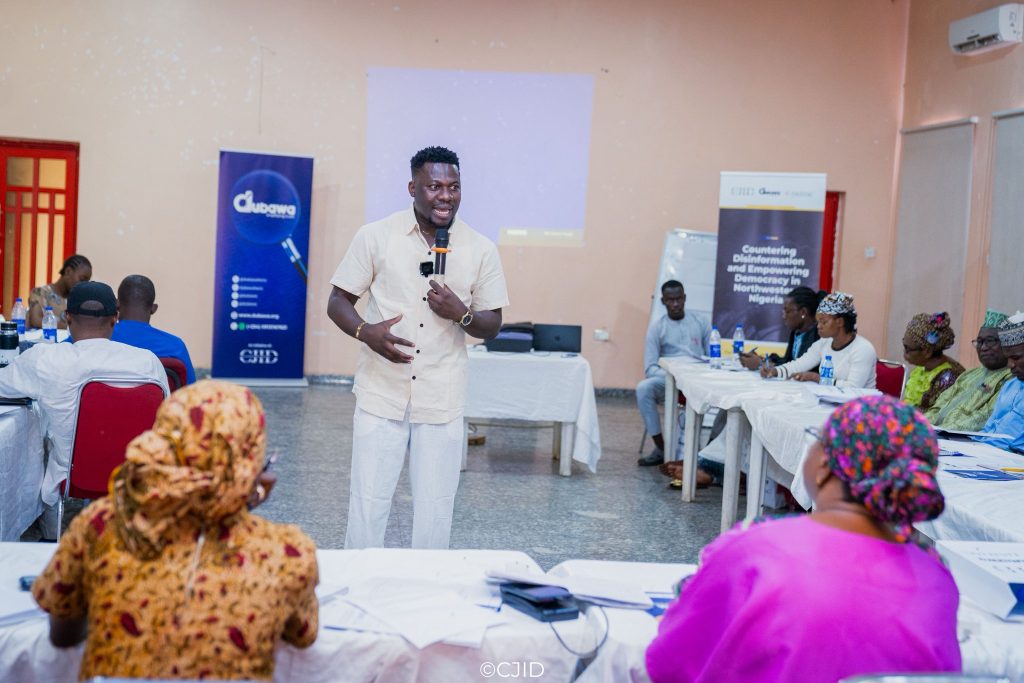
“While the digital age has expanded opportunities for visibility and communication, it has also increased pressure on institutions and professionals to adapt. We need digital inclusion, capacity building, and ensuring no one is left behind in the technological transition.” stated Akintunde Babatunde, Executive Director, CJID.
During a session focused on the “Narratives of Violence,” Babatunde further highlighted how bias, omission, and selective storytelling can dangerously warp public perception of conflict. He challenged educators and journalists to maintain strict rigor and context, ensuring that information shared in classrooms and newsrooms strengthens informed public discourse rather than distorting reality.
Unpacking the Local Information Ecosystem
The workshop featured extensive analysis of how false narratives explicitly target vulnerabilities within Nigerian society. Silas Jonathan, a digital research expert at CJID, noted that as the world becomes more digitally connected, the transmission of authentic, verified knowledge is paramount.
“Knowledge only becomes powerful when it is shared, applied, and passed on,” Jonathan stated, reminding participants that future generations will inherit the information ecosystem shaped today.
Illustrating the tangible dangers of these digital threats, Professor Ismail Mohammed Yauri, the Director of Information and Public Relations at Usman Dan Fodio University, Sokoto (UDUS), pointed out how easily everyday digital fabrications disrupt communal peace.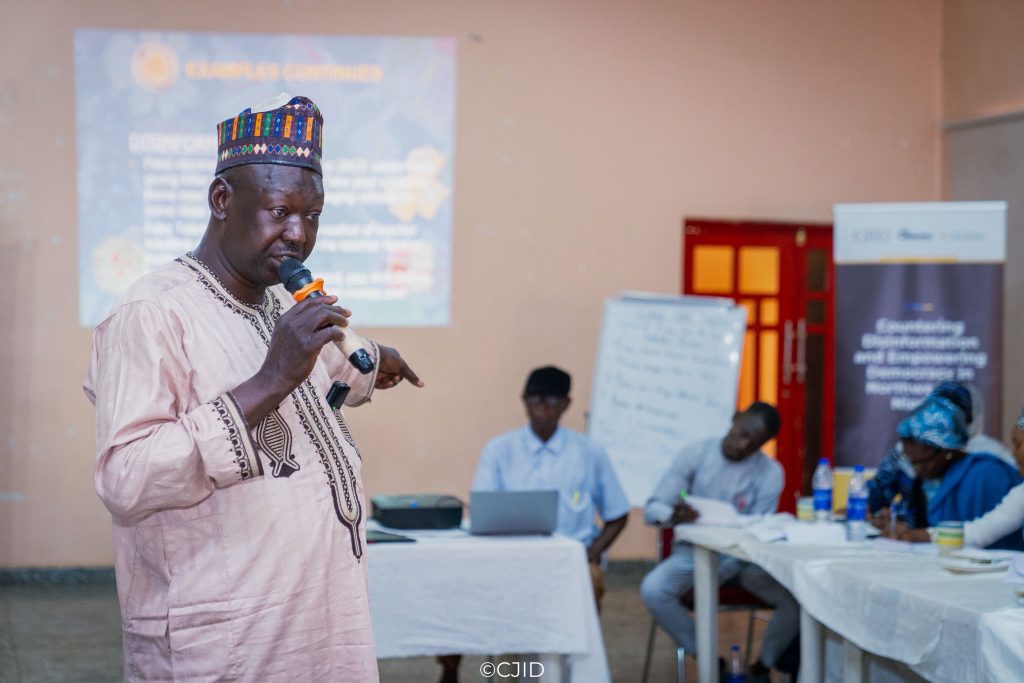
Yauri pointed to fake school announcements, manipulated screenshots, and misleading voice notes targeting vaccination campaigns as primary examples of tools used to spark widespread fear and distrust. He called for aggressive media and information literacy programs tailored specifically for young people, who consume and redistribute content daily.
Historical Precedents and the Mechanics of Fact-Checking
The real-world stakes of misinformation were brought into sharp focus by CJID facilitator Claire Mom, who used the 2003–2004 polio vaccination boycott in Northern Nigeria as a historical case study. Mom unpacked how a volatile mixture of political tension, religious influence, and institutional distrust can drive public health catastrophes.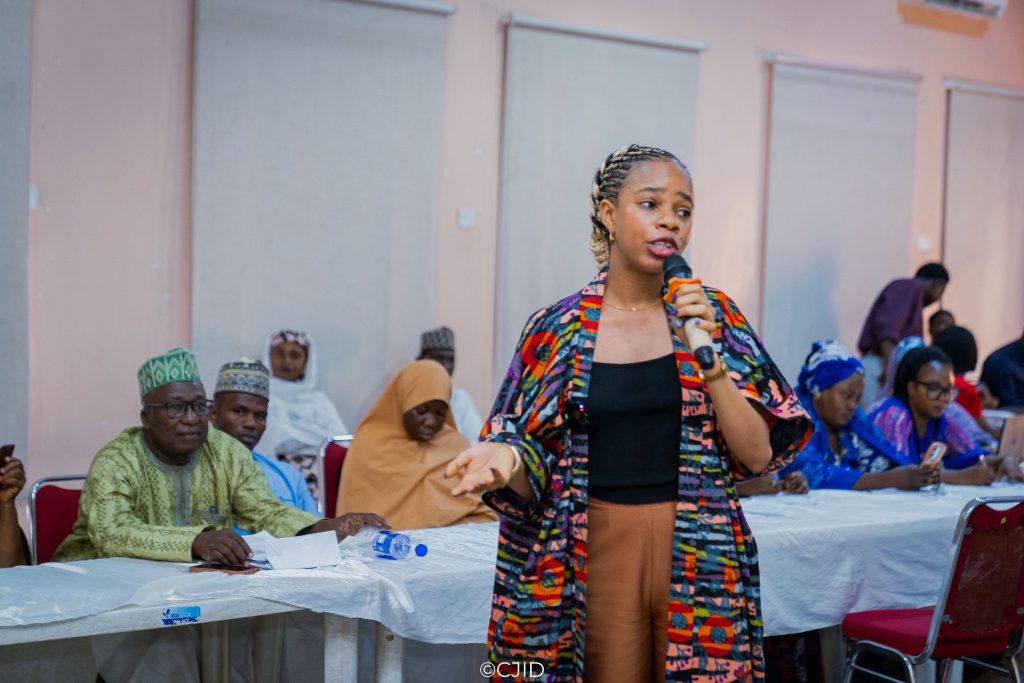
Mom also led intensive practical sessions breaking down the specific methodologies and boundaries of rigorous verification. She clarified a common point of confusion for early-stage fact-checkers, noting that while empirical facts can be verified through cross-referencing and credible sourcing, opinions, personal judgments, and emotional statements cannot be fact-checked. She cautioned participants to exercise extreme due diligence to ensure they do not inadvertently amplify the very falsehoods they are trying to correct.
Building Long-Term Community Resilience
The ultimate goal of the 18-month intervention is to build a self-sustaining network of informed voices across the Northwest region. By focusing heavily on local-language resilience initiatives, Open-Source Intelligence (OSINT), and early-warning monitoring systems, the project aims to stop malicious narratives before they instigate physical harm.
Reflecting on the collaborative nature of the training, Temilade Onilede lauded the high level of engagement among the Sokoto participants.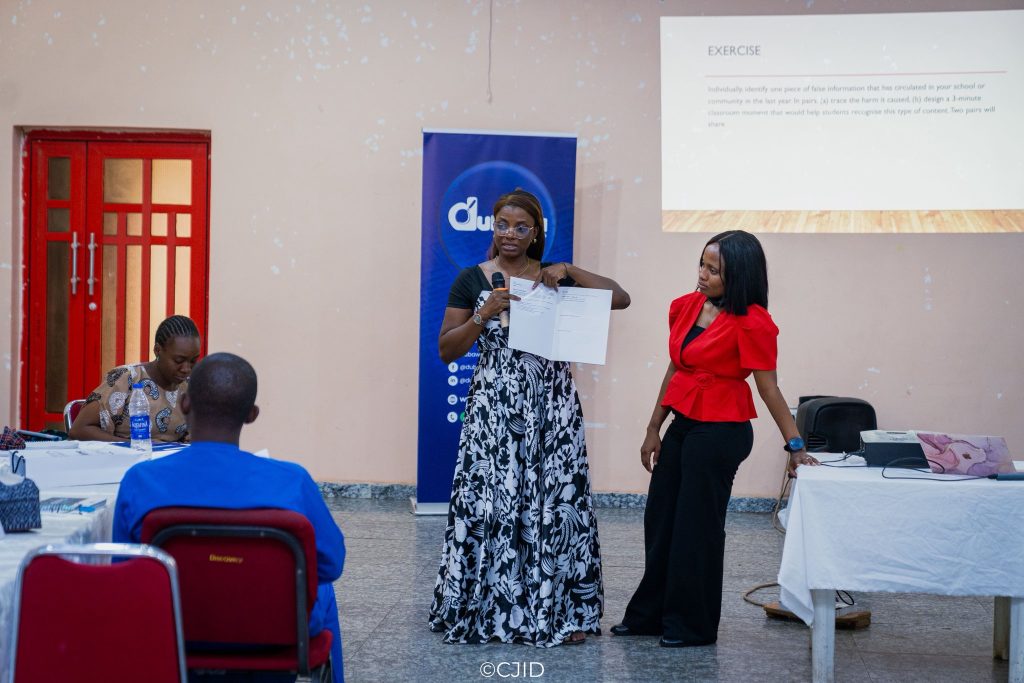
She urged the attendees to aggressively adapt the tools and analytical skills acquired during the sessions into their daily routines, schools, and community leadership practices to ensure the knowledge multiplies across the region.
Share this


