

The Wole Soyinka Centre for Investigative Journalism (WSCIJ) has held its 18th Wole Soyinka Centre Media Lecture Series, bringing together key stakeholders to dissect the quality of Nigeria’s democracy, the shrinking civic space, and the role of the media in preserving public trust.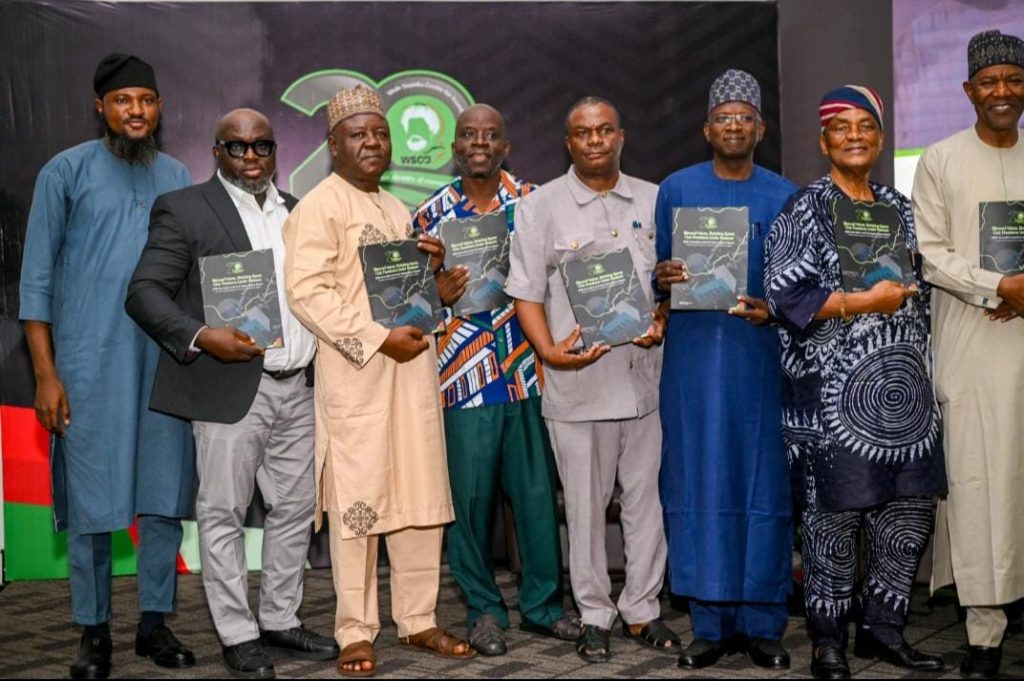
The event, held under the theme “Beyond the Ballot: Measuring Democracy Through Security, Welfare, Accountability and Public Trust,” challenged the conventional metrics of democratic success in Africa’s most populous nation. Welcoming participants, the immediate past Board Chair of the WSCIJ, Professor Repo Sopokoni, noted that there could hardly be a more fitting time to reflect on what happens before and beyond the ballot.
Redefining Democracy Beyond Elections
Delivering the keynote address, the Vice Chancellor of the Federal University, Kashere and Professor of Communication at Bayero University, Kano (BUK), Professor Umaru Pate, challenged the audience to rethink how democratic progress is measured. He drew a sharp distinction between procedural democracy which relies on periodic voting and substantive democracy, which actively improves the lives of citizens.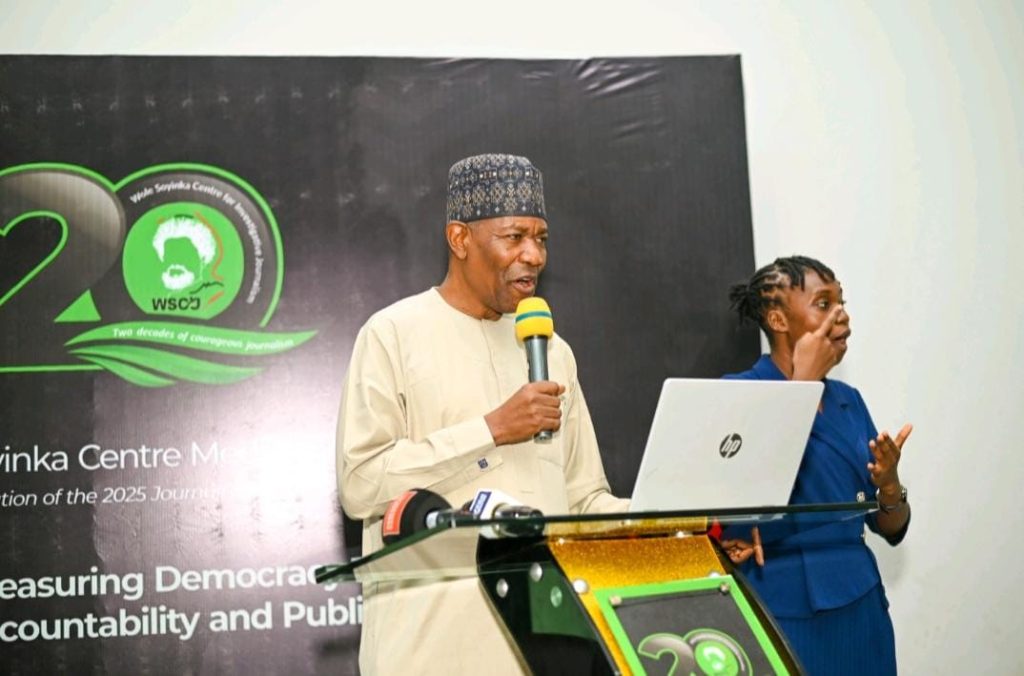
“Can a nation be considered democratic simply because elections are conducted periodically?” Pate asked. “Citizens will evaluate democracy not through constitutional provisions, but through their lived experiences. What am I feeling? Can I find employment as a Nigerian in a democratic context? Can I feed my family? Can I access healthcare? Our democracy should be able to reduce poverty.”
Addressing the modern media landscape, Pate also raised concerns about information hygiene, pointing out that “today, the problem is not about the absence of information in our democracy, but rather is the abundance of information mostly wrongly and scarcity of attention.”
A major highlight of the event was the official unveiling and review of the 2025 Journalism & Civic Space Status Report. Presenting the findings, the Executive Director of the Media Career Development Network, Lekan Otufodunrin, revealed a worrying trend of systemic hostility towards the press and civic actors.
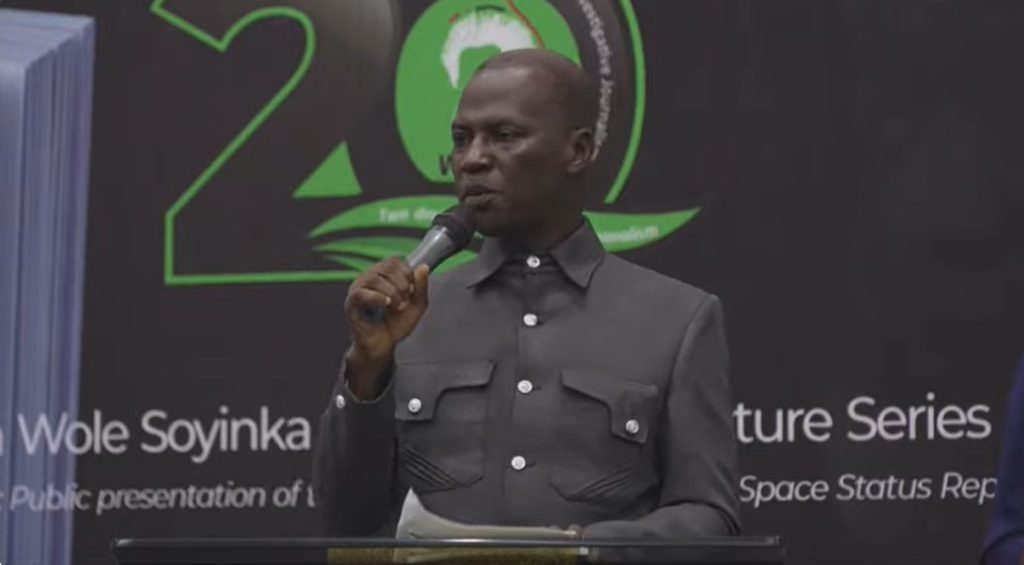
The report documented 245 civic space incidents across 570 media reports published by 54 media organisations. The findings pointed to persistent restrictions on freedom of expression, access to information, peaceful assembly, association, and broader civic participation.
Most notably, the report exposed the heavy-handed involvement of government agencies in these infractions. State actors were involved in 219 incidents (89.4%), with the Nigeria Police Force identified in 118 incidents, accounting for 53.9% of all state-linked cases documented.
Confronting the Delivery Deficit
During the panel session, moderated by the Founder and Editor-in-Chief of TV360 Nigeria, Deji Badmus, experts from media, law enforcement, and civil society debated how to bridge the gap between governance and citizens.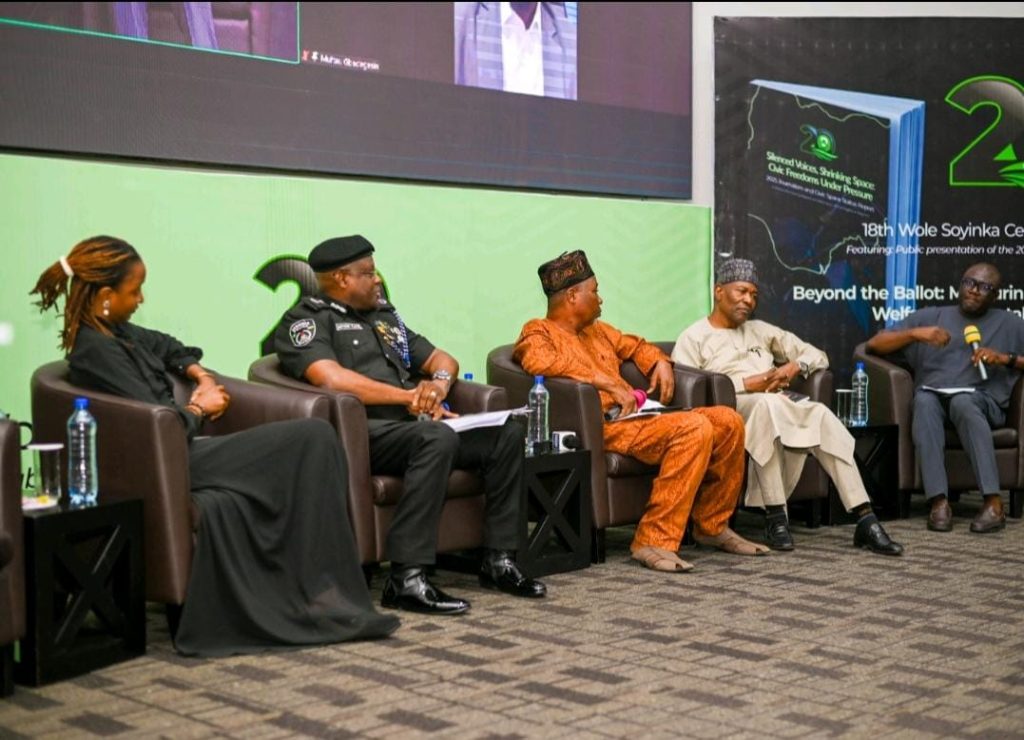
Representing the Commissioner of Police, the Deputy Commissioner of Police (Finance and Administration), DCP Anthony Placid, sued for ethical communication while maintaining that law enforcement remains bound by the rule of law.
“Nobody is above the law. There is a need to embrace responsible and ethical practices, particularly when communicating information that affects the public,” Placid stated.
Countering the narrative of state pressure, the General Manager of Radio One 95.3FM, Nabilah Usman, emphasised internal editorial gatekeeping as the ultimate defense against misinformation.
“Editorial oversight is probably the most important safeguard. Decisions cannot be taken independently, especially on issues that affect public safety. When you weigh the consequences of publishing false information, the repercussions are far greater,” Usman argued.
Stating the electoral umpire’s perspective, Taiwo Gbadegesin, Deputy Director and Head of Voter Education, Publicity, Gender and Civil Society for INEC Lagos State, shifted the focus to political actors. He argued that while the press and INEC carry out voter education, the ultimate success of the system depends on the political class actively supporting voter enlightenment.
Partnerships, Future Talents, and a Milestone Celebration
The event also featured a special farewell fireside chat between WSCIJ Executive Director and CEO, Motunrayo Alaka, and the outgoing Consul General of the Netherlands in Nigeria, Michel Deelen.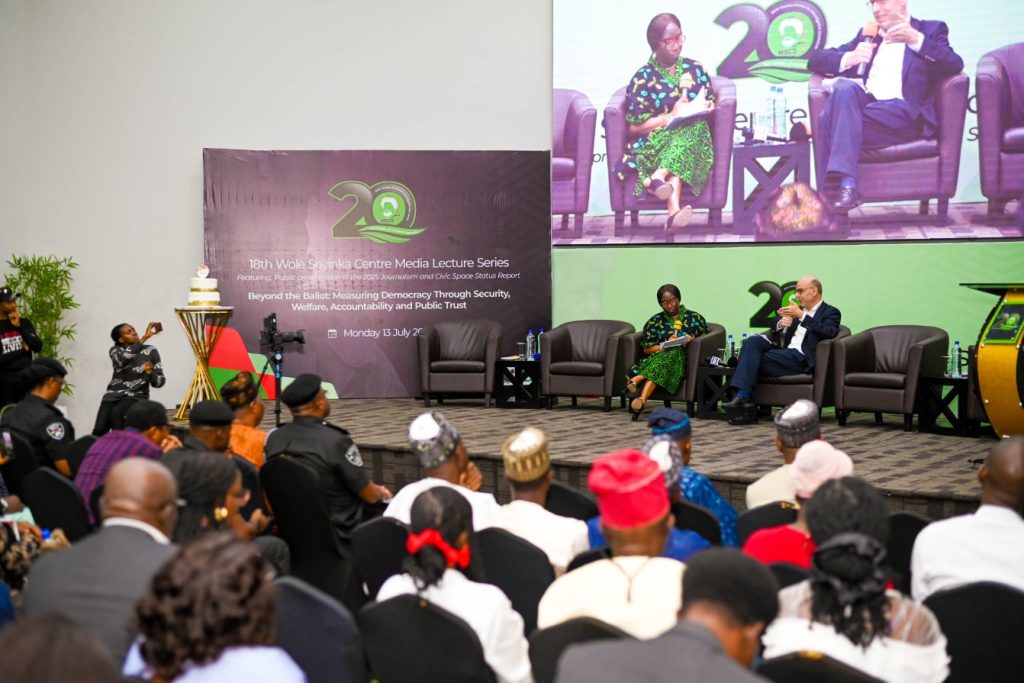
Having served in Nigeria for over 14 years, Deelen was honoured with an award recognizing his dedicated service and his country’s longstanding support for investigative journalism and democratic accountability in Nigeria.
Addressing the next generation of journalists, Alaka urged student journalists in attendance not to lose heart over the economic challenges facing the media industry.
“If you do good work, it will take you places,” Alaka encouraged, advising them to use artificial intelligence as a tool rather than a substitute for original reporting, and to build specialized expertise in niche areas.
The day concluded on a celebratory note as participants marked the 92nd birthday of Professor Wole Soyinka, Nobel Laureate and Grand Patron of the Centre, with a cake-cutting ceremony in honour of his lifelong commitment to justice and free expression.
Share this


