

Health leaders and emergency experts from across the continent have gathered in Ethiopia’s capital this week to transition Africa’s emergency response from a reactive model to a permanent state of multi-hazard preparedness.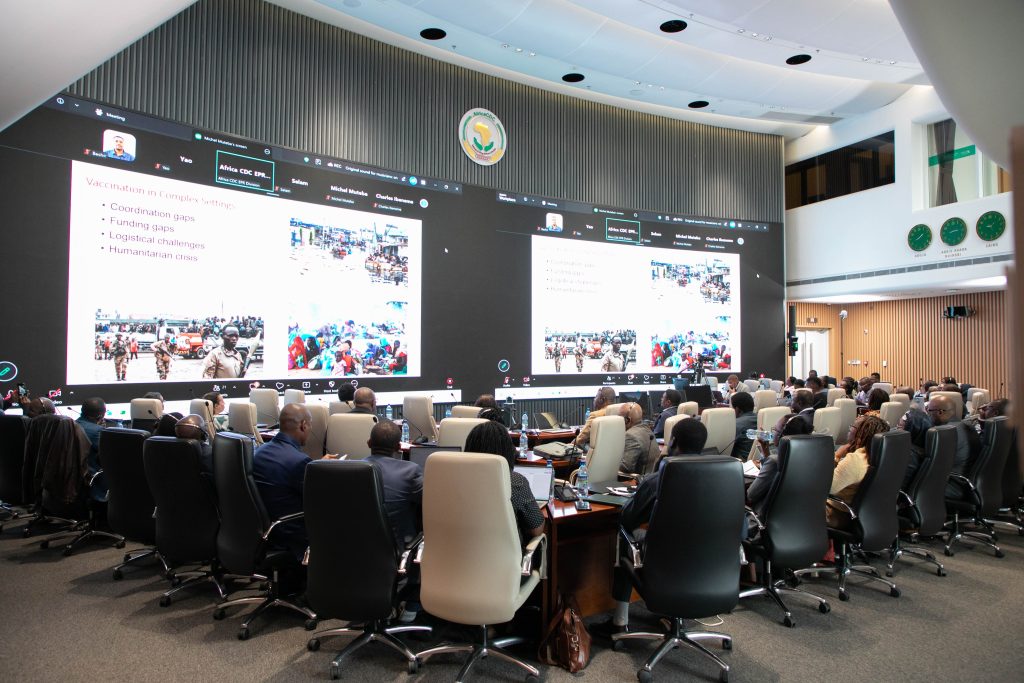
The meeting marks a pivotal shift for the Continental Incident Management Support Team (IMST), which is moving beyond emergency firefighting to establish a sustained, long-term framework for safeguarding public health across the African continent.
From Crisis to Coordination
Since its activation in August 2024, the Continental IMST has been the primary engine driving the response to the mpox outbreak, which was declared a Public Health Emergency of Continental Security (PHECS) by the Africa CDC and a global emergency by the WHO. The team has been instrumental in synchronizing efforts across surveillance, laboratory diagnostics, vaccine distribution, and community engagement.
“A stronger IMST today means a more prepared and resilient Africa tomorrow,” as posted on X. “We are turning the hard-won experiences from the cholera and mpox responses into a concrete roadmap for the future.”
Validating the New Blueprint
The primary objective of the Addis Ababa summit is to move past ad-hoc responses and finalize a standing multi-hazard coordination mechanism. Experts are currently reviewing the successes and bottlenecks of recent health crises to validate the new IMST Framework and Concept of Operations (CONOPS).
By formalizing these protocols, the Africa CDC aims to ensure that when the next health threat emerges, the infrastructure for financing, logistics, and case management is already in place and ready to deploy.
A Roadmap for Continental Security
The transition signifies a next chapter for the IMST. Rather than disbanding after a crisis subsides, the team will evolve into a permanent fixture of Africa’s health architecture. This week’s sessions are expected to result in a validated roadmap that streamlines how African nations share data and resources, ensuring that the continent no longer relies solely on external aid but leads its own defense against infectious diseases.
Share this


