

The African Union Commission (AUC) has officially convened the 3rd Edition of Africa Blue Economy Week and the High-Level Africa Sustainable Blue Economy Conference in Luanda, Angola. Running from July 22 to July 25, 2026, at the Intercontinental Hotel, the gathering brings together continental leaders, ministers, technical experts, and international partners to accelerate the sustainable utilization of Africa’s ocean and freshwater resources.
Operating under the theme “From Strategy to Action: Political Leadership for Africa’s Blue Economy Transformation,” the continental event is organized by the AUC’s Department of Agriculture, Rural Development, Blue Economy and Sustainable Environment (ARBE), in collaboration with the Government of the Republic of Angola and the United Nations Development Programme (UNDP).
Moving from Vision to Actionable Pillars
Opening the technical segment, Mr. Harsen Nyambe, Director of Sustainable Environment and Blue Economy at AU-DARBE, emphasized the urgency of shifting from strategic planning to concrete implementation inline with Agenda 2063.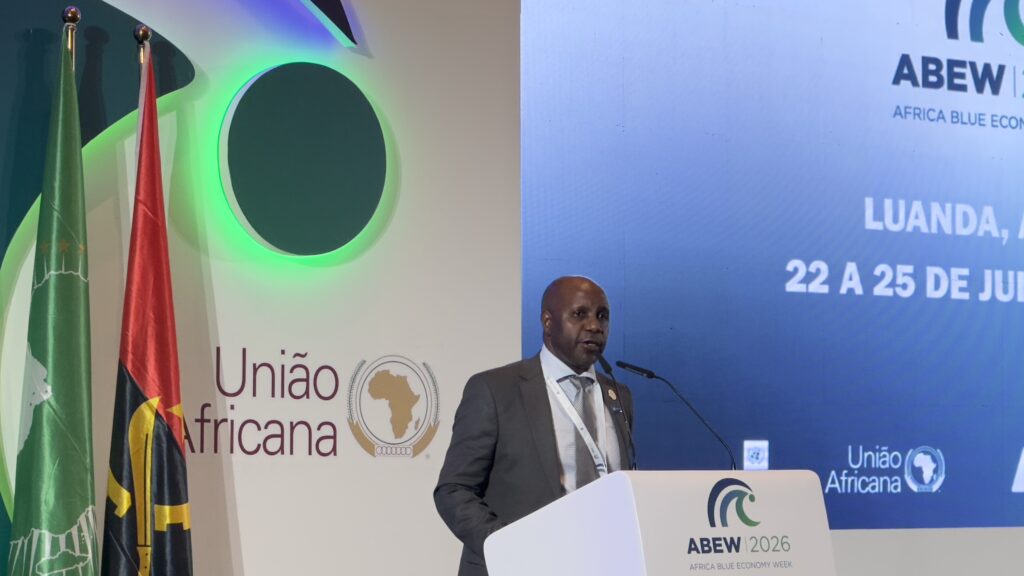
“We believe that sustainable blue economy development must be built on five pillars: strong political leadership; sound science and reliable ocean data; sustainable financing; regional cooperation; and inclusive participation that ensures no one is left behind,” stated Nyambe. “Without these pillars, Africa cannot fully harness the opportunities presented by our oceans, seas, rivers and lakes.”
Key Objectives and Expected Outcomes
The four-day conference addresses critical bottlenecks that have historically stalled continental maritime policies. Delegates are focusing on mobilizing sovereign, private sector, and philanthropic capital for bankable, investment-ready blue economy projects, while streamlining ocean data governance and regional cooperation across Regional Economic Communities (RECs).
A central pillar of the meeting is driving social inclusion, expanding leadership roles, technical skills, and market access for youth, women, and vulnerable group innovators across coastal and aquatic value chains. The summit is expected to culminate in the endorsement of The Luanda Declaration and Call to Action, setting binding commitments to enhance climate resilience, job creation, and early-warning disaster response capabilities.
Building on Africa’s Maritime Policy Architecture
The event reinforces a comprehensive suite of continental policies aimed at structural transformation, including the 2050 Africa’s Integrated Maritime Strategy (2050 AIM Strategy), the Africa Blue Economy Strategy (ABES), and the Lomé Charter on Maritime Security.
The summit also builds upon the landmark implementation of the Revised African Maritime Transport Charter (RAMTC), which entered into force in August 2025 to strengthen port governance and cabotage rights continent-wide. Following the technical expert sessions, the conference will transition into a High-Level Ministerial Session on Friday, July 24, to finalize strategic commitments.
Share this


