

By Michael Omotosho |
On a humid afternoon in Ayobo, Lagos, commercial tricycles wobble dangerously through muddy craters on the Alaja–Olayemi Road while schoolchildren cling to roadside fences to avoid slipping into pools of brown water. Residents say this has become their reality for more than a decade.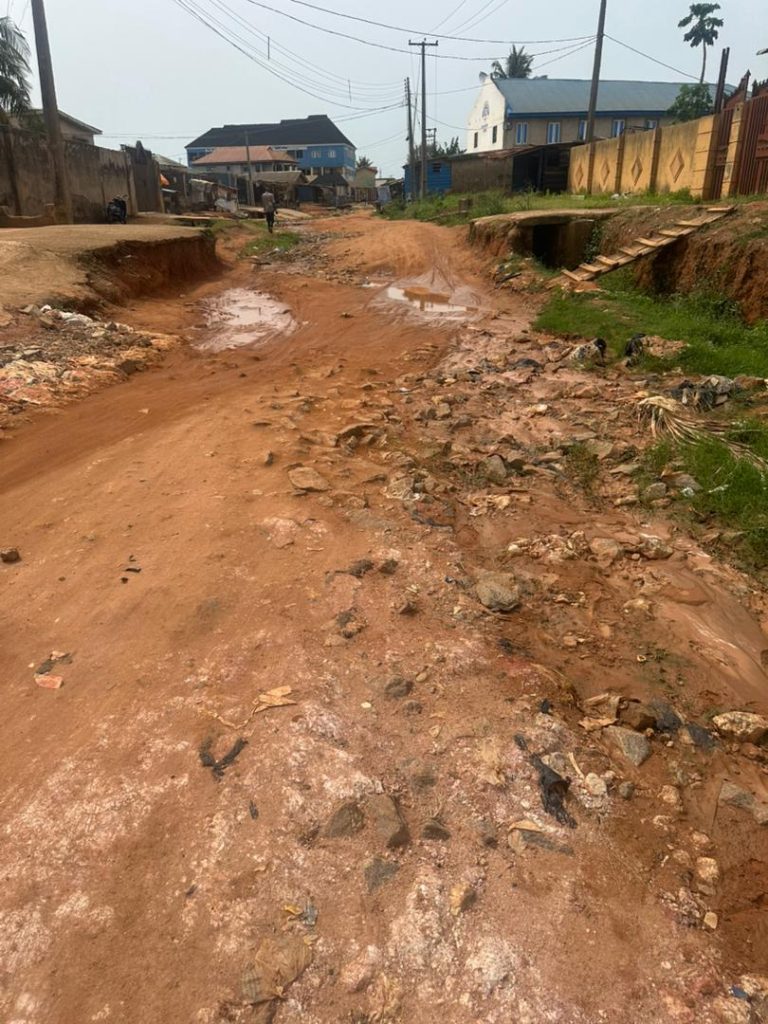
Yet standing beside the battered road is a government project signboard faded, dusty, but still boldly declaring a “Rehabilitation of Road” project under the Ayobo/Ipaja Local Council Development Area (LCDA).
For many residents, the signboard is not just an announcement but a symbol. A symbol of promises abandoned midway.
For over 10 years, the Alaja–Olayemi Road in Ayobo–Ipaja has remained in deplorable condition despite repeated assurances of intervention, partial construction efforts, and ongoing infrastructure expansion in other parts of Lagos State. Residents allege that the last major construction work on the road stopped around 2016, leaving behind an incomplete stretch now battered by erosion, flooding and neglect.
The question many residents are asking is simple: What happened to the project, and where did the funding go?
Beside the road, precisely at the point where construction visibly stopped, stands a project board bearing the inscription:

But months after the signboard appeared, residents say there is no meaningful progress beyond grading and temporary sand-filling.
You Can Get Stranded at Night
For commuters like Mr. Sunday Okafor, a tricycle rider who plies the axis daily, the road has become both an economic burden and a safety risk.
“The road is in a terrible condition,” he said, wiping sweat from his forehead after maneuvering through deep potholes.
“The major challenge is that people travel daily, but because of the bad road, they encounter different obstacles and difficulties. If you are coming into Ayobo around 10 or 11 p.m., you can easily get stranded because you won’t find bikes or any means of transportation.”
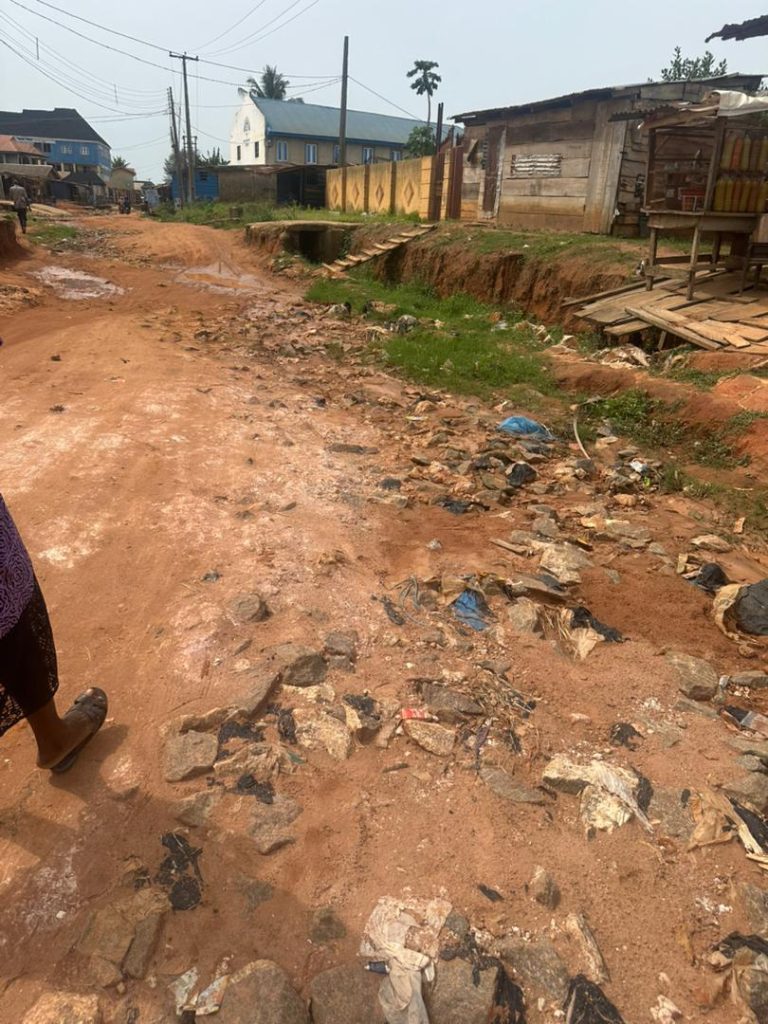
Okafor said only the bridge linking Agric Road is currently receiving attention, while the Alaja road remains abandoned.
“They fixed the road from Megida and stopped at Alaja with just half interlocking done. What about the remaining part? Is it not still Lagos road?” he asked.
Residents insist the project was initially meant to stretch from Megida Bus Stop down to Olayemi, connecting critical residential and commercial communities. Instead, only portions were completed before work mysteriously stopped.
Politics or Neglect?
Among the locals, one explanation continues to circulate quietly… Politics!
“People say it is because of politics,” Okafor said.
“The upper side supports APC while this lower side supports PDP. During elections, you see PDP flags on this side and APC flags on the other side, so they fixed one part and abandoned the other.”
There is no official evidence supporting claims of political discrimination. However, the perception has deepened distrust among residents who believe their community has been deliberately overlooked.
“But the government should remember that we are all citizens,” Okafor added. “Everybody likes good things.”
They Stopped Halfway Again
Commercial motorcyclist, Mr. Damola, described a pattern residents say “The same thing happened from Amule to Ashipa, they stopped halfway again.”
According to him, the road became almost impassable during rainy seasons until recently when stones and sand were poured on parts of it.
“It used to be even worse than this,” he said. “Since then, we have not heard anything from the government about when construction will resume.”
Community Leaders Say Efforts Failed
High Chief S.A. Oke Arefon, the Agbaakin of Alaja Land, said residents and community leaders have repeatedly appealed to authorities without success.
“The contractors handling the project left about ten years ago,” he said.
“The CDA and indigenous residents have made several efforts and supported the process, but all to no avail.”
According to him, landlords and tenants sometimes contribute money to grade sections of the road themselves, temporary interventions that are quickly destroyed by rainfall.
“The poor condition of the road affects residents in many ways,” he explained.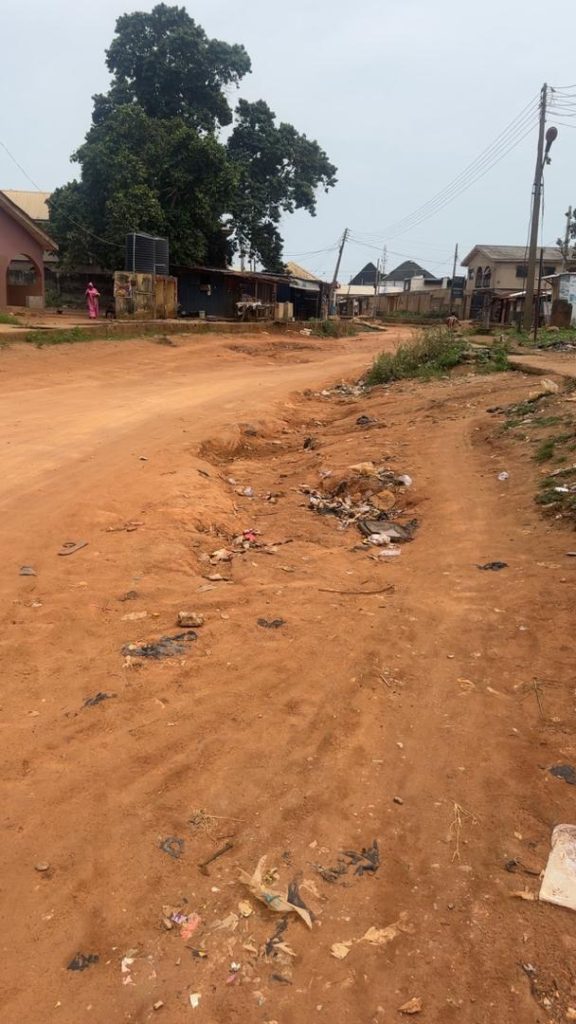
“Workers arrive late to work because movement is difficult. Development is also hindered because investors and business owners are unwilling to establish businesses in areas with poor road networks.”
Transport costs in the area have also surged as drivers avoid the route due to vehicle damage.
“A good road benefits everyone,” he added.
Children Trapped Indoors During Rainfall
For families living around the corridor, the impact goes beyond transportation.
Mrs. Seilat Ojuroungbe, a resident, said motorcycle accidents are common whenever heavy rain falls.
“This road project has not been completed, and it becomes a major problem whenever it rains,” she said. “We want the government to help us fix the road for the sake of our children.”
Another resident, Mr. Fatal Ige, described how erosion and flooding isolate parts of the community during downpours.
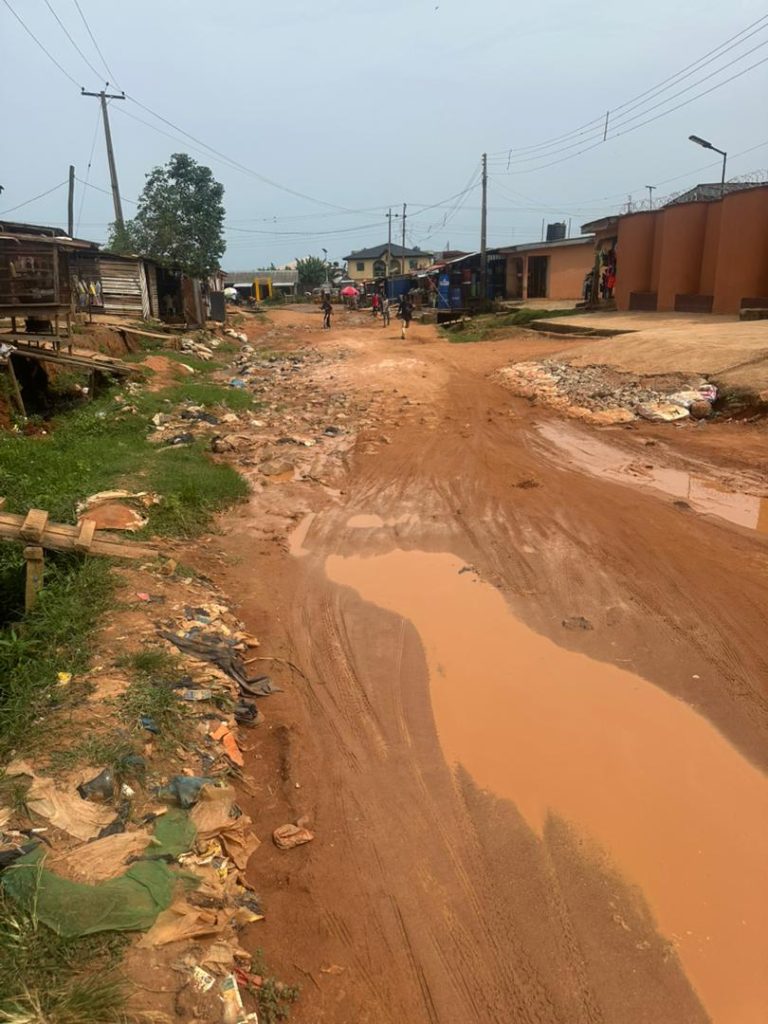
“Even our children cannot go out whenever it rains because erosion floods the community,” he said.
“For the past decade, we have been expecting government officials to return and continue the project, but nothing has happened.”
Mrs. Atoke Apena, an elderly landlady, said many transport operators now refuse to enter the community.
“I am getting old and cannot trek long distances,” she lamented.
“The road construction started years ago, but it has been abandoned for about 10 years without any sign that work will resume.”
Promises Without Progress?
In August 2025. Lukman Abiodun Agbaje, officially flagged off seven road projects across five wards within the council area. However, we observed that the Alaja–Olayemi Road was notably absent from the list.
Months later, in April 2026, the chairman publicly assured residents through his Instagram page that efforts were underway to resume construction on the road, promising that Alaja would “soon experience a positive transformation.”
But beyond the promises, residents say there has been no clear timeline, no public explanation for the earlier abandonment, and no disclosure regarding the project’s funding history.
The visible project board announcing a four-week rehabilitation timeline has only intensified questions among locals who say the road has remained largely untouched for years.
Why was the construction abandoned midway?
Residents say every rainfall reopens old wounds of flooding homes, damaging vehicles, increasing transport fares, and isolating communities from economic opportunities.
And right now it is not just about potholes, it’s about years of waiting, years of taxes paid without visible returns and years of petitions without answers.
LCDA Chairman Reacts
When contacted, the Chairman of Ayobo-Ipaja LCDA, Hon. Lukman Abiodun Agbaje, said plans were underway to resume work on the Alaja–Olayemi Road, although he declined to give a definite commencement date.
“For now, I can’t say,” the chairman said while speaking.
“We are going to do it this year anyway. It will start soon. Before any construction starts, we need to visit the site and do the paperwork before the contractor will move to the site. We are working on it.”
According to him, the necessary project documents, drawings and bills had already been submitted and were currently being processed.
“The paperwork, the drawings and the bills have been submitted, so we are working on it. Any moment from now,” he added.
However, despite the assurances, residents remain cautious after years of repeated promises and abandoned construction efforts. Many say they will only believe the project has truly resumed when heavy construction equipment returns to the site and work continues beyond the partially completed sections.
For the people of Alaja and Olayemi, the issue is no longer just about another government promise. It is about restoring confidence in leadership, accountability for public funds, and giving thousands of residents access to a road they say has been neglected for far too long.
A completed road would mean smooth movement, it would restore economic activity, reduce accidents, improve security at night and reconnect neglected parts of the community to the rest of Lagos, says Dr. Akintomiwa Muktar, an environmental specialist.
While residents now hold on to renewed hope that construction will indeed “start soon,” as assured by the chairman, many in the community say they have heard similar promises before and can only pray this time brings visible action.
As the community waits, we will continue to monitor developments on the project and provide updates on whether the long-awaited rehabilitation of the Alaja–Olayemi road finally becomes a reality.
This report was produced with support from Civic Media Lab.
Share this


