
Kimpact Development Initiative (KDI) has raised concerns over rising political violence ahead of Nigeria’s 2027 general elections, reporting 124 incidents and 22 fatalities across 35 states and the Federal Capital Territory (FCT) between July 1 and November 23, 2026.
The organisation, in a press statement issued on Tuesday, November 24, 2026, said the incidents were documented through its Nigeria Election Violence Education and Reporting (NEVER) Project, which monitors electoral violence and developments in the country’s pre-election environment.
With 53 days remaining before the January 16, 2027 Presidential and National Assembly elections, KDI warned that the growing cases of intimidation, physical assaults, kidnappings, shootings, destruction of campaign infrastructure and politically motivated attacks pose serious threats to democratic participation and electoral integrity.
According to the organisation, the figures highlight the nationwide scale of electoral violence and the need for coordinated action by political parties, security agencies, electoral institutions and citizens.
Electoral Violence Increases Ahead of Elections
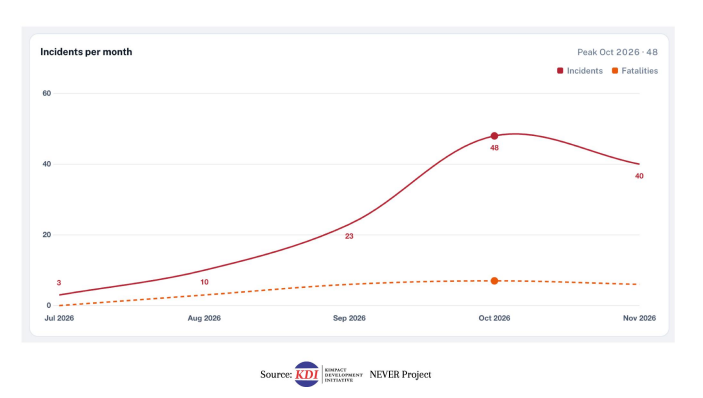
KDI’s monitoring revealed a sharp increase in electoral violence incidents following the commencement of political campaigns.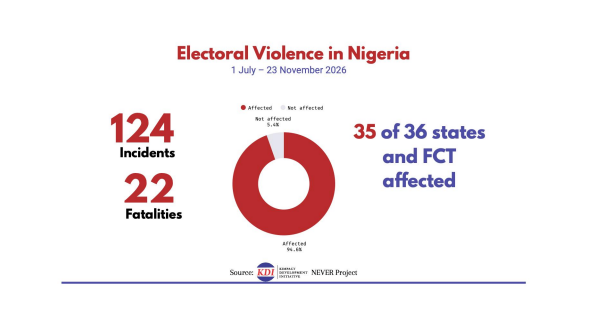
The number of recorded incidents rose from three in July to 10 in August, 23 in September and 48 in October 2026. Another 40 incidents were documented within the first 23 days of November.
The organisation expressed concern that the trend could worsen as election day approaches if preventive measures are not urgently implemented.
Political Intolerance and Inflammatory Rhetoric
KDI also raised concerns over the increasingly hostile nature of political engagements, noting that threats, inflammatory statements and divisive rhetoric across party lines could encourage violence and deepen tensions within communities.
It warned that political competition should be driven by ideas, policies and programmes rather than intimidation or attacks against opponents.
The organisation stated that dangerous political rhetoric could normalise violence and encourage supporters to engage in unlawful activities.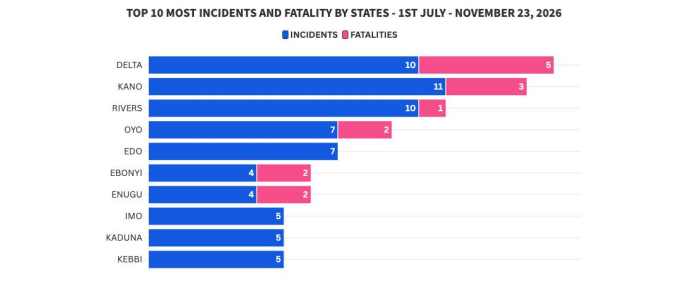
KDI therefore called on political parties, candidates, spokespersons and campaign organisations to commit publicly to issue-based campaigns and avoid statements capable of inciting violence or undermining social cohesion.
35 States and FCT Affected by Electoral Violence
The NEVER Project findings showed that electoral violence had spread beyond traditionally identified hotspots, with incidents documented in 35 of Nigeria’s 36 states and the FCT.
Among the states with notable cases were Kano, Delta, Rivers, Oyo, Edo, Ebonyi, Enugu, Imo, Kaduna and Kebbi.
Kano recorded the highest number of incidents, with 11 cases and three fatalities, while Delta recorded 10 incidents and five fatalities.
Rivers also recorded 10 incidents and one fatality, while Oyo had seven incidents and two fatalities. Ebonyi and Enugu each recorded four incidents and two fatalities.
The organisation said the widespread distribution of cases highlights the need for security agencies, electoral stakeholders and community leaders to adopt proactive measures to prevent further escalation and protect citizens’ democratic rights.
Physical Assault Accounts for Most Recorded Cases
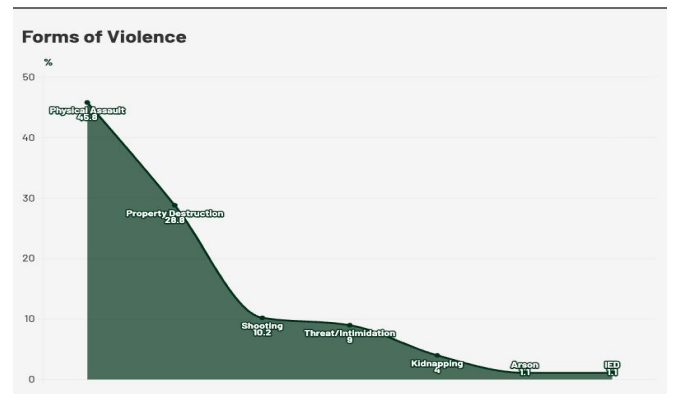
The breakdown of documented incidents showed that physical assaults accounted for 46.8 per cent of electoral violence, making them the most frequently recorded form of violence.
Property destruction accounted for 28.8 per cent, while shootings represented 10.2 per cent. Threats and intimidation made up nine per cent, kidnappings four per cent, while arson and improvised explosive device (IED) incidents each accounted for 1.1 per cent.
KDI expressed particular concern over intimidation targeting political supporters, civil servants, journalists and ordinary citizens seeking to participate in the democratic process.
Political Parties and Supporters Implicated
The organisation’s findings also identified political actors as central to the pattern of electoral violence recorded during the monitoring period.
According to the NEVER Project, political party members and affiliated groups were identified as perpetrators in 82.3 per cent of recorded incidents and victims in 86.5 per cent.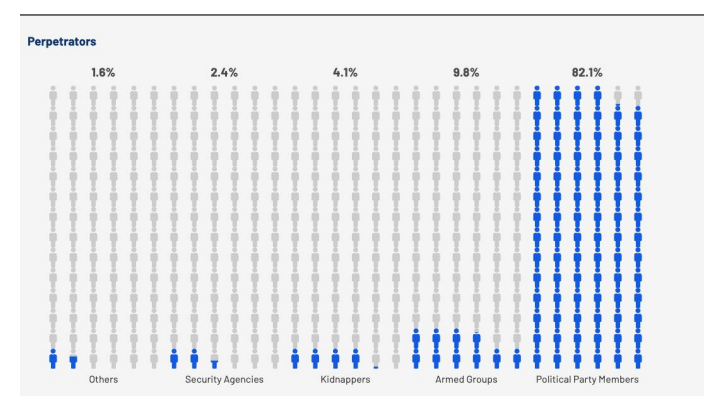
KDI said the findings underscore the responsibility of political parties and candidates to exercise effective control over their campaign structures, supporters and mobilisation networks.
It maintained that political leaders must take concrete steps to discourage violence, sanction supporters involved in unlawful conduct and demonstrate their commitment to peaceful elections.
The organisation also expressed concern over reports of political intolerance in some parts of the country, including restrictions on opposition activities, abuse of administrative authority and denial of equal opportunities for political participation and campaigning.
It warned that such practices undermine democratic principles and could further heighten tensions in already fragile communities.
KDI stressed that protecting citizens’ democratic rights and ensuring peaceful political competition would require accountability from political actors and coordinated action from all relevant stakeholders.
Share this


