

Nigeria’s headline inflation rate declined further to 14.06 per cent in October 2026, extending the slowdown in annual price increases recorded in recent months, according to the National Bureau of Statistics (NBS).
The latest figure represents a 0.57 percentage-point decline from the 14.63 per cent recorded in September and a substantial drop from the 18.97 per cent recorded in October 2025.
The statistics agency disclosed this in its October 2026 Consumer Price Index (CPI) figures released on Monday.
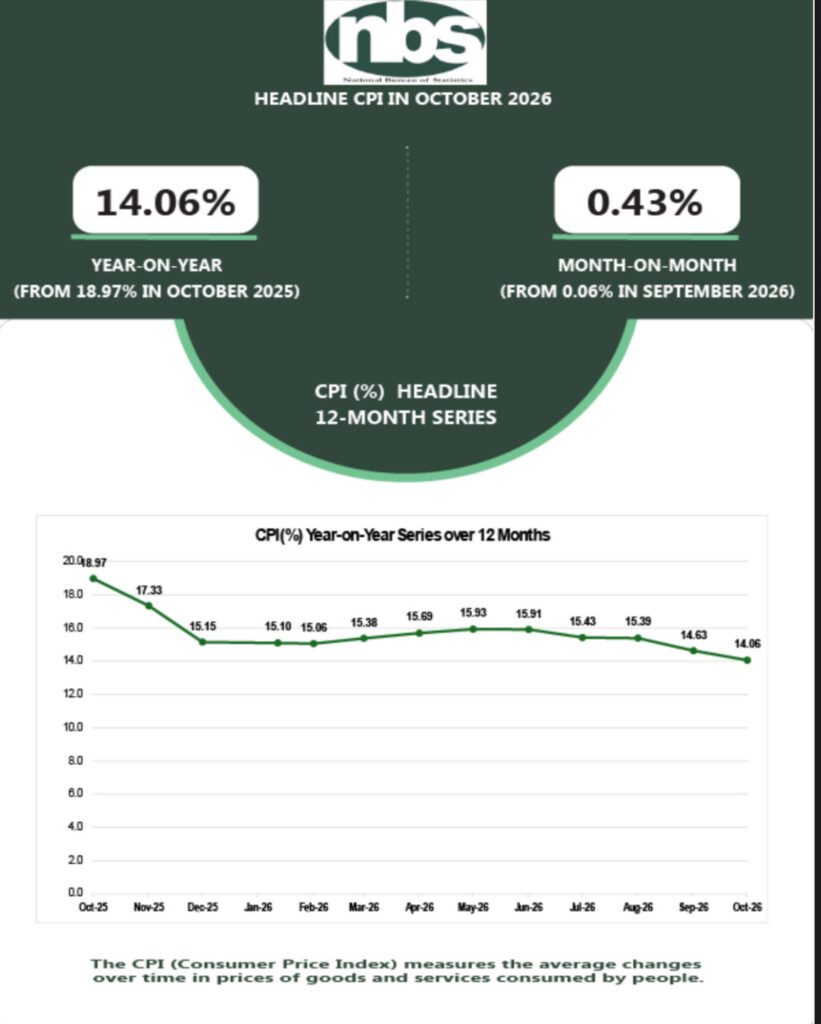
However, on a month-on-month basis, headline inflation stood at 0.43 per cent in October, compared with 0.06 per cent in September, indicating that average prices increased at a faster rate during the month.
The latest figures extend the downward trend in annual inflation. PREMIUM TIMES had reported that headline inflation fell to 14.63 per cent in September from 15.39 per cent in August, while monthly inflation slowed sharply to 0.06 per cent.
Annual Headline Inflation Falls as Monthly Rate Rises to 0.43%
The October report shows that annual inflation continued to moderate, even as monthly price increases picked up slightly.
The decline in the annual rate indicates that the pace at which prices are rising compared with the same period last year has slowed.
However, the increase in monthly inflation from 0.06 per cent in September to 0.43 per cent in October suggests that average prices rose more quickly within the month.
This means that although the overall rate of annual price increases has continued to fall, Nigerians may still experience higher prices for goods and services compared with previous months.
The distinction between annual and monthly inflation is important because a declining annual inflation rate does not necessarily mean that the cost of living has fallen.
Food Inflation Drops to 19.13% Despite Persistent High Prices
Food inflation stood at 19.13 per cent year-on-year in October, down from 19.59 per cent in September and 16.30 per cent in October 2025.
On a month-on-month basis, food inflation was -0.75 per cent in October, compared with -1.55 per cent in September.
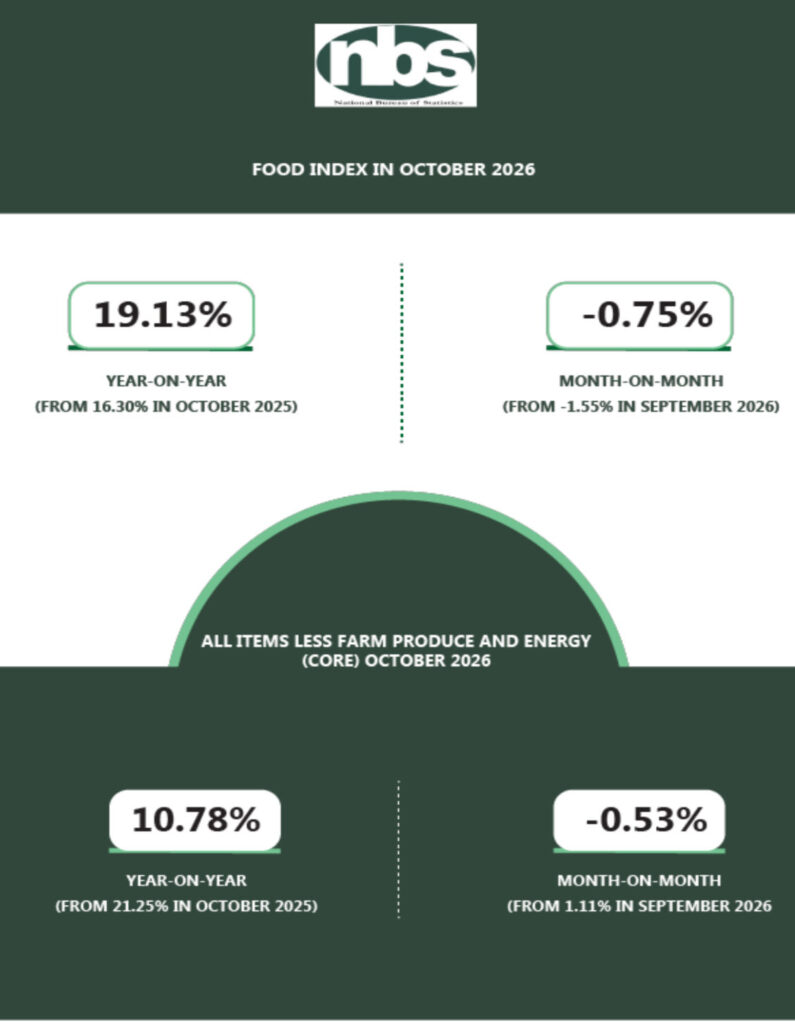
The negative monthly rate indicates that average prices of food items in the CPI basket declined between September and October, although the decrease was smaller than the fall recorded in the preceding month.
The movement comes after food prices also declined monthly in September, when food inflation stood at -1.55 per cent following a rise of 1.02 per cent in August.
Despite the monthly reductions, the annual figure shows that food prices remained substantially higher than they were a year earlier.
This distinction is particularly important for households, especially low-income families that spend a large share of their earnings on food. A decline in monthly food inflation does not necessarily mean that prices have returned to earlier levels or that all food items have become cheaper.
The October figures therefore suggest that the pace of annual food price increases has slowed, while average food prices recorded another monthly decline.
Urban Inflation Remains Higher Than Rural Rate
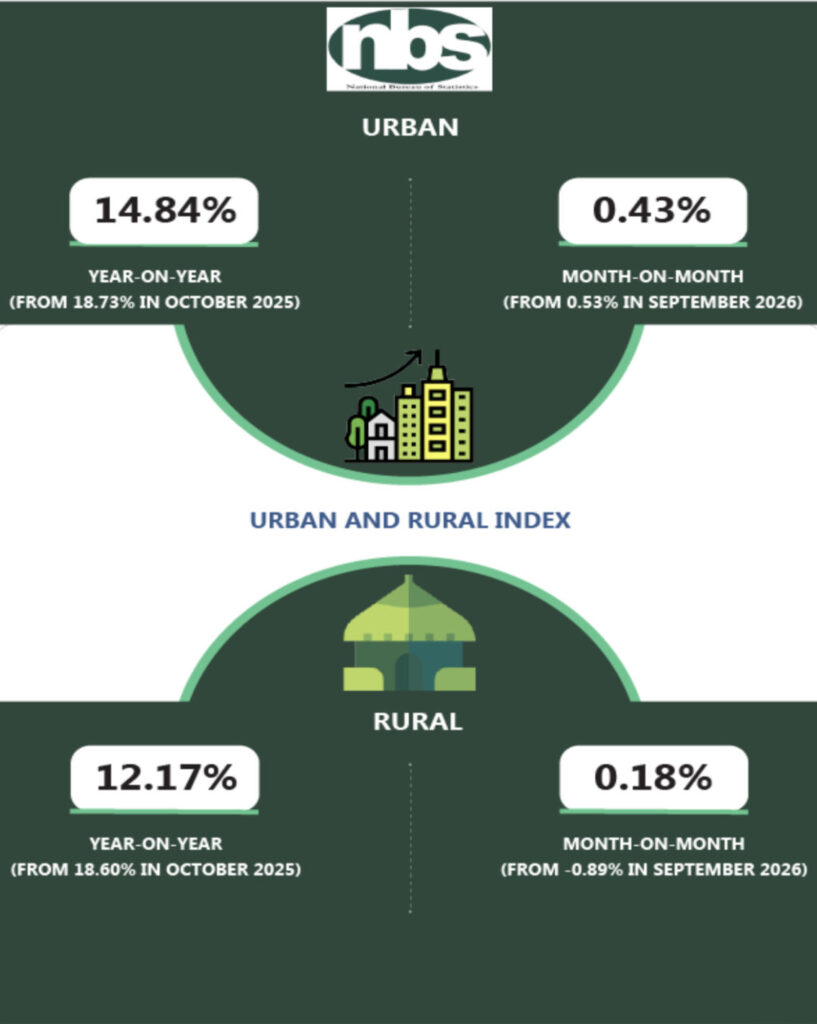
The NBS data also showed that annual inflation continued to moderate in both urban and rural areas, although the rate remained higher in urban locations.
Urban inflation stood at 14.84 per cent year-on-year in October, down from 18.73 per cent in the corresponding month of 2025.
On a month-on-month basis, urban inflation increased to 0.43 per cent in October from 0.53 per cent in September.
Rural inflation was lower at 12.17 per cent year-on-year, compared with 18.60 per cent in October 2025.
The monthly rural inflation rate stood at 0.18 per cent in October, reversing the -0.89 per cent recorded in September.
The figures show that annual price increases remained higher in urban areas than in rural areas, while average prices in both categories rose between September and October.
Core Inflation Falls as Cost-of-Living Pressures Persist
Core inflation, which excludes farm produce and energy prices, stood at 10.78 per cent year-on-year in October, down from 21.25 per cent in October 2025.
On a month-on-month basis, core inflation was -0.53 per cent in October, compared with 1.11 per cent in September.
The monthly decline indicates that average prices within the core inflation basket fell during the period, after increasing in September.
Overall, the October data point to a continued slowdown in Nigeria’s annual inflation rate, with headline inflation declining for another month and annual food inflation also moderating.
However, the increase in monthly headline inflation from 0.06 per cent in September to 0.43 per cent in October suggests that prices rose at a faster pace within the month.
The negative monthly food inflation rate offers some relief, but the annual food inflation figure of 19.13 per cent indicates that food remains considerably more expensive than it was a year earlier.
Inflation measures the rate at which prices change over time. A declining inflation rate means prices are increasing more slowly, not necessarily that the cost of living has fallen.
For households still struggling with the cost of food, transport and other necessities, the distinction between slower price increases and actual reductions in prices remains significant.
Share this


