

The Federal Ministry of Livestock Development has unveiled an ambitious roadmap to transform Nigeria’s livestock sector into a foreign exchange powerhouse, signaling a shift from subsistence farming to a high-yield commercial export model.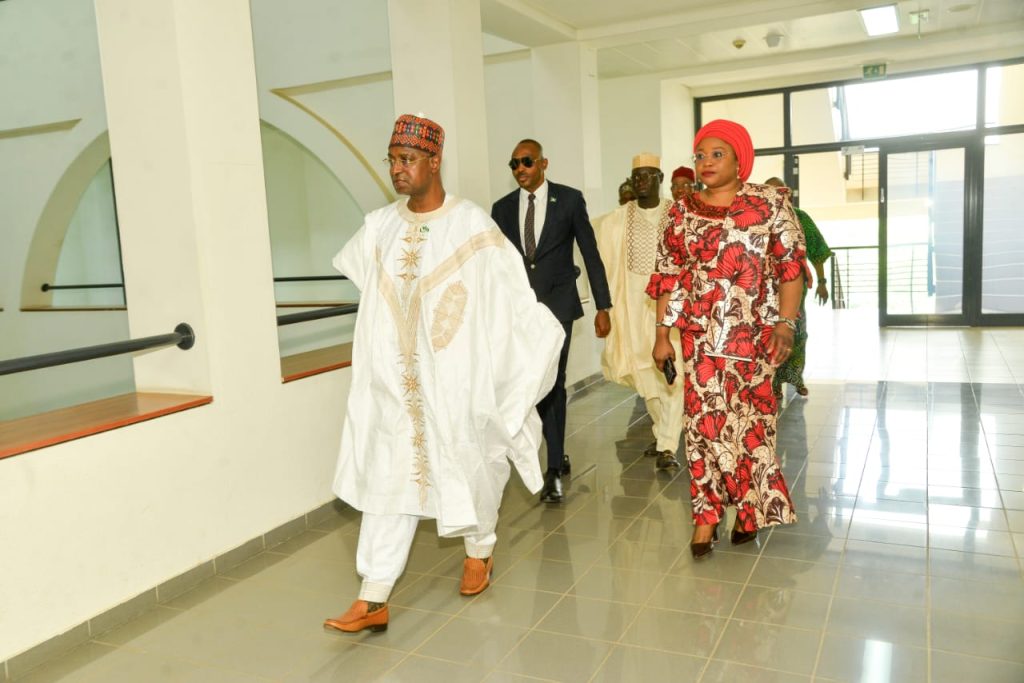
Appearing before the Joint Committee of the National Assembly on Friday, February 20, 2026, the Honourable Minister of Livestock Development, Idi Mukhtar Maiha, emphasized that the ministry is strategically positioning Nigeria to claim a stake in the N3.2 trillion global red meat market.
Funding Constraints Hamper Initial Growth
During the 2026 budget defence, Minister Maiha disclosed that despite being a newly established institution, the ministry has faced significant fiscal hurdles. He revealed that out of a N75 billion take-off grant earmarked for 2024, only N20 billion was released, while the 2025 cycle saw zero budgetary releases.
The Minister noted that while prudent financial management allowed the ministry to maintain core institutional coordination, the lack of consistent funding has stalled the implementation of critical revenue-generating programs.
“Nigeria possesses a large livestock population, yet we earn minimal value from it,” Minister Maiha stated. “Our objective is to move from subsistence production to a structured commercial system that supports exports, creates jobs, and generates revenue for the country. Our Ministry is well positioned to generate significant revenue, but limited budget releases have hindered our ability to tap into the economy.”
The Blueprint for Export Readiness
To meet the rigorous demands of international buyers, the Ministry is focusing on three critical pillars: Traceability, Productivity, and Health.
The Minister outlined several key initiatives currently underway, National Livestock Identification which is the framework to track animals, which is essential for meeting global export standards and curbing cattle rustling, Feed and Fodder Development, for rehabilitation of grazing reserves and service centers designed to reduce seasonal migration and minimize farmer-herder conflicts, and lastly the Genetic Improvement for programs aimed at significantly increasing meat yield and dairy output through modernized breeding techniques.
Legislative Support for Economic Diversification
The National Assembly expressed strong support for the ministry’s vision, provided the sector transitions into a modern enterprise. Senator Umar Shehu Buba, Chairman of the Senate Committee on Livestock Development, stressed that proper investment is the only way to reduce the nation’s reliance on imports.
“The livestock sector must transition from traditional practices to modern enterprise,” Senator Buba remarked. He called for intensified investment in cold chain logistics, modern abattoirs, and artificial insemination to attract private sector participation and empower women and youth.
Echoing these sentiments, the House Committee Chairman, Hon. Olawole Tasir Raji, joined other committee members in advocating for improved funding and inter-governmental collaboration to unlock the sector’s multi-trillion naira potential.
Looking Ahead: The 2026 Proposal
As the Ministry moves into the new fiscal year, it has carried forward 70 key projects intended to bridge the gap between local production and international demand. The 2026 budget proposal aims to create a “measurable impact” on the national economy by prioritizing the livestock value chain as a pillar of national diversification.


